Port Agency Software for Small and Mid-Size Agencies
Port calls, PDA and FDA, crew changes, vendor quotes and deliveries in one record per call, instead of spreadsheets and scattered email threads.

Who this is for
- You run a port agency covering one or a few ports
- Your team handles merchant vessels of different types: bulk, tanker, container, ro-ro or general cargo
- You prepare PDAs and FDAs in Excel and email them to principals
- Some port calls have more than one principal, and costs arrive in several currencies
- You want a system junior staff can pick up without breaking the process
A port agent coordinates the vessel's arrival, formalities with the authorities, crew changes, husbandry services and the accounts owed to the principal, often for several vessels at once and with requests that change by the hour.
In many agencies this still runs on Outlook, Excel and WhatsApp. The result is familiar: each agent has their own DA template, the PDA and FDA are rebuilt by hand, and when the person who handled a call is away, nobody else can find the file.
SupaMaritime Agent is a web app built around the port call. Services, disbursement accounts, invoices, payments, crew changes, documents, deliveries and emails sit on the same record, with a timeline of every change.
Where the day breaks down
DA templates multiply
Every agent keeps their own Excel template. The version sent to the principal is not always the one finance sees, and month-end reconciliation takes longer than it should.
PDA to FDA means retyping
Closing a call means copying the proforma into the final account by hand, applying exchange rates and explaining the differences to the principal.
Multi-principal calls are split by hand
When costs are shared between principals, the shares are often typed into a separate spreadsheet tab, where one wrong figure goes unnoticed until the principal queries it.
Crew changes create their own paperwork
Names, ranks, passports, flights and receipts for on-signers and off-signers end up in separate folders and chat threads for each call.
Email is the only record
When an agent leaves, their knowledge of each principal and each open call goes with them. There is no shared timeline to hand over.
Principals want the accounts quickly
Principals expect a PDA before arrival and an FDA soon after sailing. With manual steps, a busy week pushes that work into the evenings.
Built around the workflow, not bolted on top
SupaMaritime Agent keeps one record per port call. Services and tasks, the PDA and FDA, vendor invoices, principal payments, crew changes, documents and deliveries all sit on that record, and every change appears on its timeline. The team can also record services, parcel photos and voice notes from Telegram; the bot asks for confirmation before it writes anything.
Port calls in table, Kanban and calendar views
Follow each call through its statuses, from nomination to settlement. An operations board groups services, tasks and deliveries by port call, and a calendar shows arrivals by month or week.
PDA and FDA with PDF export
Add DA lines by category, copy PDA lines into the FDA and adjust them to actual costs; the FDA shows the variance against the PDA. Export a detailed or summary PDF and email it from the port call.
Costs shared between principals
Attach several principals to a port call with their share, split a DA line between them, and generate the PDA or FDA for one principal or for all of them combined.
Crew changes with flights and costs
Record on-signers and off-signers with rank, nationality, passport and flight details, keep their documents on the port call and track estimated and actual costs for each crew change.
Invoices, payments and accounting export
Log vendor invoices and principal payments on the port call, with daily ECB rates for other currencies. Generate FatturaPA XML from the final DA and export FDA disbursements to CSV as journal entries.
AIS port radar and vessel tracker (Pro)
On the Pro plan, see AIS positions on your port calls, vessels approaching your ports within a radius you set, a vessel tracker, a route planner and vessel details by IMO number. Not included in Starter.
Illustrative example: a bulk carrier with a crew change
A hypothetical case, not a customer story. A bulk carrier calls at a Mediterranean port to discharge grain, with a crew change of five. Two principals share the port costs.
Before SupaMaritime
After SupaMaritime
The senior agent builds the PDA in Excel and emails it to both principals, who reply with changes in separate threads.
The port call is created on nomination, with both principals and their shares attached.
Crew documents and flight details arrive over WhatsApp from the master, the crewing office and the travel agent.
Services are added from the agency's service types, vendor quotes are requested by email, and the PDA is exported as a PDF and sent from the port call.
Supplier invoices for pilotage, towage and port dues land in different inboxes and are matched to the call by hand.
The five crew members are recorded with rank, nationality, passport and flights; their documents and costs sit on the crew change.
Each principal's share is calculated in another spreadsheet tab, typed in by hand.
Supplier invoices are logged on the port call as they arrive, and amounts in other currencies are converted with the ECB rate.
The FDA waits for the last invoice and is then rebuilt from the PDA file.
PDA lines are copied into the FDA and adjusted to actual costs; each principal receives an FDA with their own lines and the variance against the PDA.
When the senior agent is away, nobody else knows where the file stands.
Anyone on the team can open the call and read its timeline to see what has been done and what is still pending.
Facts you can check
Copy PDA lines into the FDA, enter actual costs and show the variance against the PDA on the PDF.
Daily ECB reference rates convert DA lines in other currencies to EUR.
Italian e-invoice XML from the final DA, plus a CSV export of FDA disbursements as journal entries.
English, Italian, Spanish, French and German.
Why generic ERPs do not fit a port agency
General-purpose ERPs model purchase orders, sales orders, customers and suppliers. A port call is different: a time-boxed event whose costs are billed to one or more principals but paid to many suppliers, such as the port authority, pilots, tugs, mooring crews and the agency itself, with estimates that change between the proforma and the final account and amounts in more than one currency.
Fitting that into a generic ERP usually takes custom configuration, and operations often drift back to spreadsheets because the system does not represent the call the way agents work.
SupaMaritime Agent takes the port call as its unit of work. Services, disbursement accounts, invoices, payments, crew changes, documents, deliveries, emails and the timeline all hang off the call. Agent is not a general ledger: final accounts go to your accounting software as FatturaPA XML or as a CSV of journal entries.

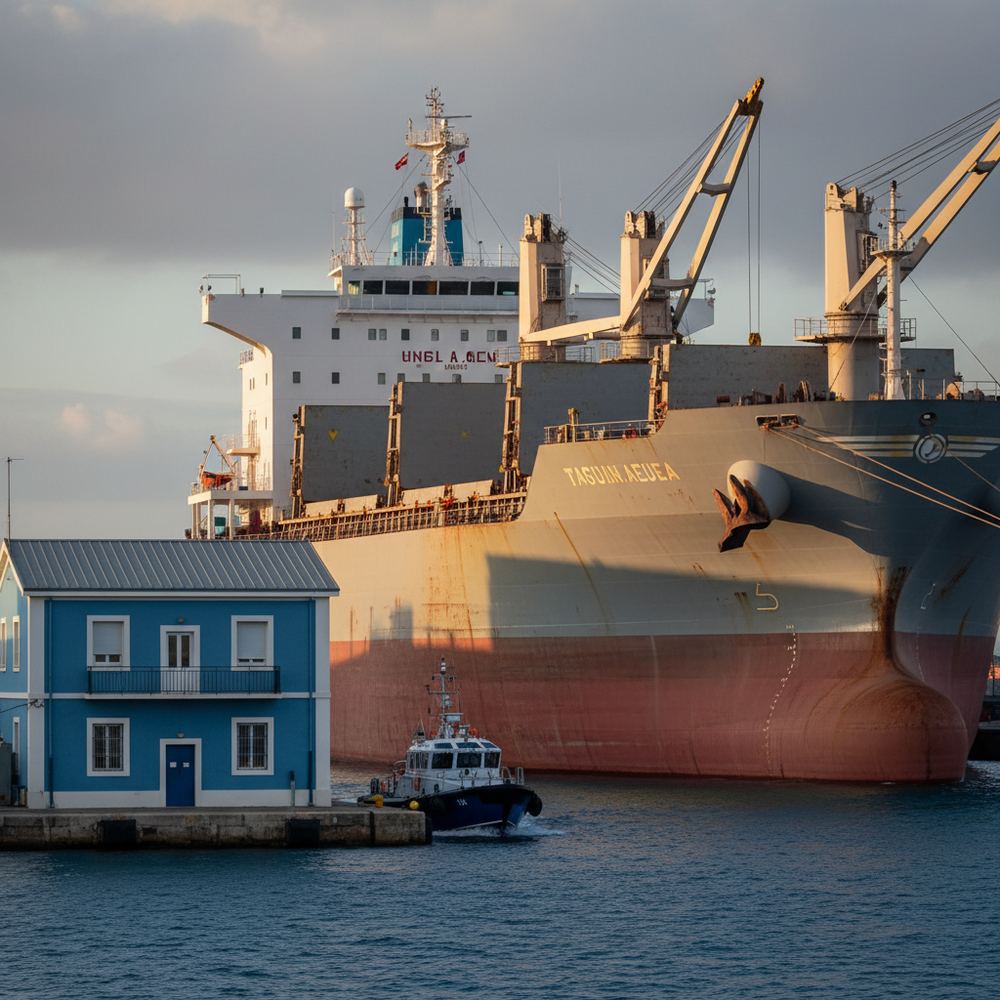
What distinguishes port agency software from ship agency software
The terms are often used interchangeably. In practice, port agency software focuses on the port-side work: arrival and berth coordination, formalities, husbandry services, crew change logistics ashore and disbursement accounting. Ship agency software can mean the same thing, or a broader category that also covers the owner's side, such as voyage management and chartering.
If you earn fees by representing shipowners and operators in port, you need port agency software, and that is what SupaMaritime Agent does. If you operate ships, you need ship management software. SupaMaritime Merchant covers maintenance, crew records and compliance for merchant vessels; it does not handle chartering or voyage accounting.
A practical test: if disbursement accounts are the main document you deliver to clients, you are a port agent and Agent is the module to look at.
How to choose port agency software in 2026
Start with the basics: does the PDA the tool produces look better than the Excel you send today, will finance use the figures to invoice principals, can junior staff use it without breaking the process, and does the price make sense for the number of calls you handle.
Then look at three things. Multi-principal calls: you should be able to attach several principals to one call and split the costs, not create duplicate calls. Exchange rates: lines in other currencies should use a published reference rate, such as the ECB's daily rate, rather than a fixed yearly rate. Documents: attaching a delivery note or an invoice to the call should be quick, or the team will go back to email.
Finally, data ownership. Your port calls, principals and DA history are commercially sensitive. In SupaMaritime you can export your data as CSV, JSON or XLSX and your files in their original format at any time, there is no fee for exporting, and you have at least 30 days after the contract ends to retrieve everything. A GDPR Data Processing Agreement is part of the terms.
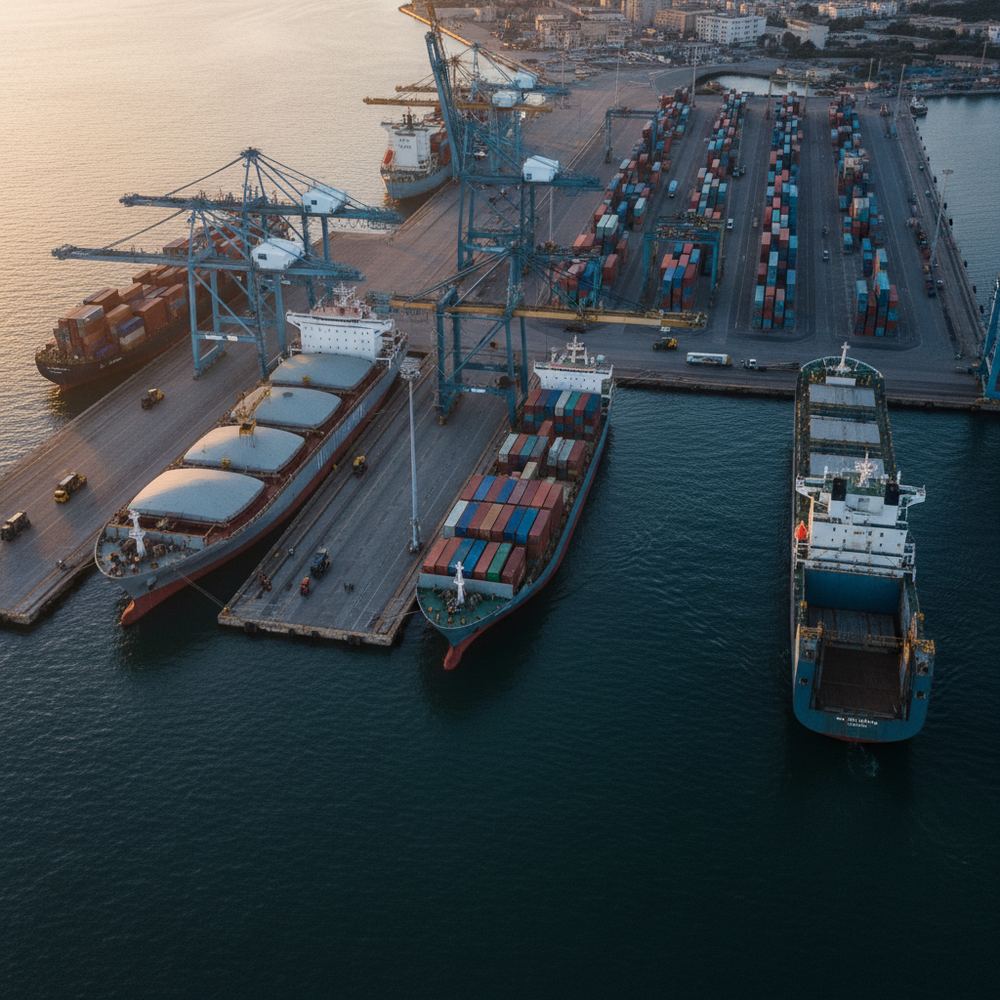

Getting started: what setup involves
Agent has no free plan or free trial: access starts on a paid plan (Starter, Pro or Enterprise), quoted on request. A demo is the best way to check whether it fits the way your agency works.
Setup starts with master data: your ports, principals, vendors and vessels, your service types and statuses, your DA sections, and the company details, logo and bank details that appear on PDFs. You then invite the team, assign roles, and each person who wants to can link the Telegram bot.
No IT department is needed, because Agent runs in the browser. Onboarding, data migration and training are provided only when your order form includes them. Support is by email and in the app on Spanish business days, and we aim to respond within one business day.
How this compares to the alternatives
Cloud software for port agencies.
Cloud platform for port agencies.
Long-established port agency software vendor.
Port agency ERP software.
Port agency software positioned around AI.
Frequently asked questions
What is port agency software?
How is a PDA different from an FDA?
Can port agency software handle multi-principal disbursement splits?
How much does SupaMaritime Agent cost?
Can port agency software handle ECB exchange rates?
How do port agents keep track of crew changes?
Does SupaMaritime Agent integrate with port community systems?
What changes when a port agency moves off Excel?
See it in your workflow, not a generic demo
We'll walk through built for port agents.
Agent has no free plan and no public price list. Starter, Pro (with AIS features) and Enterprise are quoted on request: book a demo and we will send you a quote.