Maintenance and Crew Compliance Software for Offshore Vessels
Planned maintenance, spare parts, crew certificates, hours of rest and ISM, ISPS, MARPOL and ballast water records for PSV, AHTS, SOV and CTV fleets.

Who this is for
- You operate offshore vessels such as PSVs, AHTS, SOVs, CTVs or MPSVs
- Your vessels work for oil and gas, offshore wind, or both
- Crews rotate on fixed swings and each role needs its own certificates in date
- Maintenance has to fit between contracts, campaigns and crew changes
- ISM, ISPS, MARPOL and ballast water records must be ready for clients, auditors and inspectors
Offshore vessels work on contracts and campaigns rather than voyages. They spend weeks in the field, crews rotate on fixed swings, and every role on board needs its own set of certificates. On top of flag and class, clients inspect vessels before and during contracts. The technical and crewing side has to be in order all the time.
SupaMaritime Merchant is software for that side of the business: planned maintenance tied to equipment and running hours, onboard inventory and spare parts, crew records with certificate expiry alerts, hours of rest checked against MLC and STCW limits, and ISM, ISPS, MARPOL and ballast water records, with a multi-vessel view for the office.
It is not a commercial or DP system. Day rates, charter contracts, utilisation and off-hire, project mobilisation, DP documentation such as FMEA and capability plots, owner accounting and emissions reporting stay in the tools you already use. SupaMaritime does not connect to those tools; it covers maintenance, spare parts, crew and compliance.
Where the day breaks down
Maintenance squeezed between contracts
Windows between campaigns are short and hard to predict. Jobs get deferred, and without a clear list of what is overdue per vessel nobody sees how far behind the plan is.
Spare parts far from the base
A vessel that works in the field for weeks cannot pick up a missing spare on the way. Stock that is not written off when used makes the next order a guess.
Role-specific certificates on rotating crews
STCW certificates, DPO certificates, offshore training and medicals, spread across two or more crews per vessel, each with its own expiry date.
Hours of rest on long swings
Twelve-hour shifts over two or four weeks leave little margin. Rest records have to stand up to MLC and STCW checks by inspectors and clients.
Evidence for clients, class and flag in different places
ISM and ISPS records, drills, vessel certificates, MARPOL entries and ballast water records sit in separate binders, drives and inboxes.
The office has no fleet-wide picture
Superintendents chase each vessel by email to find out what is overdue, what is expiring and which defects are still open.
Built around the workflow, not bolted on top
SupaMaritime Merchant brings maintenance, spare parts, crew and compliance records for every vessel into one web app. The crew on board and the office work on the same records, and the dashboard shows what needs attention across the fleet, whichever market each vessel is working in.
Planned maintenance and work orders
Maintenance jobs tied to equipment in the equipment register, scheduled by calendar or by running and engine hours. Work orders and defects are logged and followed up on the vessel record.
Onboard inventory and spare parts
Spare parts and stores per vessel. Parts used in a work order come off inventory, low stock shows on the dashboard, and inventory orders are raised from the same place.
Crew records and certificate alerts
Crew records with the certificates you record for each person, such as STCW, DPO or offshore training certificates, with expiry alerts, plus a duty roster, timesheets and leave requests.
Hours of rest against MLC and STCW
Rest hours are recorded per crew member and checked against MLC and STCW limits, so a breach is visible when it happens rather than at the next inspection.
ISM, ISPS, MARPOL and ballast water records
A compliance hub for ISM and ISPS items, audits and drills, insurance inspections and vessel certificates with expiry reminders, plus MARPOL record entries (Annex I, IV, V and VI) and ballast water records.
Fleet dashboard for the office
Overdue maintenance, expiring documents, low stock and open defects across all vessels, with permissions by role and department.
Illustrative example: an operator with two PSVs and one SOV
A hypothetical operator runs two PSVs on oil and gas supply work and one SOV on an offshore wind service campaign, with crews on fixed rotations. This is an illustrative scenario, not a customer story. Contracts, day rates and DP documentation stay in the operator’s existing tools; the example covers only the technical, crewing and compliance side.
Before SupaMaritime
After SupaMaritime
Each vessel keeps its own maintenance spreadsheet; running hours are noted by hand and the superintendent asks by email what is overdue.
Planned maintenance and work orders per vessel, scheduled by calendar or running hours, with overdue jobs on the dashboard.
Spare parts are counted at crew change at best, so orders for the next supply run are based on guesswork.
Parts used in work orders come off onboard inventory; low stock shows on the dashboard and inventory orders are raised in the app.
Crew certificates, including DPO and offshore training certificates, sit in a shared folder and are checked by hand before each rotation.
Each crew member’s certificates are recorded in the app with expiry alerts.
Hours of rest are kept on paper and reviewed only when a client inspection or audit is coming.
Hours of rest are recorded in the app and checked against MLC and STCW limits.
ISM, ISPS and vessel certificate records, MARPOL entries and ballast water records are spread across binders and inboxes.
ISM and ISPS items, audits, drills, vessel certificates, MARPOL entries and ballast water records sit in the compliance hub, with expiry reminders.
Facts you can check
Rest hours are checked against MLC and STCW limits for every crew member.
Dashboard, Contacts, Inventory and Documents on the free plan, no credit card required.
Export your data at any time, with files in their original format and no export fee.
Databases are backed up every day and each backup is kept for 7 days.
What SupaMaritime covers for an offshore operator, and what it does not
An offshore operator needs two kinds of tools. The commercial side handles tenders, contracts, day rates, utilisation, off-hire and project mobilisation, and often owner reporting for managed vessels. The technical and crewing side keeps the vessels maintained, crewed by qualified people and compliant with ISM, ISPS, MARPOL and the ballast water convention.
SupaMaritime Merchant covers only the technical and crewing side: planned maintenance, spare parts, crew records, hours of rest and compliance records. It does not track day rates, charter contracts, utilisation or off-hire, does not manage DP systems or DP documentation, does not do accounting or owner reporting, and does not calculate fuel consumption or emissions. It has no public API or connectors to exchange data with the tools that do.
That makes it a fit for operators who want a clear, affordable tool for maintenance, crew and compliance next to their existing commercial systems, rather than a replacement for them.
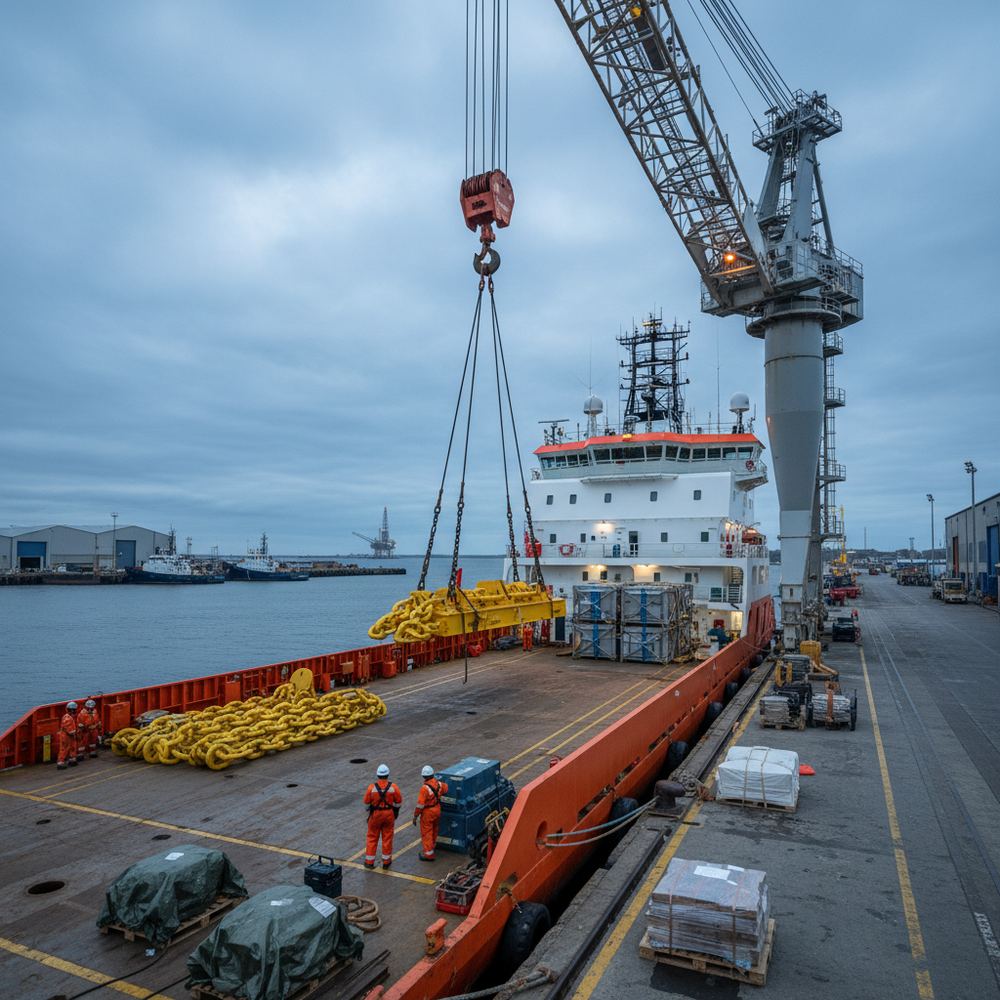

Maintenance planned around contracts and campaigns
Offshore vessels run engines, generators and thrusters for long hours in the field, and the time between contracts is when much of the maintenance gets done. If the plan is scattered across spreadsheets, that window is used badly and overdue jobs pile up.
In SupaMaritime, each maintenance job is tied to a piece of equipment in the equipment register and scheduled by calendar or by running and engine hours. Work orders record what was done, parts used come off onboard inventory, and defects stay open until they are closed. The dashboard lists overdue maintenance, open defects and low stock for every vessel.
The crew can report through the Telegram assistant with messages, voice notes and photos, and an AI assistant answers questions from the manuals and documents you upload. The app runs in the browser on desktop, tablet and phone, and the last synced data stays readable when the connection drops offshore.
Role-specific certificates and hours of rest on offshore rotations
Offshore crews typically rotate on fixed swings, and the qualifications required depend on the role: DP operators, deck crew, engineers and, on wind vessels, people with offshore wind training. Keeping every certificate in date across two or more crews per vessel is a constant task.
SupaMaritime keeps a record for each crew member with the certificates you record for them and expiry alerts, together with a duty roster, timesheets and leave requests. Hours of rest are recorded in the app and checked against MLC and STCW limits.
SupaMaritime does not plan rotations or check automatically that each rotation covers the qualifications a contract requires; the office does that with the crew records and the duty roster. It does not run payroll either.

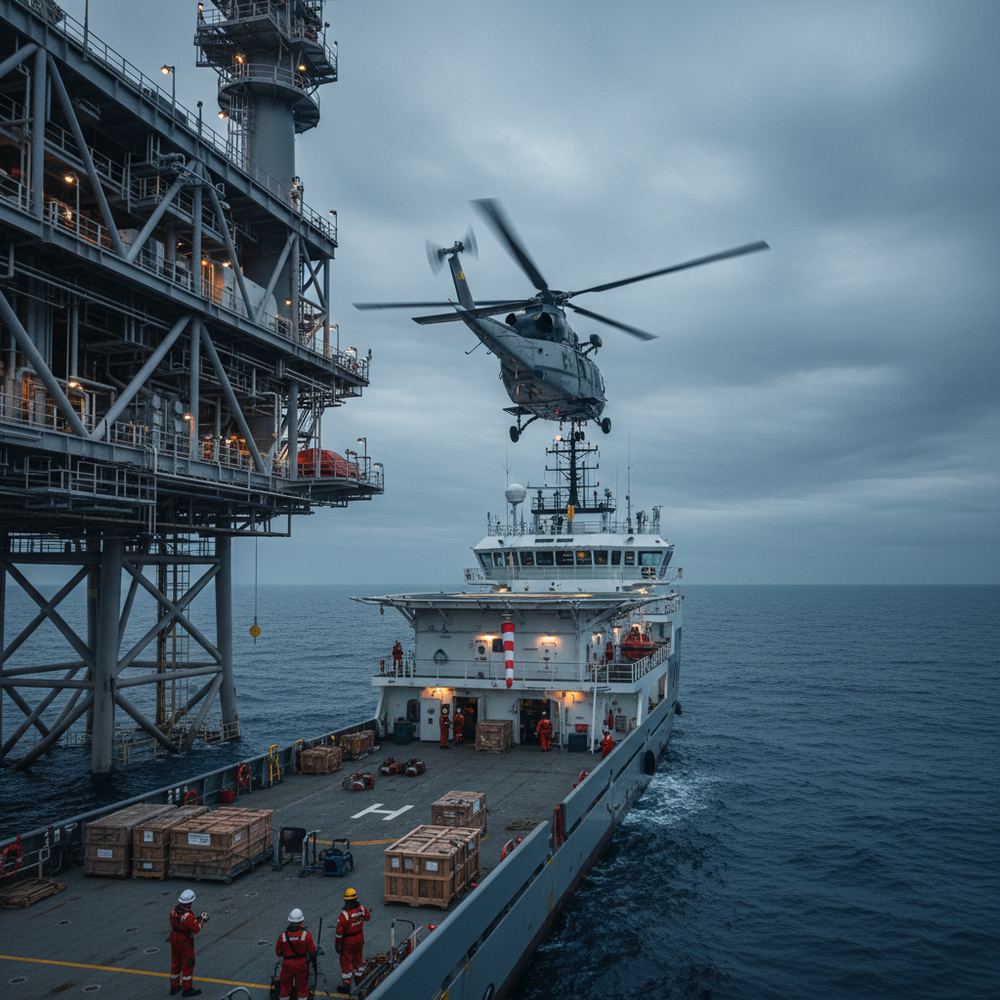
Oil and gas or offshore wind: the same records underneath
Oil and gas and offshore wind clients work differently, but the evidence they, class and flag ask for rests on the same records: maintenance history, crew certificates, rest hours, ISM and ISPS records, drills, vessel certificates, MARPOL entries and ballast water records.
The SupaMaritime compliance hub holds ISM and ISPS items, audits and drills, insurance inspections and vessel certificates with expiry reminders, plus MARPOL record entries for Annex I, IV, V and VI and ballast water management records. Checklists, logbooks and documents with expiry reminders sit alongside, so other files a client asks for can be stored and found in one place.
SupaMaritime has no separate modes for oil and gas and offshore wind and does not manage client-specific HSE regimes: the same tools apply to every vessel in the fleet.
How this compares to the alternatives
Operations software for workboat and offshore fleets.
Established ship management suites covering technical management, crewing and QHSE.
Some offshore operators run systems built for their own fleet and processes.
A common way to keep maintenance, crew and certificate records in smaller fleets. SupaMaritime replaces them for those records.
Frequently asked questions
Does SupaMaritime track day rates, charter contracts or off-hire?
Does it manage DP documentation, FMEA or DP audits?
Can it track DPO, offshore training and other role-specific certificates?
Does it work for both oil and gas and offshore wind vessels?
Does SupaMaritime handle accounting or owner reporting for managed vessels?
Does it connect to DP systems, AIS, vessel sensors or our ERP?
Where is the data hosted, and how is it protected?
How do we get started?
See it in your workflow, not a generic demo
We'll walk through built for offshore vessel operators.
Free plan with Dashboard, Contacts, Inventory and Documents, no credit card. Pro is €199 per vessel per month + VAT. Larger fleet? Contact us for a quote.