Why Commercial Shipping Companies Are Switching to Cloud-Based Maritime Software
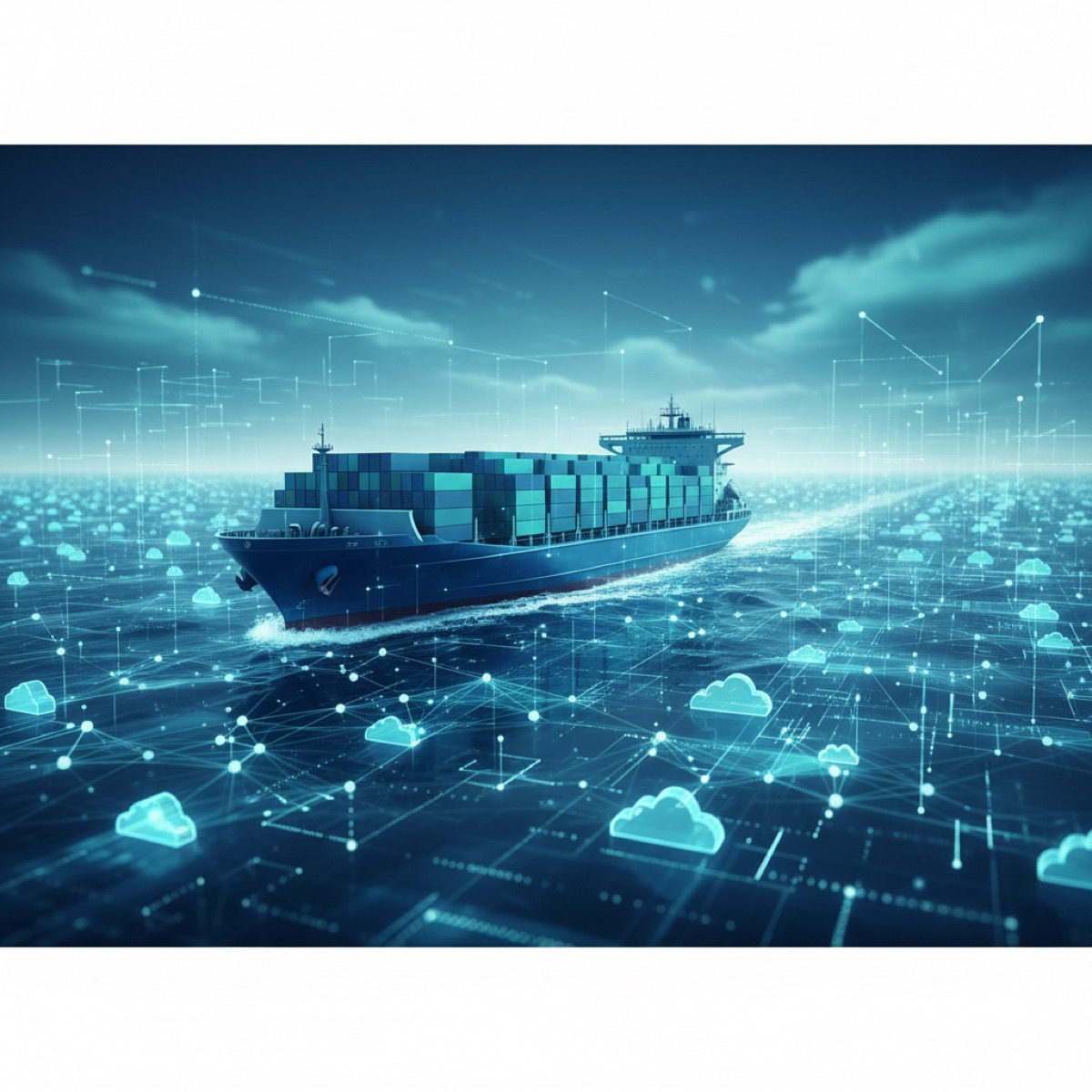
Cloud-based maritime software is redefining how commercial shipping companies manage their fleets — replacing aging on-premise systems with SaaS platforms hosted on enterprise cloud infrastructure (AWS, Azure, GCP) that are accessible from any device, in any port, at any time. The shift to cloud maritime software is no longer a future trend; it is the present reality for forward-thinking fleet operators who want lower IT costs, real-time data visibility, and the agility to compete in an increasingly digital shipping industry.
The numbers tell a compelling story. According to Clarkson Research (2025), cloud adoption in commercial shipping grew 42% year-over-year in 2024–2025, with mid-size fleet operators (10–50 vessels) leading the transition. Meanwhile, a survey by DNV (2024) found that 73% of maritime executives consider cloud migration a top-3 strategic priority for the next two years. The question for most operators is no longer whether to migrate — it is how to do it successfully and how quickly the benefits will materialize.

The Problem with Legacy Maritime Software
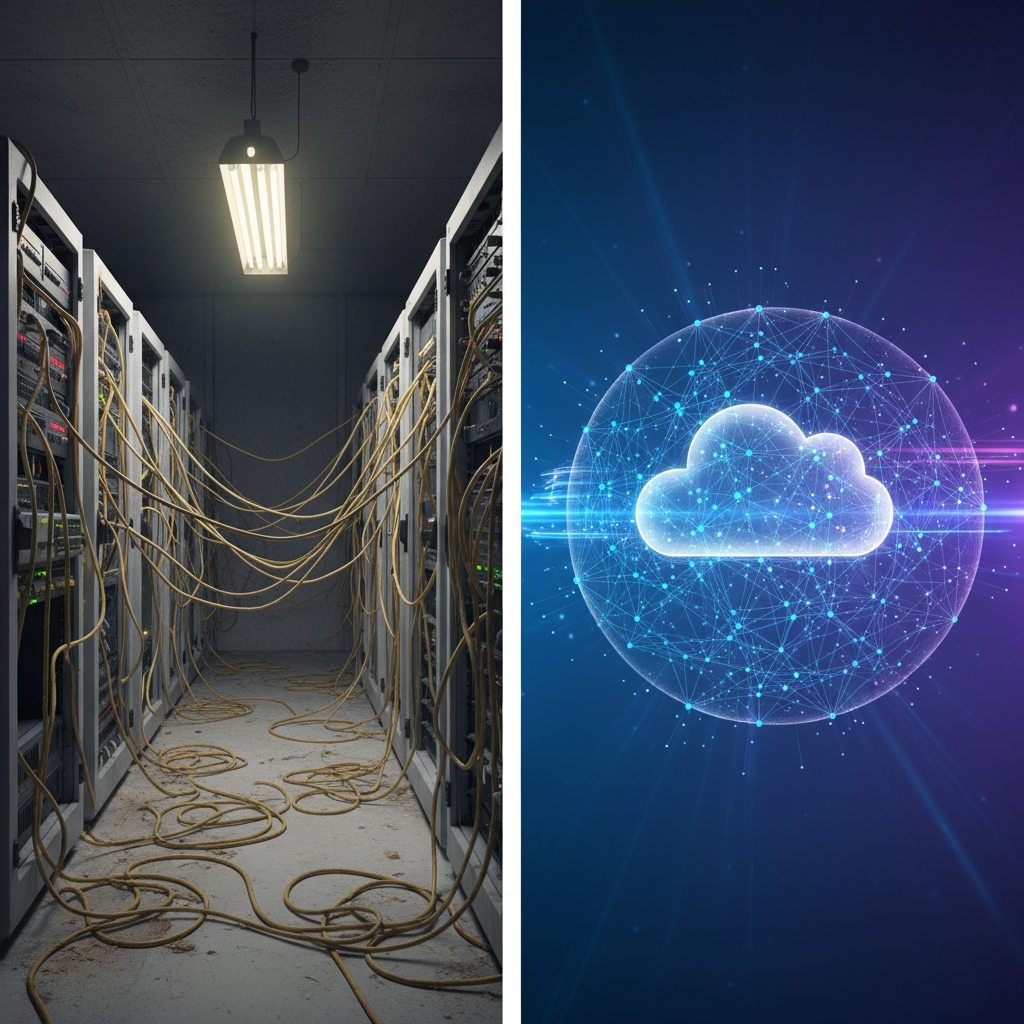
Most shipping companies still run on software architectures from the 2000s or earlier. These legacy systems create compounding problems that grow more acute with every passing year:
- Data silos — Technical management, commercial operations, and finance run on separate systems that don't communicate in real time. A fleet manager can't see the financial impact of a maintenance decision without calling the finance team.
- Version fragmentation — When software runs on-premise, different offices and vessels often run different versions. A Singapore office on v4.2 can't share data with the Hamburg office on v3.8.
- IT infrastructure burden — On-premise servers require physical space, cooling, backup systems, security patches, and dedicated IT personnel. For a shipping company, this is not core competency.
- Upgrade paralysis — Major version upgrades on legacy systems are disruptive, expensive, and risky. Many companies postpone upgrades for years, falling further behind on features, security, and regulatory compliance.
- Remote access limitations — Legacy systems often require VPN connections or specific hardware to access. In a post-2020 world where remote work is standard, this is a significant competitive disadvantage.
- Analytics gap — Legacy maritime software was built for transaction recording, not insight generation. Producing fleet-wide KPI reports typically requires exporting data into spreadsheets and manual consolidation — a process that is slow, error-prone, and produces information that is already outdated by the time it reaches decision-makers.
What Cloud-Based Maritime Software Changes
| Aspect | Legacy On-Premise | Cloud-Based (SaaS) |
|---|---|---|
| Access | Office-only or VPN required | Any browser, anywhere, any device |
| Updates | Manual, annual major releases | Continuous deployment, always current |
| IT costs | Servers, backup, IT staff, security | Included in subscription |
| Scaling | Buy new hardware, reinstall | Add vessels/users instantly |
| Data sharing | Export/import between systems | Real-time across all offices |
| Disaster recovery | Self-managed backups | Automatic geo-redundant backups |
| Integration | Custom point-to-point | REST APIs, webhooks, pre-built connectors |
| Security | Self-managed (often inadequate) | Enterprise-grade (SOC 2, ISO 27001) |
Real-World Benefits: By the Numbers
Data compiled from maritime technology deployments across 200+ vessels:
Cost Savings
- 40–60% reduction in IT infrastructure costs — No servers, no on-premise IT staff, no hardware refresh cycles.
- 25–35% lower total cost of ownership (TCO) over 5 years compared to on-premise equivalents.
- Zero upgrade costs — Feature updates and security patches are included in the subscription. No surprise capital expenditure.
Operational Improvements
- 75% faster report generation — Real-time dashboards replace manual data compilation across offices.
- 90% reduction in data re-entry — Single source of truth eliminates duplicate data entry between systems.
- 50% faster onboarding — New offices, vessels, or staff can be provisioned in hours instead of weeks.
Strategic Advantages
- Real-time fleet visibility — All stakeholders access the same data simultaneously, enabling faster, better-informed decisions.
- AI and analytics readiness — Cloud platforms can integrate machine learning for predictive maintenance, route optimization, and demand forecasting without additional infrastructure investment.
- M&A agility — When acquiring new vessels or companies, cloud systems can absorb new entities without major re-implementation. A new vessel can be operational in the fleet management platform within days, not months.
Common Concerns (and Reality)
| Concern | Reality |
|---|---|
| "Cloud isn't secure enough for maritime" | Major cloud providers (AWS, Azure) hold more security certifications than any shipping company's IT department. SOC 2, ISO 27001, and GDPR compliance are standard. |
| "We need offline capability for vessels" | Modern cloud maritime platforms include offline-capable vessel apps with intelligent sync. Better than legacy systems that require USB drives or email attachments. |
| "Migration is too risky" | Phased migration reduces risk. Start with non-critical modules (reporting, HR), build confidence, then migrate core operations. Most migrations complete in 3–6 months. |
| "Our data will be locked in" | Reputable SaaS providers offer full data export capabilities and API access. Your data remains yours. |
| "Internet connectivity at sea is unreliable" | Cloud maritime platforms are designed for intermittent connectivity. Vessel-side apps work offline and sync when connection is available. |
Migration Roadmap: 4 Phases
- Phase 1: Assessment (4–6 weeks) — Audit current systems, document workflows, identify data migration scope, and define success criteria.
- Phase 2: Pilot (8–12 weeks) — Deploy cloud platform for 3–5 vessels with select modules. Train pilot users, validate data migration, and measure KPIs.
- Phase 3: Rollout (12–20 weeks) — Expand to full fleet in waves of 10–20 vessels. Enable additional modules based on pilot learnings.
- Phase 4: Optimization (ongoing) — Fine-tune configurations, build custom reports, integrate with third-party systems, and leverage advanced analytics.
Selecting the Right Cloud Maritime SaaS Platform
Not all cloud maritime software is created equal. The market includes both true cloud-native platforms built from the ground up on modern SaaS architecture and legacy vendors who have moved their existing software to a cloud-hosted server without re-engineering the underlying application. The latter offers little of the real benefit of cloud — it still requires periodic manual updates, lacks real-time data sharing, and cannot scale elastically.
When evaluating maritime SaaS platforms, apply the following criteria:
Multi-Tenancy and Continuous Deployment
A true cloud maritime platform serves all customers from a shared, continuously updated codebase. When a new feature is released or a security patch is applied, it rolls out to all customers simultaneously — without any intervention from your IT team. If a vendor quotes you an annual upgrade cycle or charges for version upgrades, it is not a genuine SaaS product.
API-First Architecture
Modern cloud platforms expose all core functionality through documented REST APIs and support webhooks for event-driven integrations. This is how you connect your maritime software to your accounting system, port agent network, charterer's platform, or custom analytics tool without expensive bespoke development. Evaluate the API documentation quality and the vendor's track record of integration delivery.
Offline Vessel Capability
Vessels operate in areas of limited or expensive connectivity. The vessel-side application must be able to operate fully offline for extended periods, store data locally, and synchronize intelligently with the cloud when bandwidth is available. Ask vendors specifically how they handle the sync conflict scenario — when a vessel officer updates a record offline at the same time a shore team member updates the same record.
Regulatory Compliance Readiness
Maritime software must evolve continuously to stay current with IMO regulations, MARPOL requirements, ISM Code obligations, and MLC crew welfare standards. A cloud platform can push regulatory updates to all customers immediately when rules change. An on-premise system requires you to wait for the next vendor release, purchase an upgrade, and manage the installation — a cycle that can leave you non-compliant for months.
Data Residency and Privacy
For shipping companies operating under GDPR or with crew members from regions with strong data residency requirements, verify that the cloud platform offers regional data storage options (EU, US, Asia-Pacific) and contractual data processing agreements that meet your compliance obligations.
Explore SupaMaritime's full suite of maritime management solutions or review the available fleet management modules to understand how a cloud-native architecture supports every area of fleet operations.
The ROI Case for Maritime Digital Transformation
The financial case for moving to cloud-based shipping software is straightforward, but operators often underestimate the total cost of their current legacy infrastructure when building the comparison.
A typical 30-vessel shipping company operating on legacy on-premise software carries the following hidden costs annually:
- Server hardware maintenance and refresh: $40,000–$80,000 per year
- Dedicated IT staff (partial FTE allocation): $60,000–$120,000 per year
- Software support and maintenance contracts: 18–22% of original license cost per year
- Security patching and compliance audits: $20,000–$40,000 per year
- Data backup and disaster recovery: $15,000–$30,000 per year
- Lost productivity from version incompatibility and manual data reconciliation: Difficult to quantify, but consistently estimated at 10–15% of staff time in operations and finance teams
Against this baseline, a cloud maritime SaaS subscription — which includes all infrastructure, updates, security, and support — typically costs 25–35% less in total annual expenditure. The productivity gains from real-time data access and elimination of manual reconciliation add a further 15–20% operational efficiency improvement, according to maritime technology adoption studies from Lloyd's Register Foundation (2024).
Ready to quantify the opportunity for your fleet? Request a personalized demo and receive a TCO analysis comparing your current infrastructure costs to the SupaMaritime cloud platform.
Maritime Digital Transformation: Beyond the Software
Adopting cloud maritime software is the enabling foundation of a broader maritime digital transformation, but the technology alone does not deliver results. Operators who maximize the return on their cloud platform investment share three organizational characteristics:
Executive Sponsorship
Successful cloud migrations have a champion at the C-suite or senior management level who communicates the strategic rationale, allocates resources for change management, and holds the organization accountable for adoption milestones. Without executive sponsorship, cloud implementations frequently stall at the pilot phase as competing priorities dilute the rollout momentum.
Data Governance from Day One
The value of a cloud platform compounds over time as historical data accumulates and enables trend analysis, benchmarking, and predictive analytics. Operators who establish data governance standards — who enters what, in what format, with what approval workflow — from the first day of implementation build the data foundation that pays dividends for years. Those who treat data quality as a problem to solve later typically find that poor data quality limits what the analytics can deliver.
Continuous Training and Process Review
Cloud platforms release new features regularly. Operators who invest in periodic training cycles — not just at go-live but on an ongoing quarterly basis — consistently achieve higher adoption of new capabilities and greater return on their subscription investment. Designate power users in each functional area (technical, commercial, crew, finance) who are responsible for staying current and cascading knowledge to their teams.
Frequently Asked Questions
What is cloud-based maritime software?
Cloud-based maritime software is a shipping management platform hosted on cloud infrastructure and delivered as a service (SaaS). Users access it through a web browser from anywhere, without installing or maintaining local servers. It covers the same functions as traditional maritime software — fleet management, chartering, crew, finance — but with modern architecture that delivers continuous updates, real-time data sharing, and significantly lower total cost of ownership than on-premise alternatives.
Is cloud maritime software safe for sensitive shipping data?
Yes. Leading cloud maritime platforms operate on enterprise-grade infrastructure (AWS, Azure) with SOC 2 Type II, ISO 27001, and GDPR compliance. They typically offer stronger security than self-managed on-premise installations, including automatic encryption, multi-factor authentication, role-based access control, and geo-redundant backups. The question is not whether cloud is secure enough — it is whether your current self-managed infrastructure meets the same standard.
How long does it take to migrate from legacy to cloud maritime software?
A typical migration takes 3–6 months for a focused implementation (1–2 modules) and 12–18 months for a full enterprise migration. The phased approach — starting with a pilot fleet of 3–5 vessels — is recommended to minimize risk and build organizational confidence. Vendors with maritime-specific implementation experience and proven data migration tooling can significantly accelerate this timeline.
What happens to my data if I want to switch providers?
Reputable cloud maritime software providers guarantee full data portability. Your data can be exported in standard formats (CSV, JSON, XML) and via API access. Look for providers that contractually guarantee data export rights and reasonable transition periods — and treat any vendor that resists this conversation as a red flag.
Can cloud maritime software handle vessels with unreliable internet connectivity?
Yes. Purpose-built maritime cloud platforms include offline-capable vessel applications designed for intermittent satellite connectivity. Crew and officers work in the vessel application normally, and all data syncs with the cloud platform when bandwidth is available. This architecture is superior to legacy on-premise systems that simply stop working when a network connection is unavailable — and far better than the email-and-spreadsheet workarounds that most crews resort to on legacy platforms.
Conclusion: Cloud Is the Future of Fleet Management
The commercial shipping industry is in the middle of a generational shift in how fleet operations are managed and optimized. Cloud-based shipping software is not a niche technology for early adopters — it is rapidly becoming the baseline expectation for professional fleet management, just as email replaced telex and satellite communication replaced radio-only vessels.
The operators who migrate now gain compounding advantages: lower costs, better data, faster decision-making, and a technology foundation that can evolve with the industry rather than constrain it. Those who delay face widening gaps in operational efficiency and the increasing cost of maintaining aging infrastructure that is incompatible with the data standards, integration requirements, and regulatory reporting obligations of modern commercial shipping.
SupaMaritime is built as a cloud-native maritime SaaS platform from the ground up — not a legacy system retrofitted for cloud hosting. To explore what a full cloud maritime management platform looks like for your fleet, visit our solutions overview or request a live demo tailored to your fleet type, size, and operational requirements.
Last updated: March 2026