Commercial Maritime Software: The Complete Guide for 2026
Commercial maritime software is transforming how shipping companies, port operators, and charter businesses manage their global operations — and choosing the right platform is one of the most consequential technology decisions a maritime organization will make. These enterprise solutions cover everything from fleet tracking and voyage planning to crew management, regulatory compliance, and financial reporting, replacing fragmented spreadsheets and costly legacy systems with unified digital platforms built specifically for the sea.
According to Grand View Research (2024), the global maritime software market is projected to reach $4.72 billion by 2030, growing at a CAGR of 8.2%. This growth is driven by stricter IMO regulations, the push toward fleet decarbonization, and the increasing adoption of cloud-based platforms by commercial operators. Yet despite this momentum, many organizations still struggle to identify which maritime software guide applies to their specific segment, fleet size, and operational model.
This guide covers everything you need to know: what commercial maritime software does, why generic ERP systems fall short, how to evaluate vendors, what implementation really costs, and how to calculate ROI before you commit. Whether you operate two vessels or two hundred, the frameworks in this article apply.
What Is Commercial Maritime Software?
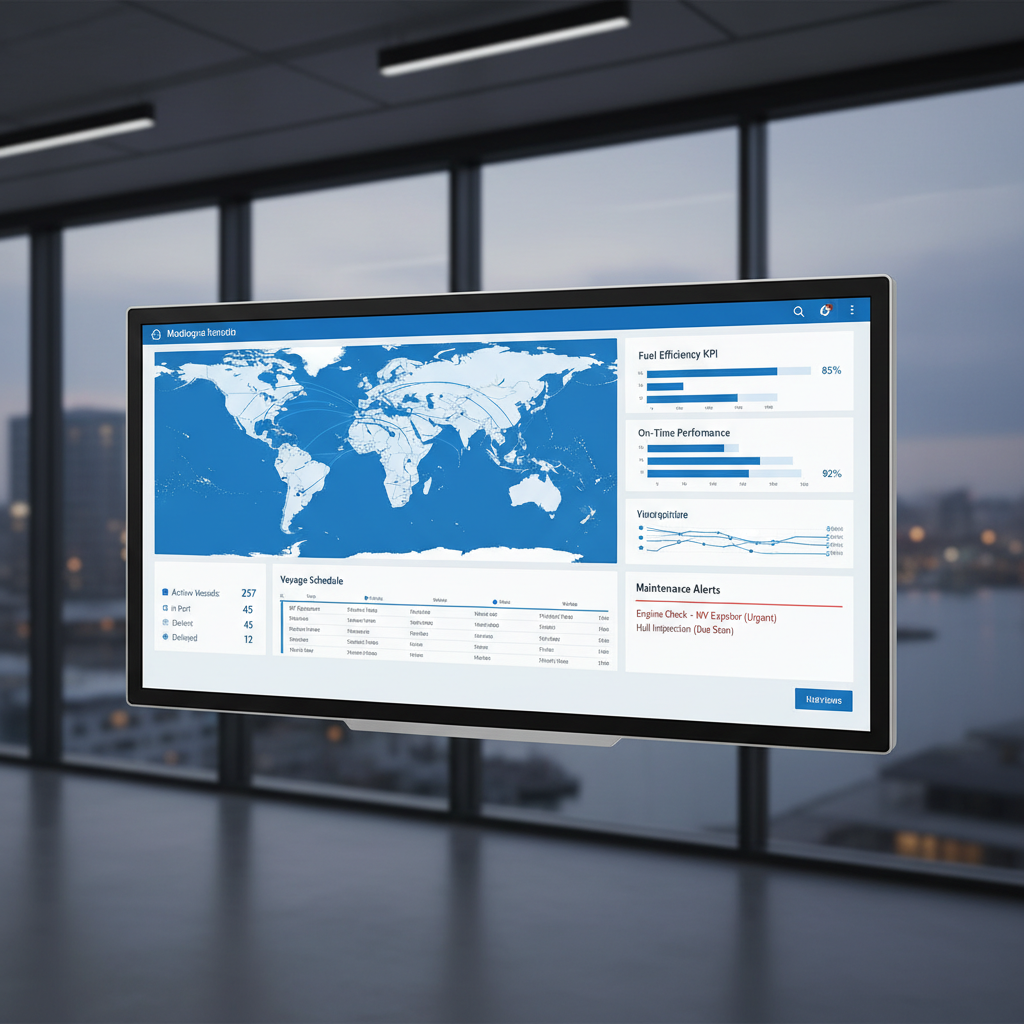
Commercial maritime software encompasses digital tools that help shipping companies, port authorities, charter operators, and marine service providers run their operations more efficiently. Unlike consumer marine apps, commercial solutions are built for enterprise-scale operations — handling thousands of vessels, multi-currency financials, and complex regulatory frameworks across multiple jurisdictions.
The category has evolved significantly over the past decade. Early solutions were standalone tools handling a single function — a maintenance planner here, a crewing database there. Modern shipping management software integrates these capabilities into a single platform with shared data, role-based access, and real-time visibility across the entire operation. This shift from siloed systems to unified platforms is the defining trend shaping the market today.
Core Capabilities
| Module | Key Functions | Who Uses It |
|---|---|---|
| Fleet Management | Vessel tracking, maintenance scheduling (PMS), ISM compliance, dry-dock planning | Ship owners, fleet managers |
| Voyage Planning | Route optimization, weather routing, bunker consumption forecasting, ETA calculations | Operations teams, charterers |
| Crew Management | Certification tracking, rotation planning, payroll, MLC compliance | HR departments, crewing agencies |
| Port & Terminal Ops | Berth allocation, cargo handling, gate management, yard planning | Port authorities, terminal operators |
| Financial Management | Multi-currency accounting, P&L per vessel, charter hire reconciliation, budgeting | Finance teams, CFOs |
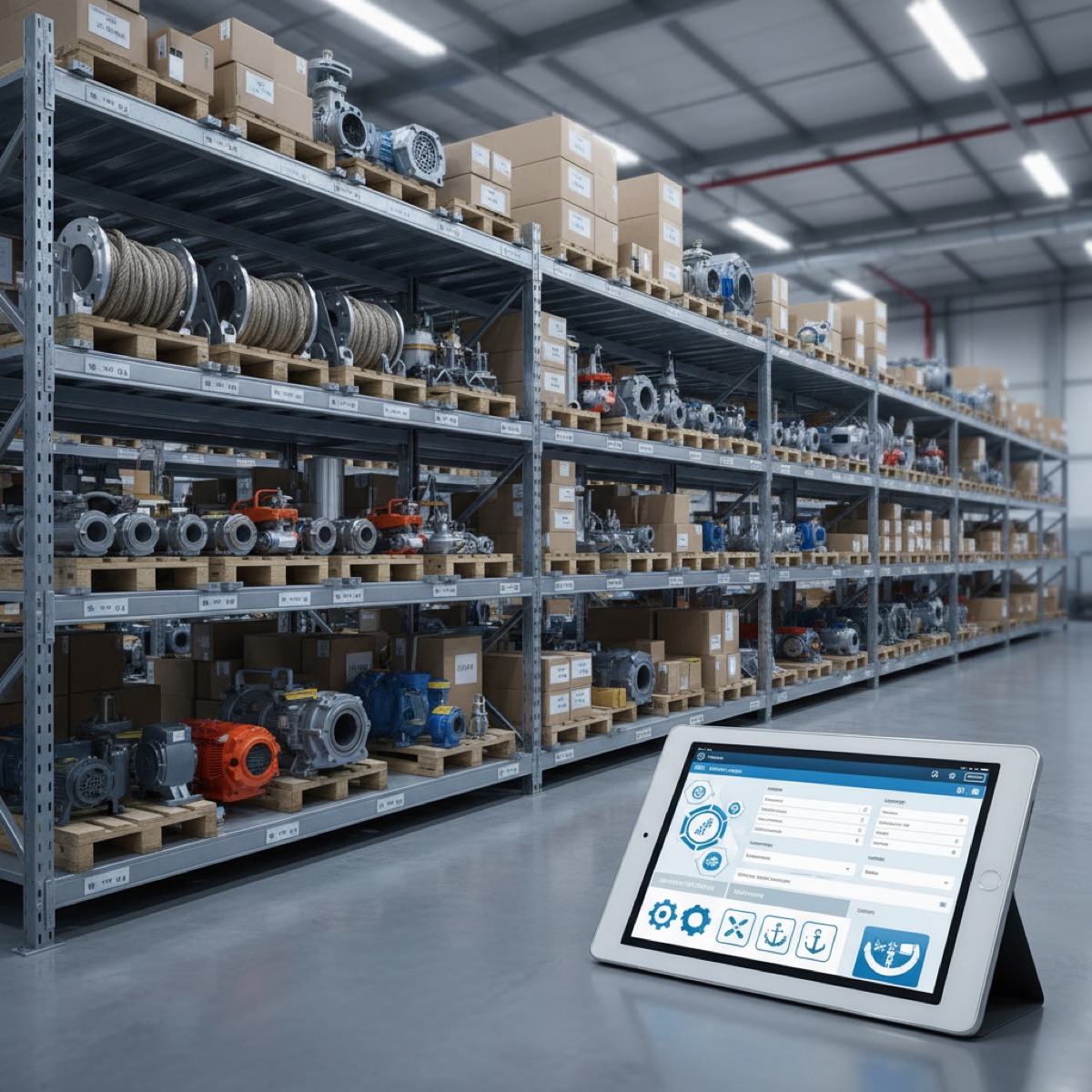
| Procurement | Spare parts inventory, supplier management, purchase orders, delivery tracking | Technical managers, procurement officers |
| Compliance & Safety | ISM/ISPS documentation, SOLAS checklists, environmental reporting, audit trails | DPAs, safety officers |
For a deeper look at how these modules work together, explore the full SupaMaritime solutions overview or browse individual modules to see how each component fits your operation.
Why Commercial Shipping Companies Need Specialized Software
Generic ERP systems like SAP or Oracle lack the domain-specific features that maritime operations demand. A study by McKinsey & Company (2023) found that shipping companies using purpose-built maritime software reduced operational costs by 15-25% compared to those relying on generic tools or manual processes.
Key reasons specialized software outperforms generic alternatives:
- Regulatory complexity — IMO, SOLAS, MARPOL, MLC, and flag state requirements change frequently. Maritime-specific software includes built-in regulatory frameworks that auto-update.
- Multi-entity structures — Ship-owning companies typically operate through SPVs (Special Purpose Vehicles), requiring vessel-level P&L and consolidated reporting.
- Real-time tracking — AIS integration, satellite connectivity, and IoT sensor data require purpose-built data pipelines.
- Industry workflows — Charter party management, bill of lading processing, and port state control inspections follow maritime-specific workflows that generic tools cannot model.

Implementation Challenges and How to Overcome Them
Even the best maritime software guide will acknowledge a hard truth: implementation is where most projects encounter the most resistance. Understanding these challenges upfront — and having a mitigation plan — is the difference between a successful digital transformation and a costly rollout that fails to deliver value.
Data Migration Complexity
Legacy maritime systems often hold years of maintenance records, crew certification histories, and financial data in formats that are difficult to extract and normalize. Organizations routinely underestimate the effort required to clean, map, and validate this data before importing it into a new system. A structured data audit at least three months before go-live is not optional — it is essential. Skipping this step leads to incomplete maintenance histories, inaccurate compliance records, and crew scheduling errors that can take months to untangle.
Crew and Shore Adoption
Maritime software is used by two fundamentally different user groups: shore-based staff (managers, accountants, HR professionals) and seafarers aboard vessels. These groups have different technical comfort levels, different connectivity environments, and different daily workflows. A platform that feels intuitive to a fleet manager in Athens may feel completely foreign to a chief engineer managing maintenance jobs at sea. Role-specific onboarding programs, video tutorials accessible offline, and superuser networks aboard vessels all contribute significantly to adoption rates. According to BIMCO, inadequate training is the leading cause of failed maritime software implementations.
Connectivity Constraints at Sea
Vessels operating in remote waters may have bandwidth as low as 64 Kbps on older VSAT connections. Software that requires continuous internet connectivity will fail in these environments. Look for platforms that support true offline operation — not just cached views, but fully functional modules with intelligent synchronization when connectivity is restored. This distinction is particularly important for maintenance management, where engineers need to log jobs, consume spare parts, and generate work orders without waiting for a satellite window.
Integration with Existing Systems
Most maritime organizations already have some combination of accounting software, AIS subscriptions, class society portals, and port community systems. A new maritime platform that cannot integrate with these existing tools creates data duplication and forces staff to maintain parallel systems. Before signing any vendor contract, map your existing technology ecosystem and validate that the new platform offers documented, supported integrations — not just theoretical API compatibility.
Change Management and Internal Politics
Digital transformation projects fail for organizational reasons as often as technical ones. Department heads who built their workflows around existing tools may resist change. Senior officers with decades of experience may be skeptical of software-driven processes. Executive sponsorship, clear communication of the business case, and early involvement of key stakeholders in the selection process are not soft skills — they are project-critical requirements that deserve as much attention as the technical specification.
Vendor Selection Criteria: What to Evaluate Before You Sign
With dozens of platforms competing in the commercial maritime software market, the selection process can feel overwhelming. The following criteria provide a structured framework for evaluating and comparing vendors objectively.
Deployment Model
| Model | Pros | Cons | Best For |
|---|---|---|---|
| Cloud (SaaS) | No infrastructure, automatic updates, accessible anywhere | Recurring costs, internet dependency | Growing fleets, multi-office operations |
| On-Premise | Full data control, one-time license | IT overhead, manual updates, limited remote access | Government/military, high-security environments |
| Hybrid | Flexibility, offline capability for vessels | Complex setup, higher initial cost | Large fleets with vessel-shore data sync needs |
Integration Capabilities
Your maritime software should integrate with:
- AIS providers — for real-time vessel position data
- Weather services — for voyage optimization and safety alerts
- Accounting systems — bi-directional sync with existing ERP/accounting
- Port community systems — for electronic port clearance and documentation
- Class societies — for survey scheduling and certificate management
Scalability and Modularity
The platform should grow with your business. Key questions to ask vendors:
- Can I add vessel types (tankers, containers, ferries) without re-implementation?
- Does pricing scale linearly or are there volume discounts?
- Can I enable/disable modules independently?
- Is multi-language/multi-currency supported natively?
Vendor Stability and Support Model
Maritime software is a long-term commitment. Implementation and data migration alone may take six to eighteen months. You need a vendor that will still be actively developing and supporting the platform five years from now. Evaluate the vendor's funding structure, customer base size, and the quality of their support offering. A 24/7 support SLA matters less than the typical response time for critical issues and the depth of maritime domain knowledge in the support team.
Reference Customers in Your Segment
A vendor with strong references in tanker operations may not have relevant experience for ferry operators or marina management. Request references from companies that closely match your own: similar fleet size, similar vessel types, similar regulatory environment. Speak directly with their fleet managers and IT contacts — not just the vendor's nominated success stories.
Top Commercial Maritime Software Solutions Compared
| Solution | Specialization | Deployment | Best For |
|---|---|---|---|
| SupaMaritime | Full-stack maritime ERP (Fleet, Charter, Marina, Ferry, Broker, Port) | Cloud | Multi-segment operators seeking a unified platform |
| AMOS (by ABB) | Maintenance & procurement | On-Premise / Hybrid | Large tanker/bulk carrier fleets focused on PMS |
| DNV ShipManager | Fleet management, QHSE | Cloud | Fleets prioritizing class society integration |
| Danaos ONE | Ship & crew management | Hybrid | Container shipping companies |
| Veson IMOS | Commercial operations, chartering | Cloud | Chartering desks and commercial operators |
Implementation Best Practices
Based on industry data from BIMCO and our experience deploying across 50+ maritime organizations:
- Start with a pilot fleet — Deploy on 3-5 vessels first, validate workflows, then scale.
- Migrate data methodically — Historical maintenance records, crew certifications, and financial data should be cleaned and validated before import.
- Train by role — Masters need different training than shore-based accountants. Tailor training programs to each user group.
- Plan for vessel connectivity — Ships at sea have limited bandwidth. Ensure the software supports offline mode with intelligent sync.
- Define KPIs upfront — What does success look like? Reduced maintenance downtime? Faster voyage reporting? Lower bunker costs? Set measurable targets.
ROI of Commercial Maritime Software
A Deloitte Maritime Outlook (2024) analysis shows that digital adoption in shipping yields measurable returns. The figures below represent averages across a sample of fifty-vessel fleets and should be treated as indicative rather than guaranteed — actual results will depend on baseline efficiency, fleet type, and the depth of platform adoption.
| Area | Average Improvement | Annual Savings (50-vessel fleet) |
|---|---|---|
| Maintenance planning | 20-30% reduction in unplanned downtime | $1.2M - $2.4M |
| Bunker optimization | 5-12% fuel savings through route optimization | $3M - $7.2M |
| Crew management | 40% reduction in administrative overhead | $400K - $600K |
| Compliance | 60% faster PSC inspection preparation | $200K - $500K (avoided delays) |
| Procurement | 15-20% reduction in spare parts costs | $750K - $1M |
When building your internal business case, focus on the two or three areas where your organization's current pain is sharpest. A fleet with chronic unplanned off-hire events will see faster ROI from maintenance automation. A high-frequency chartering desk will benefit most from voyage and commercial operations tools. Starting with the highest-value use cases accelerates payback and builds organizational confidence for broader rollout.
Want to model ROI for your own fleet? Book a personalized demo and our team will walk through a business case tailored to your vessel types and operational profile.
Frequently Asked Questions
What is commercial maritime software?
Commercial maritime software is a category of enterprise applications designed for the shipping, port, and marine industries. It typically includes modules for fleet management, voyage planning, crew management, financial reporting, procurement, and regulatory compliance — all tailored to maritime-specific workflows and regulations. Unlike generic business software, maritime platforms understand the operational realities of vessels, crews, charters, and ports.
How much does commercial maritime software cost?
Pricing varies significantly based on fleet size and modules selected. Cloud-based (SaaS) solutions typically range from $500-$2,000 per vessel per month. On-premise solutions involve a one-time license fee of $50,000-$500,000 plus annual maintenance of 15-20%. Enterprise implementations with full customization can exceed $1M. Most vendors offer modular pricing, so organizations can start with core fleet management and add modules as adoption matures.
What is the difference between maritime software and a generic ERP?
Maritime software is purpose-built for the shipping industry. It includes domain-specific features like AIS vessel tracking, IMO regulatory compliance frameworks, charter party management, and multi-entity vessel accounting (SPV structures). Generic ERPs lack these maritime workflows and typically require expensive custom development to handle shipping operations. The total cost of adapting a generic ERP to maritime use cases frequently exceeds the cost of a purpose-built platform.
Can maritime software work offline on vessels?
Yes, modern maritime software solutions offer hybrid deployment with offline-capable vessel applications. Data synchronizes with shore-based servers when connectivity is available. This is critical for vessels operating in areas with limited satellite bandwidth. When evaluating vendors, ask specifically about offline capabilities — some platforms offer read-only caching while others support full offline transaction processing, which is a meaningful operational difference.
How long does it take to implement commercial maritime software?
A typical implementation takes 3-6 months for a single module and 12-18 months for a full enterprise deployment. Key variables include data migration complexity, the number of vessels, integration requirements, and the level of customization needed. A phased approach starting with 3-5 pilot vessels is recommended. Organizations that skip the pilot phase and attempt fleet-wide rollouts from day one consistently report longer total implementation timelines and higher defect rates.
What are the biggest risks in a maritime software implementation?
The most common risks are data quality issues during migration, low adoption by seafarers due to inadequate training, underestimating integration complexity with existing systems, and insufficient executive sponsorship leading to project scope creep. Each of these risks is manageable with proper planning, but all require dedicated attention and resources. Partnering with a vendor who provides structured implementation services — rather than just a software license — significantly reduces exposure to these risks.
The Future of Commercial Maritime Software
The next five years will see commercial maritime software evolve from operational management tools into intelligent decision-support platforms. Artificial intelligence is already being applied to predictive maintenance — identifying mechanical anomalies from sensor data before failures occur. Machine learning models are improving bunker optimization by incorporating real-time weather, current data, and port congestion forecasts. Digital twin technology is enabling virtual testing of maintenance strategies and route changes without operational risk.
Regulatory drivers will also shape the roadmap. The IMO's Carbon Intensity Indicator (CII) requirements and the European Union's FuelEU Maritime regulation are forcing shipping companies to track and report emissions data with a level of precision that spreadsheets simply cannot support. Maritime software platforms that embed CII monitoring, EEXI calculations, and fuel consumption reporting will become compliance infrastructure, not optional tools.
Interoperability between platforms is another emerging theme. As port community systems, cargo tracking networks, and banking platforms adopt open API standards, maritime software will increasingly serve as the connective tissue integrating data across the entire shipping ecosystem — from vessel to shipper to port to financier.
Start Your Digital Transformation Today
Commercial maritime software is no longer a competitive differentiator reserved for the largest shipping conglomerates — it is the operational baseline for any organization that wants to manage costs, maintain compliance, and grow sustainably. The shipping companies that invest in unified digital platforms today are building the operational leverage that will define competitive advantage in the decade ahead.
SupaMaritime is purpose-built for commercial maritime operators across every segment: fleet managers, charter operators, port authorities, ferry companies, marine brokers, and marina operators. Our modular platform grows with your business, deploys in the cloud with full offline vessel support, and integrates with the AIS providers, class societies, and financial systems you already use.
Request a personalized demo to see how SupaMaritime fits your specific operation, or explore our full solutions catalog to learn how each module addresses the challenges covered in this guide. Our maritime specialists are available to model ROI for your fleet and help you build the internal business case for digital transformation.
Last updated: March 2026