Ship Provisioning & Procurement Software: A Complete Guide
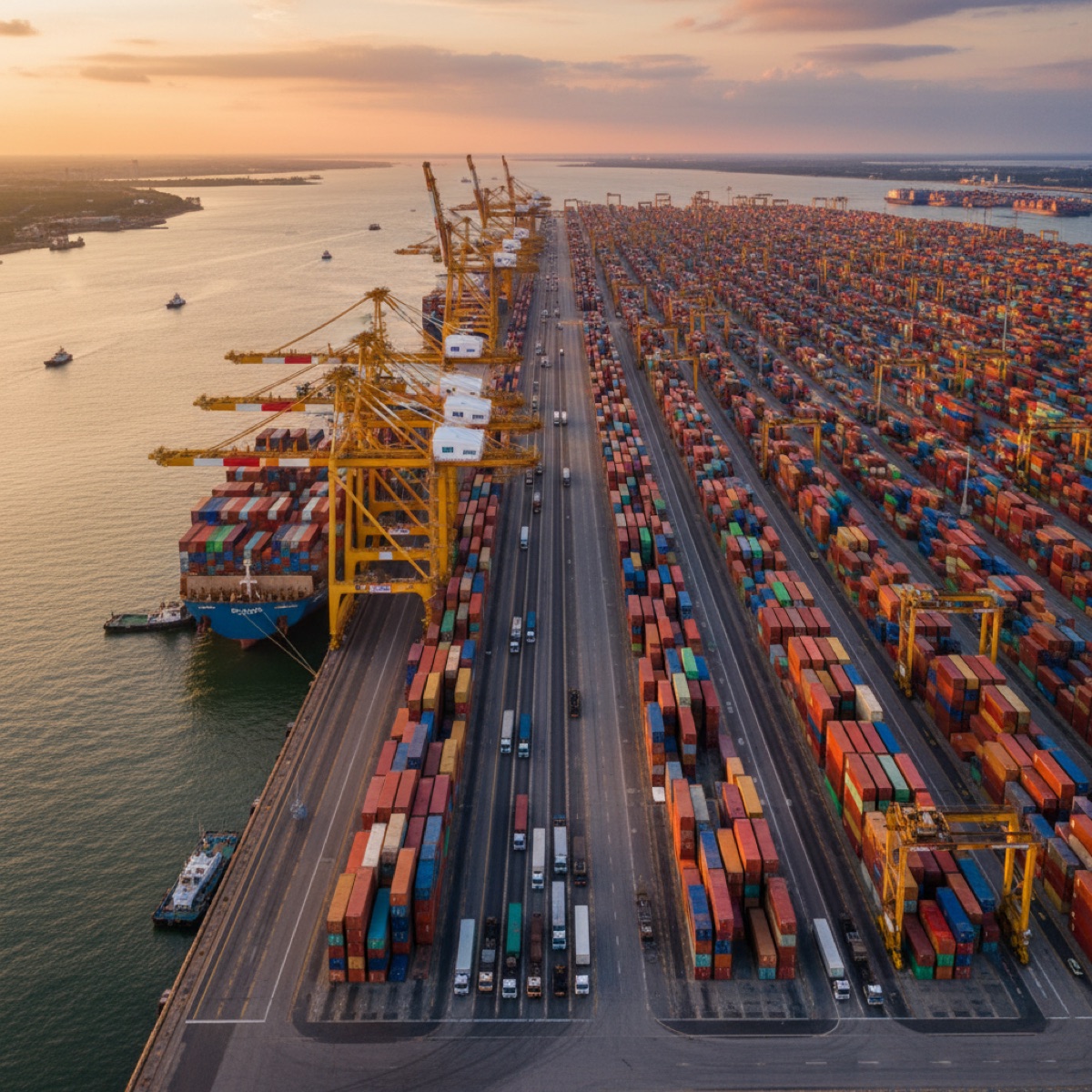
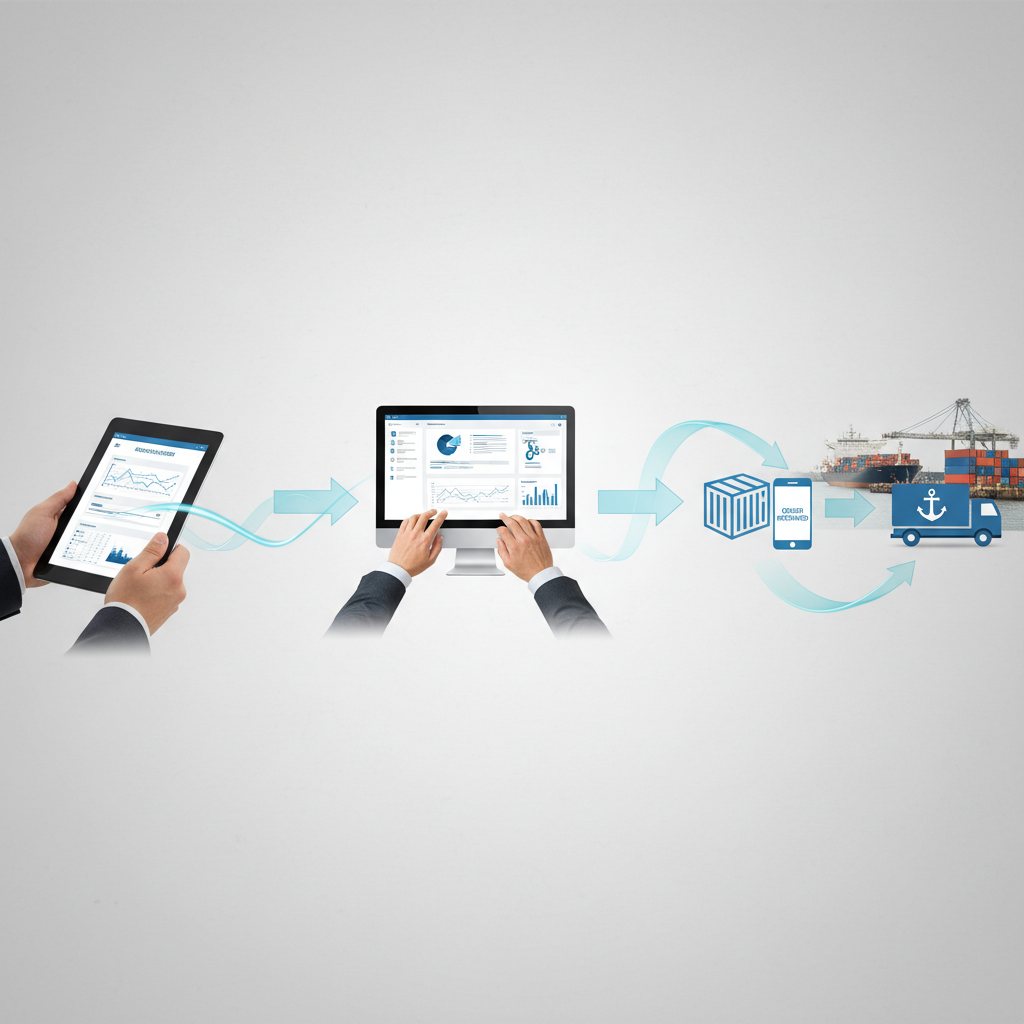
Ship provisioning software is the backbone of efficient maritime procurement — a purpose-built system that manages the acquisition of spare parts, consumables, provisions (food and stores), lubricants, and technical equipment for vessels, connecting shore-based purchasing teams with vessel crews through a centralized, auditable workflow. For any fleet operator seeking to reduce operating expenditure and eliminate supply-chain chaos, investing in dedicated ship provisioning and procurement software is no longer optional — it is a competitive necessity.
Maritime procurement is notoriously complex: a single vessel can have 50,000–100,000 spare part line items across thousands of equipment components, sourced from hundreds of suppliers in dozens of countries. According to DNV's Maritime Digitalization Report (2024), procurement and spare parts management account for 25–35% of vessel operating expenditure (OPEX), making it one of the highest-impact areas for digital optimization. Yet many fleet operators still rely on spreadsheets, email chains, and disconnected ERP modules that were never designed for the realities of global ship management.
Key Challenges in Maritime Procurement
- Global supply chain complexity — Parts must be delivered to vessels calling at ports worldwide. Logistics coordination across time zones, customs regulations, and local agents is a constant challenge.
- Equipment maker diversity — A single vessel may have engines from MAN, generators from Caterpillar, pumps from Alfa Laval, and navigation equipment from Furuno. Each requires maker-specific spare parts catalogs.
- Inventory visibility — Without centralized software, shore offices don't know what's actually on board. This leads to over-ordering (wasted capital) or under-ordering (equipment failures).
- Budget control — Procurement budgets are set per vessel but purchases happen globally. Real-time budget tracking prevents overruns.
- Supplier management — Evaluating supplier performance across price, delivery time, quality, and geographic coverage requires structured data.
- Regulatory compliance — MARPOL, ISM Code, and flag-state requirements demand complete documentation for certain consumables and chemicals purchased on board. Manual systems leave audit trails full of gaps.
Core Features of Ship Provisioning Software
| Feature | What It Does | Business Impact |
|---|---|---|
| Electronic Requisitions | Vessel crew creates digital requisitions linked to equipment and job orders | Eliminates email/fax, 70% faster processing |
| Maker Catalogs | Integrated spare parts catalogs from major equipment manufacturers | Correct part identification, reduces wrong orders by 90% |
| RFQ Management | Automated request for quotation to approved suppliers with side-by-side comparison | 15–20% cost savings through competitive bidding |
| Purchase Orders | Digital PO creation, approval workflows, and supplier acknowledgment tracking | Complete audit trail, budget control |
| Delivery Tracking | Track shipment from supplier to agent to vessel with ETD/ETA visibility | Reduces delivery failures and missed port calls |
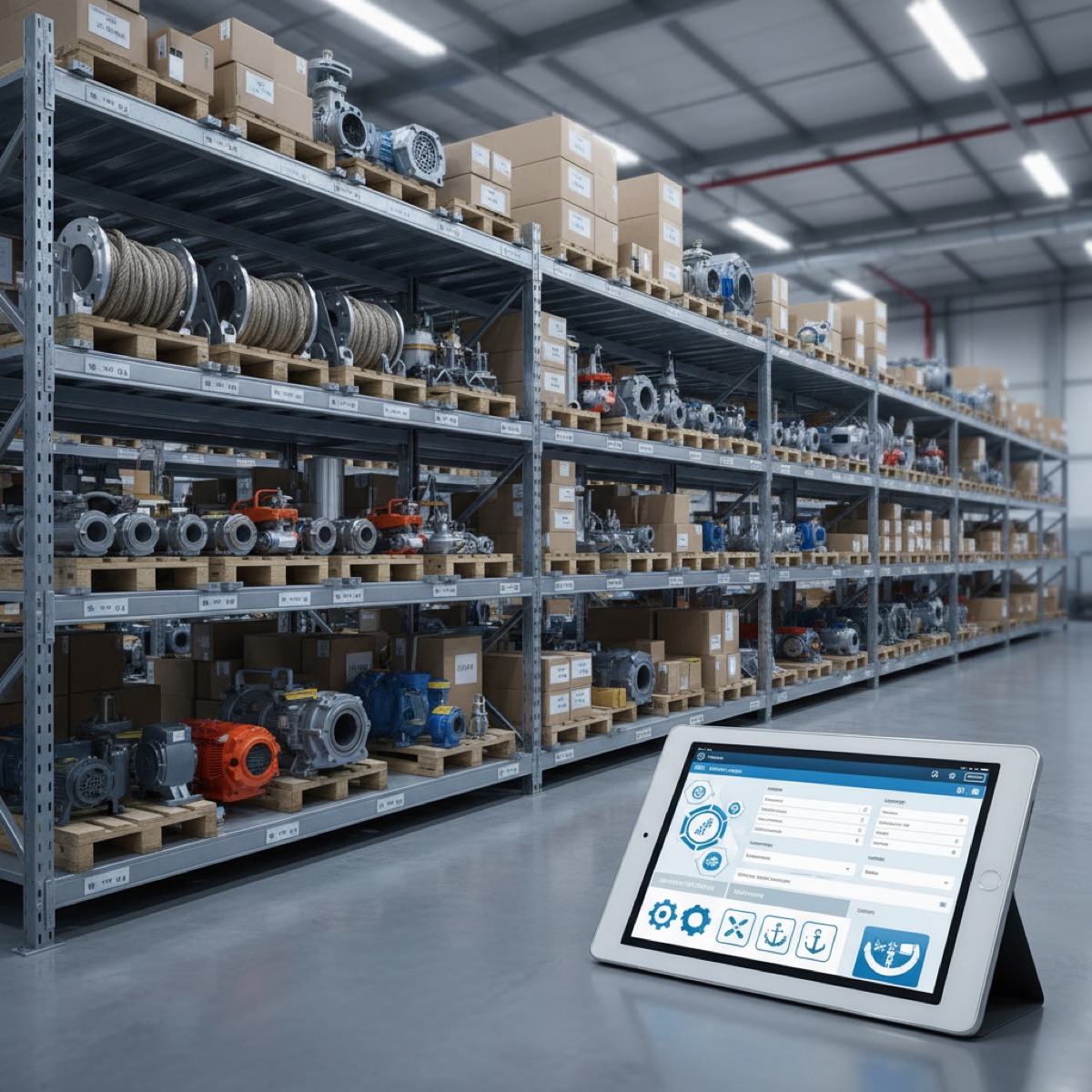
| Vessel Inventory | ROB (Remaining on Board) tracking for critical spares, consumables, and provisions | Prevents stockouts and over-ordering |
| Budget Management | Per-vessel budget allocation, commitment tracking, variance reporting | Real-time OPEX visibility per vessel |
| Supplier Scorecards | Automated scoring based on price, delivery performance, quality, and responsiveness | Data-driven supplier selection |
How Ship Procurement Software Reduces Costs
Based on data from maritime management companies operating 50+ vessel fleets:
| Cost Area | Without Software | With Software | Savings |
|---|---|---|---|
| Spare parts costs | $450K/vessel/year | $360K/vessel/year | 20% reduction |
| Procurement admin time | 2.5 FTE per 20 vessels | 1.0 FTE per 20 vessels | 60% time savings |
| Wrong part orders | 8–12% of orders | <1% of orders | 90% reduction |
| Emergency purchases (premium pricing) | 15% of total spend | 5% of total spend | 67% reduction |
Integration with Planned Maintenance
The highest-value implementation connects procurement directly to the Planned Maintenance System (PMS). When a maintenance job is scheduled, the software automatically checks spare parts availability, generates requisitions for missing parts, and times delivery to the next port call. This preventive approach reduces emergency purchases and unplanned downtime. According to industry data from Inmarsat Maritime's Fleet Management Report (2024), fleets with tightly integrated PMS and procurement modules see a 30–40% reduction in unplanned maintenance costs compared to those operating disconnected systems.
Beyond maintenance integration, leading vessel supply management platforms also connect with:
- Crew management systems — Provision quantities automatically scale to the number of crew members on board and voyage duration, reducing food waste and ensuring adequate catering supply.
- Voyage management — Port calls and ETAs feed directly into delivery scheduling, ensuring parts arrive when the vessel is in port and not days after departure.
- Financial management — Purchase orders flow directly into accounts payable, eliminating manual re-entry and reconciliation between procurement and finance teams.
Implementation: What to Expect
Deploying maritime procurement software for a mid-size fleet typically follows a structured phased approach. Understanding what each phase involves helps operators plan resources and set realistic expectations.
Phase 1: Data Preparation (4–6 Weeks)
Before go-live, your vessel and equipment data must be migrated or built out in the new system. This involves loading vessel particulars, equipment hierarchies, existing spare part catalogs, and approved supplier lists. For fleets with robust legacy systems, this migration can be partially automated. For fleets moving from spreadsheets, expect manual data entry effort during this phase. The investment pays off immediately in the accuracy of the operational system.
Phase 2: Pilot Fleet (8–12 Weeks)
Run the new procurement software on 2–5 vessels in parallel with existing processes. This validates workflows, identifies any gaps in supplier or catalog data, and builds crew and shore-team confidence before full rollout. Key performance indicators to track during the pilot include requisition processing time, order error rates, and delivery performance.
Phase 3: Fleet Rollout (12–20 Weeks)
Expand to the full fleet in waves of 10–20 vessels per wave. Provide role-specific training for vessel officers (requisition creation), shore procurement teams (approval and ordering), and management (reporting and budget oversight). Most operators complete full rollout within 6 months of go-live on the pilot.
Phase 4: Optimization (Ongoing)
Post-rollout, focus on supplier rationalization (consolidating to preferred vendors who deliver consistent performance), catalog enrichment (adding missing spare part records), and workflow refinement. Many operators achieve their largest cost savings in months 6–18 as data quality improves and the system's analytical capabilities are fully leveraged.
ROI Calculation for a 20-Vessel Fleet
To make the business case concrete, consider a mid-size tanker operator with 20 vessels, each spending an average of $450,000 per year on procurement. Total fleet procurement spend: $9 million per year.
- Spare parts savings (20%): $1.8M per year
- Administrative cost reduction (60% of 1.5 FTE saved): $90K per year
- Reduction in emergency purchase premiums: $270K per year
- Total annual savings: approximately $2.16M
- Typical software cost (SaaS, 20 vessels): $120,000–$200,000 per year
- Net annual benefit: $1.96M–$2.04M
- Payback period: 1–2 months
These figures are conservative. Operators who also leverage the supplier scorecard data to negotiate volume agreements and preferred supplier contracts often achieve an additional 5–10% reduction in unit costs over a two-year period.
Vendor Selection: How to Evaluate Ship Provisioning Software
- Maker catalog coverage — Does it include catalogs from your fleet's major equipment manufacturers? Integrated catalogs from MAN, Wartsila, ABB, Alfa Laval, and Caterpillar should be standard.
- Supplier network — Does the platform have a built-in supplier directory, or do you manage suppliers manually? A pre-populated directory with thousands of vetted maritime suppliers significantly reduces setup effort.
- Vessel-shore sync — How does data synchronize between vessel and shore when connectivity is limited? Look for offline-capable vessel apps with intelligent sync, not systems that simply fail when satellite bandwidth is constrained.
- PMS integration — Can it link procurement directly to maintenance jobs and running-hours triggers? This integration is what separates reactive purchasing from predictive supply chain management.
- Multi-currency & multi-entity — Does it handle procurement across different management companies, currencies, and accounting entities? Essential for ship managers and holding companies with diverse fleets.
- Reporting depth — Can you analyze spend by vessel, equipment type, supplier, port, and time period? Rich analytics are the mechanism by which savings are identified and tracked.
- Cloud vs. on-premise — Cloud-based (SaaS) solutions offer lower IT overhead, automatic updates, and anywhere access. See our guide on maritime management modules for a full comparison.
- Implementation support — Assess the vendor's data migration capability and onboarding methodology. A poorly managed implementation can negate the software's benefits for 12–18 months.
Ready to see how SupaMaritime's procurement module transforms vessel supply management? Request a live demo tailored to your fleet type and size.
Best Practices for Maritime Procurement Management
Standardize Your Parts Catalog Before Go-Live
The single greatest predictor of procurement software success is the quality of your spare parts data. Invest time before implementation in cleaning up part numbers, linking parts to equipment, and standardizing naming conventions. A clean catalog means fewer requisition errors, faster approval cycles, and more accurate inventory counts from day one.
Implement a Three-Quote Rule Systematically
Configuring the software to require three supplier quotes for any purchase above a threshold (e.g., $500) delivers consistent competitive pricing without adding administrative burden. The RFQ automation handles the distribution and comparison — procurement teams simply select the best offer.
Use Delivery Performance Data to Rationalize Your Supplier Base
Most fleets use too many suppliers. After six months of operation, the supplier scorecard data will clearly identify which vendors deliver on time, at the right price, with the correct parts. Use this data to consolidate to a shorter list of preferred suppliers and negotiate volume agreements. This approach typically yields an additional 8–12% cost reduction beyond the initial software savings.
Connect Inventory Reorder Points to Consumption Data
Rather than manually reviewing stock levels, configure automatic reorder triggers based on minimum stock thresholds linked to historical consumption rates and voyage schedules. This eliminates the risk of running out of critical spares at sea while simultaneously preventing the accumulation of slow-moving inventory that ties up working capital.
Frequently Asked Questions
What is ship provisioning software?
Ship provisioning software is a maritime-specific procurement and inventory management system. It handles the purchasing of spare parts, consumables, provisions (food/stores), and technical equipment for vessels. The software connects vessel crews with shore-based procurement teams and manages the entire process from requisition to delivery tracking, with full budget visibility and audit trails.
How much can ship procurement software save?
Companies typically see 15–20% reduction in spare parts costs through competitive bidding automation, 60% reduction in procurement administrative time, and 90% fewer wrong part orders through integrated maker catalogs. For a 20-vessel fleet spending $9 million per year on procurement, this translates to $1.5M–$2M in annual savings — typically recovering the software investment within the first one to two months of operation.
Does ship provisioning software work offline?
Yes, modern solutions offer offline-capable vessel applications. Crew members create requisitions offline, and data syncs with shore systems when connectivity is available via satellite or port Wi-Fi. This is critical for vessels operating in areas with unreliable or expensive satellite bandwidth.
How does ship provisioning software integrate with maintenance systems?
Best-in-class maritime procurement software integrates directly with the Planned Maintenance System (PMS). When a maintenance job is due, the system checks spare parts availability, automatically generates requisitions for missing items, and schedules delivery to align with the vessel's next port call. This closes the loop between maintenance planning and supply chain execution, reducing both unplanned downtime and emergency purchase costs.
What is the typical implementation timeline?
For a 20-vessel fleet, a full procurement software implementation typically takes 4–6 months from contract to fleet-wide go-live. A well-planned phased approach — pilot fleet first, then broader rollout — reduces risk and allows the team to refine workflows before scaling. Vendors with maritime-specific implementation experience can significantly accelerate this timeline. Explore SupaMaritime's fleet management solutions to understand the full scope of what's possible.
Conclusion: Modernizing Vessel Supply Management
Ship provisioning and procurement software represents one of the clearest ROI opportunities in commercial shipping today. With procurement accounting for 25–35% of vessel OPEX, even modest efficiency gains translate into material savings across a fleet. The technology is mature, the implementation methodology is proven, and the risk of change is manageable when approached with a structured phased plan.
The question for fleet operators is no longer whether to adopt dedicated maritime procurement software, but which platform best fits their fleet composition, operational model, and integration requirements. As vessel supply management becomes increasingly automated and data-driven, the operators who invest now will have a compounding advantage: better supplier relationships, lower unit costs, and faster decision-making — all built on the rich historical data that only a purpose-built maritime procurement system can provide.
To explore how SupaMaritime's integrated procurement module fits into a complete fleet management solution, visit our demo page or review the full suite of maritime management modules.
Last updated: March 2026