Port Terminal Operations Software: Features, Benefits & Top Solutions
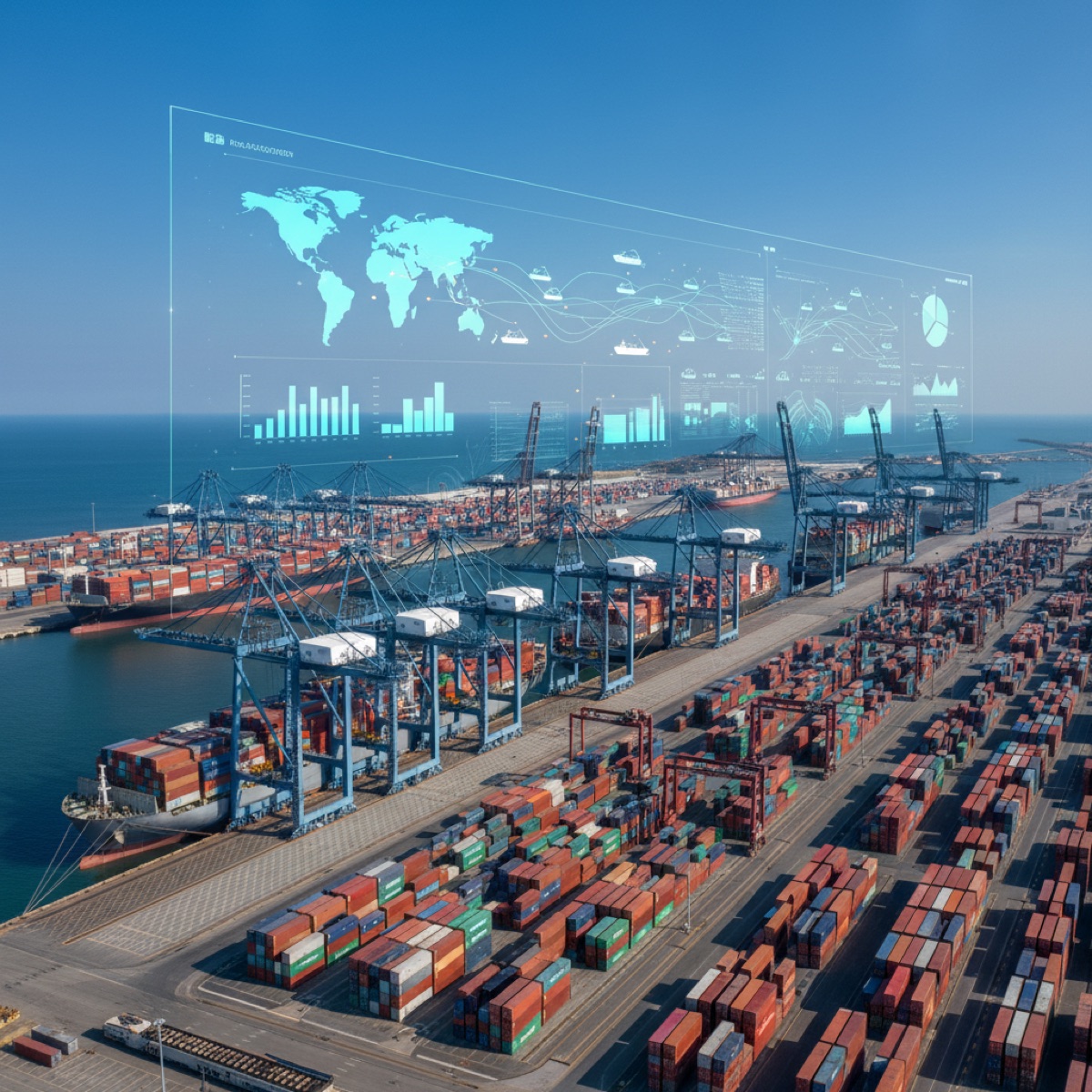
Port terminal operations software — also known as a Terminal Operating System (TOS) or port management software — is the technological backbone of every efficient modern port. A TOS manages the complete flow of cargo, vessels, trucks, and equipment within a port terminal, coordinating berth allocation, yard planning, gate operations, and equipment dispatch to maximize throughput while minimizing vessel turnaround times.
The global port digitization market is accelerating rapidly. According to IAPH (International Association of Ports and Harbours, 2024), 82% of ports worldwide are actively investing in digital transformation, with terminal operating systems being the highest-priority investment area. Ports that fail to modernize risk losing cargo volumes to more efficient competing terminals.
What Does Port Terminal Operations Software Do?
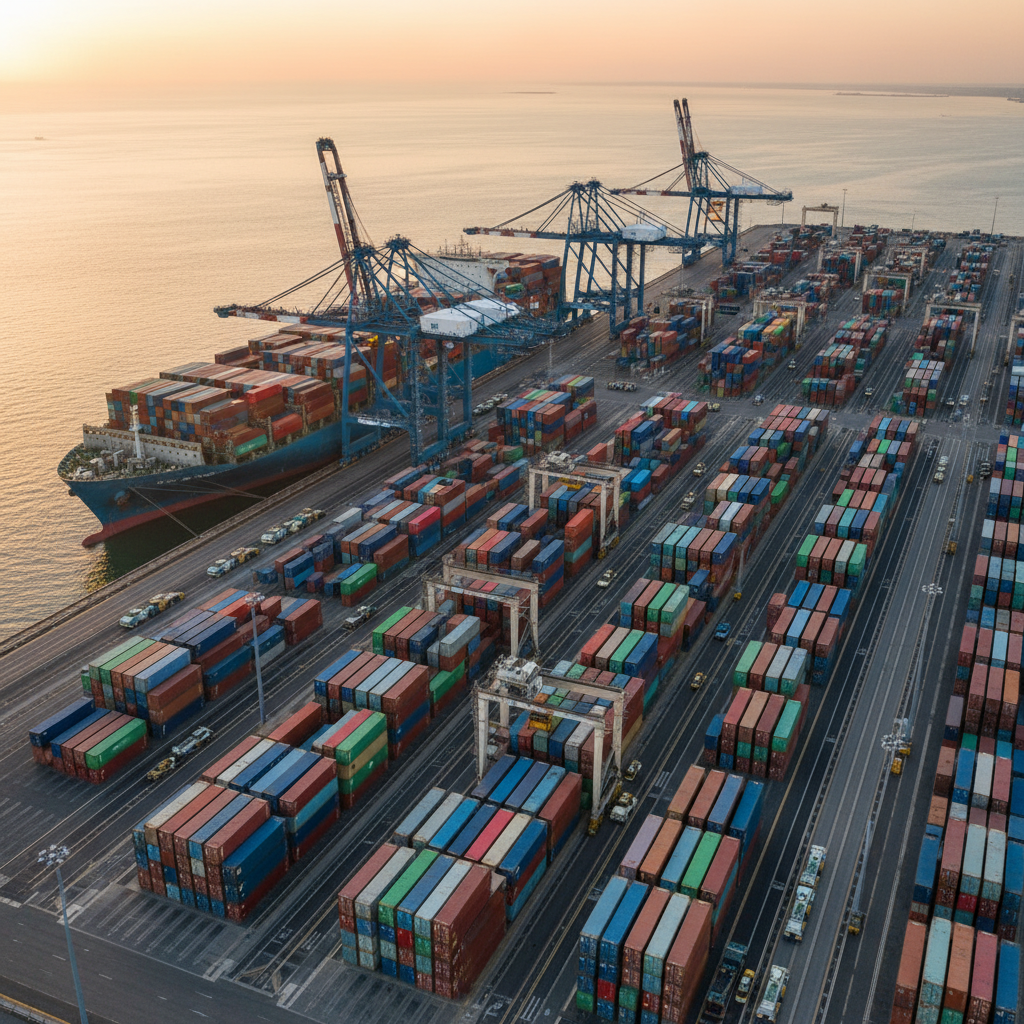
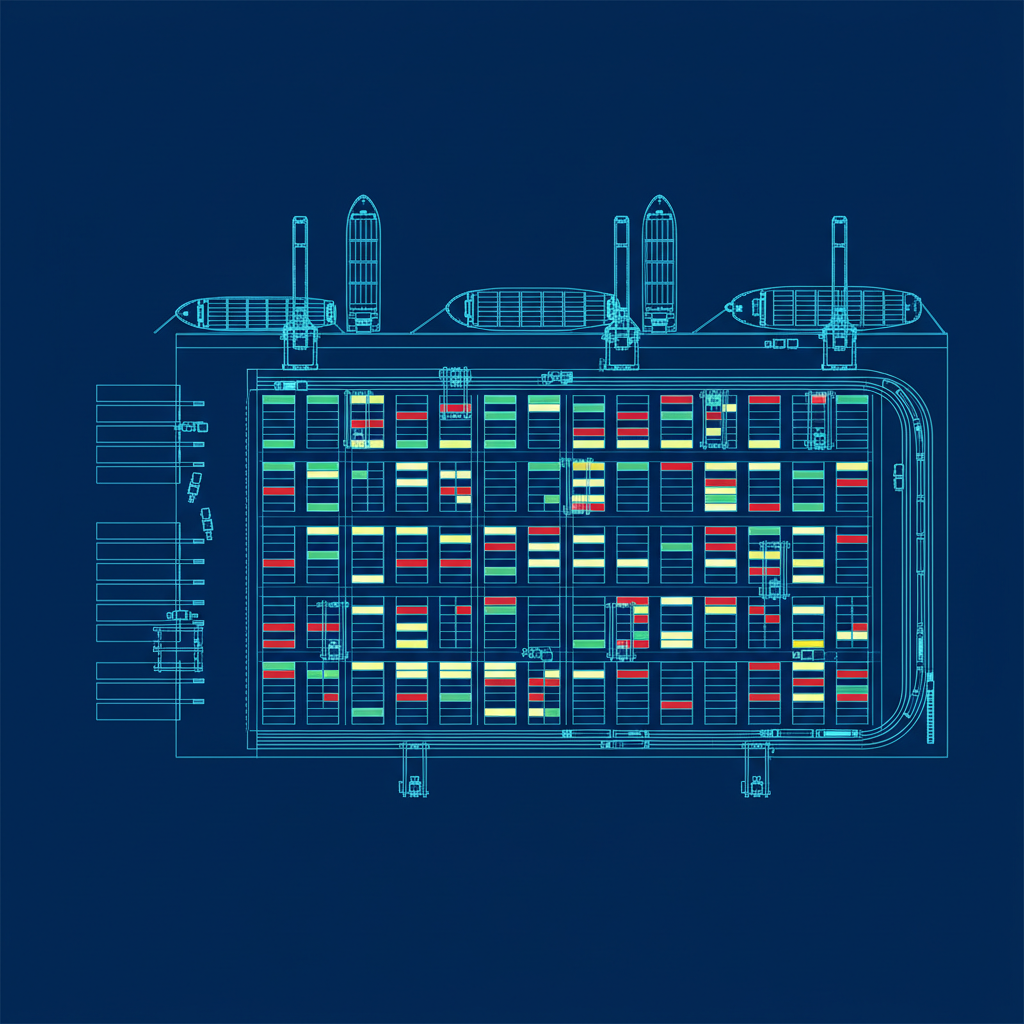
A terminal operating system (TOS) acts as the central nervous system of a port. It orchestrates every movement — from the moment a vessel announces its arrival to when the last container leaves the gate on a truck or train. Key functional areas include:
| Function | What It Manages | Key Metrics Improved |
|---|---|---|
| Berth Planning | Vessel scheduling, berth allocation, draft/tide calculations, priority management | Berth utilization rate, vessel waiting time |
| Yard Management | Container positioning, block/bay/row/tier allocation, reefer monitoring, hazmat segregation | Yard density, rehandle ratio |
| Gate Operations | Truck appointment scheduling, OCR recognition, damage inspection, documentation verification | Gate turnaround time, truck queue length |
| Vessel Operations | Stowage planning, crane sequencing, loading/discharge optimization, hatch management | Crane productivity (moves/hour), vessel turnaround |
| Equipment Dispatch | RTG/RMG assignment, trailer pooling, equipment maintenance alerts, operator scheduling | Equipment utilization, fuel consumption |
| Rail Operations | Rail car planning, intermodal transfers, rail yard management | Rail dwell time, rail-to-truck ratio |
Why Port Terminals Need Specialized Software
Port terminal operations are uniquely complex. A medium-sized container terminal handles 500,000–2,000,000 TEU annually, with each container touching 4–6 pieces of equipment and requiring coordination across multiple parties (shipping lines, truckers, customs, freight forwarders).
Key challenges that terminal software addresses:
- Vessel schedule unpredictability — 35–40% of container vessels arrive outside their scheduled window (Drewry Maritime Research, 2024). Software must dynamically reallocate berths and resources.
- Yard congestion — Without optimization, yard utilization above 65% leads to exponential increases in rehandling. TOS algorithms maintain efficiency up to 80–85%.
- Multi-modal coordination — Containers transfer between vessels, trucks, rail, and barges. Each mode has different scheduling constraints.
- Regulatory compliance — Customs clearance, dangerous goods segregation, trade compliance screening, and environmental regulations require real-time rule enforcement.
Key Features to Evaluate in Port Management Software
1. Berth Management
Look for dynamic berth allocation that considers vessel LOA, draft restrictions, tidal windows, crane reach, and commercial priorities. Advanced systems use AI to optimize berth windows and predict delays before they cascade into costly operational disruptions.
2. Yard Optimization Algorithms
The best TOS solutions use AI-driven yard planning to minimize rehandling moves. Top systems achieve a rehandle ratio below 1.5 (industry average is 2.2–2.8), saving $3–5 per container move. At a 300,000 TEU terminal, reducing the rehandle ratio from 2.5 to 1.5 can save over $600,000 per year in crane time alone.
3. Real-Time Equipment Tracking
GPS/RFID tracking of RTGs, reach stackers, and trucks enables automated dispatch and reduces equipment idle time by 20–35%. Integration with onboard telemetry systems also improves predictive maintenance scheduling, reducing unplanned downtime.
4. Gate Automation
OCR camera integration for container number recognition, damage detection, seal verification, and automated documentation checks reduces gate processing from 3–5 minutes to under 60 seconds per truck. Automated truck appointment systems further reduce peak-hour congestion and driver wait times.
5. Community Integration
Port Community System (PCS) integration enables electronic data exchange with customs, shipping lines, freight forwarders, and hinterland operators. This eliminates manual re-keying of data across organizations and accelerates customs clearance timelines by 30–50%.
Implementation Best Practices for Port Terminal Software
Deploying a new terminal operating system is one of the most operationally sensitive IT projects a port can undertake. A poorly managed TOS implementation can disrupt live operations, erode shipper confidence, and delay ROI by years. Following proven implementation best practices significantly reduces these risks.
Phase the Rollout Carefully
The most successful implementations use a phased approach — typically starting with yard management and berth planning, then adding gate automation and vessel operations modules. Trying to go live with all modules simultaneously is the leading cause of TOS project failures. A phased timeline of 6–18 months for mid-size terminals is considered best practice by leading maritime consultants.
Invest in Data Migration and Cleansing
Historical data quality directly determines how quickly the new TOS produces accurate results. Before go-live, terminals should audit equipment databases, vessel call records, and customer profiles. Poor data at launch leads to incorrect yard positions, misrouted containers, and lost crane time that can take months to correct. Dedicating 10–15% of the project budget specifically to data migration activities is a hallmark of successful deployments.
Train Operational Staff Thoroughly
A TOS is only as effective as the people operating it. Best-in-class implementations dedicate 15–20% of the total project budget to training — including simulator environments where planners and dispatchers can practice without affecting live operations. Ongoing refresher training as software updates are released is equally important to sustaining performance gains over time.
Run Parallel Operations During Transition
Running the legacy system alongside the new TOS for 2–4 weeks during cutover provides a safety net. Staff can cross-check outputs, identify configuration errors, and build confidence before fully decommissioning the old platform. This approach has been shown to reduce post-launch incident rates by over 60% compared to hard-cutover implementations.
ROI Analysis: The Business Case for Port Management Software
Investing in a modern TOS or port management software platform requires significant capital, but the financial returns are well-documented across the industry. Here is how terminals typically build their ROI case:
Direct Revenue Gains
Faster vessel turnaround times directly increase a terminal's capacity without adding physical infrastructure. A terminal that reduces average vessel port stay by 4 hours can accommodate 2–3 additional vessel calls per berth per month, translating to incremental handling revenue of $200,000–$500,000 per berth annually, depending on the cargo mix and port tariff structure.
Cost Reductions
Equipment utilization improvements from automated dispatch typically cut fuel and maintenance costs by 15–20%. Gate automation reduces staffing requirements by 40–60% while processing trucks faster. Optimized yard planning eliminates an estimated $3–5 in unnecessary crane moves per container, adding up to millions of dollars annually at mid-to-large terminals.
Payback Periods by Terminal Size
- Small terminals (under 200K TEU): Cloud-based TOS with low upfront costs typically achieves payback within 12–18 months.
- Mid-size terminals (200K–500K TEU): Full TOS implementations typically achieve payback in 18–30 months.
- Large terminals (500K+ TEU): Enterprise TOS projects often achieve payback in 24–36 months, but deliver higher absolute dollar returns due to scale.
Interested in modeling the ROI for your specific terminal? Request a personalized SupaMaritime demo and our team will walk through a customized business case with data from comparable terminals.
Security and Compliance in Port Terminal Software
Port operations sit at the intersection of international trade, customs enforcement, and national security. Modern port management software must address a growing set of security and regulatory compliance requirements that have intensified significantly since 2020.
Cybersecurity Requirements
The IMO's Maritime Cyber Risk Management guidelines (MSC-FAL.1/Circ.3) require ports to integrate cyber risk management into their safety management systems. TOS platforms handling vessel and cargo data must comply with ISO 27001, support role-based access controls, provide full audit trails, and encrypt data in transit and at rest. High-profile ransomware attacks on ports — including incidents affecting major global terminal operators — have made cybersecurity a board-level concern for port operators worldwide.
Customs and Trade Compliance
A compliant TOS must integrate with national single window systems for pre-arrival declarations, automate dangerous goods segregation rules per the IMDG Code, enforce trade sanctions screening against OFAC and EU lists, and generate customs release documentation. Non-compliance can result in cargo holds, significant fines, and reputational damage with shipping line customers.
Environmental Compliance
Port carbon reporting obligations are growing under EU ETS (Emissions Trading System) for vessels calling European ports and EEXI/CII rating requirements under IMO 2023 regulations. Modern TOS platforms increasingly include bunker consumption reporting, shore power utilization tracking, and vessel emissions dashboards to support terminal environmental reporting obligations and sustainability commitments.
Integration with Existing Port Systems
A TOS rarely operates in isolation. Successful port technology ecosystems connect the TOS to a broader set of systems via APIs and EDI messaging standards. Key integration points that any modern port management software must support include:
- Port Community System (PCS): Electronic cargo manifests, customs clearance status, and payment instructions flow between the TOS and PCS in real time.
- Vessel Traffic Service (VTS): Vessel positions and arrival/departure confirmations feed directly into berth planning modules to enable dynamic scheduling.
- Crane Control Systems (CCS): Work instructions generated by the TOS are transmitted directly to crane automation systems, reducing manual radio communication and human error.
- Enterprise Resource Planning (ERP): Billing, invoicing, and financial reporting require clean data feeds from the TOS into ERP platforms like SAP or Oracle.
- Customer Portals: Shipping lines and freight forwarders expect real-time container track-and-trace via API or web portal, drawing live data from the TOS.
SupaMaritime's port management software is built with an API-first architecture, enabling rapid integration with existing legacy systems and third-party platforms. Explore our full solutions portfolio to see how our platform connects across your entire technology ecosystem.
Leading Port Terminal Software Solutions
| Solution | Type | Best For | Notable Clients |
|---|---|---|---|
| SupaMaritime Port Module | Cloud TOS + Port Management | Small to mid-size ports, multi-purpose terminals, marinas transitioning to commercial ops | Mediterranean & Caribbean ports |
| Navis N4 | Enterprise TOS | Large container terminals, automated terminals | PSA, Hutchison, ICTSI |
| TBA OSCAR | Enterprise TOS | Container and multi-purpose terminals | DP World, APMT |
| Tideworks Mainsail | Enterprise TOS | North American terminals | SSA Marine, Carrix |
| Jade Master Terminal | Mid-market TOS | Multi-purpose & breakbulk terminals | Ports in Asia-Pacific |
Frequently Asked Questions About Port Terminal Software
What is port terminal operations software?
Port terminal operations software (Terminal Operating System or TOS) is a specialized platform that manages all operational activities within a port terminal, including berth allocation, yard management, gate operations, vessel loading/discharge, and equipment dispatch. It coordinates the movement of cargo between vessels, trucks, and rail, serving as the central hub for all operational data and decisions.
What is the difference between a TOS and a Port Community System?
A TOS manages internal terminal operations (yard, berth, equipment, gate), while a Port Community System (PCS) manages data exchange between all port stakeholders (terminal, customs, shipping lines, freight forwarders, truckers). They are complementary systems that typically integrate via APIs or EDI messaging standards such as EDIFACT or XML.
How much does terminal operating software cost?
Cloud-based TOS solutions start at $5,000–$15,000/month for small terminals. Enterprise TOS implementations for large container terminals can cost $2M–$10M including hardware, licensing, customization, and implementation services. Mid-market cloud solutions like SupaMaritime offer lower entry points with per-transaction or per-vessel pricing that scales with your volumes.
Can a TOS work for non-container terminals?
Yes, modern TOS platforms support multiple cargo types including containers, breakbulk, dry bulk, liquid bulk, RoRo vehicles, and project cargo. Multi-purpose terminal configurations are available from most major vendors and are designed to handle the unique documentation, stowage, and operational requirements of each cargo type.
How long does a TOS implementation take?
Implementation timelines vary by terminal size and complexity. Cloud-based TOS deployments for small terminals can go live in 6–10 weeks. Mid-size terminal implementations typically take 6–12 months for a phased rollout. Large enterprise TOS projects at major container terminals can span 18–36 months from contract signature to full production cutover, particularly when significant infrastructure integration or automation upgrades are involved.
What is the biggest risk in a TOS implementation project?
The most commonly cited risk is data migration failure — when historical container, customer, and configuration data does not transfer accurately to the new system. This can cause operational disruptions, incorrect billing, and yard positioning errors post-launch. Engaging experienced implementation consultants and investing in pre-migration data cleansing significantly reduces this risk and improves go-live stability.
Conclusion: Choosing the Right Port Management Software
Port terminal operations software is no longer optional for terminals competing in the modern maritime supply chain. Whether you operate a small multi-purpose port or a large container terminal, the right TOS delivers measurable improvements in vessel turnaround times, yard efficiency, gate throughput, equipment utilization, and regulatory compliance.
The decision between an enterprise TOS and a cloud-based port management platform ultimately depends on your terminal's scale, budget, integration requirements, and growth trajectory. Smaller and mid-size terminals increasingly find that cloud-native solutions deliver 80–90% of the functionality of legacy enterprise systems at a fraction of the cost and implementation complexity.
Ready to see how modern port terminal operations software can transform your terminal's performance? Book a free SupaMaritime demo and our maritime operations specialists will walk you through a live demonstration tailored to your terminal type, cargo mix, and operational challenges. You can also explore our full solutions portfolio to discover how SupaMaritime addresses every aspect of port and maritime operations management.
Last updated: March 2026