Maritime Operations Software: The 2026 Guide to a Unified Platform
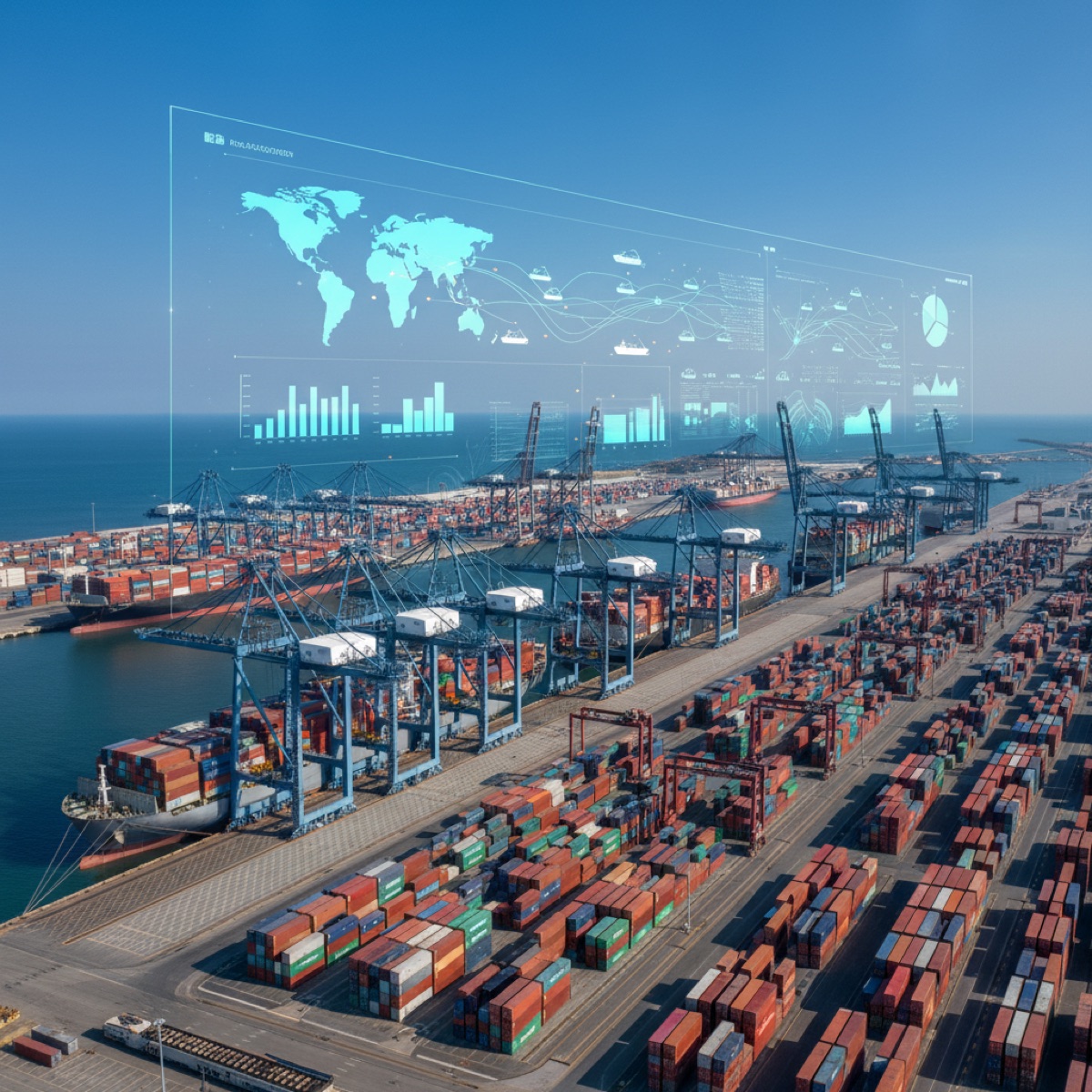
Maritime operations software is the connective tissue of a modern shipping business. It is the digital layer that ties together vessels, crews, ports, cargo, compliance and finance into a single operating picture. For ferry operators, merchant fleet managers and port and yacht agencies, the question in 2026 is no longer whether to digitise operations, but how to do it without recreating the fragmentation that has quietly drained margins for the past two decades.
This guide explains what maritime operations software is, why a single unified platform consistently outperforms a stack of disconnected point solutions, and how to evaluate, choose and implement the right system. Along the way we map the core capability areas to the three SupaMaritime modules so you can see exactly where a unified maritime software platform fits your business.
What Maritime Operations Software Actually Is
At its simplest, maritime operations software is the set of applications that run the day-to-day business of moving vessels, people and goods by sea. That spans far more than a single tool. A complete maritime operations platform typically covers vessel and fleet operations, port call management, crew administration, commercial and chartering workflows, compliance and certification, finance and invoicing, and the analytics that sit on top of all of it.
The defining characteristic of a true platform, as opposed to a collection of software, is shared data. When a crew change is recorded once and instantly updates the crew roster, the payroll calculation, the port call disbursement and the compliance certificate register, you have a platform. When each of those lives in a separate system and someone re-keys the same information four times, you have fragmentation wearing the costume of digitisation.
The Fragmentation Problem That Quietly Erodes Margins
Walk into almost any operations office and you will find the same picture: a planned maintenance system here, a separate crewing database there, a chartering spreadsheet, an accounting package that knows nothing about voyages, and a constellation of email threads and WhatsApp groups holding the operation together. It is common to find four to six disconnected systems plus a heavy dependence on Excel and messaging apps doing work that no one ever intended them to do.
Each of these tools may be perfectly good in isolation. The problem is the seams between them. Data is entered repeatedly, reconciliations are manual, and the single source of truth becomes whoever happened to update their copy most recently. The costs are rarely visible on a single invoice, which is precisely why they persist:
- Duplicate data entry across crewing, maintenance, finance and compliance, often the same fields keyed three or four times.
- Reconciliation overhead as teams spend hours matching figures between systems that should already agree.
- Decision latency because no one can see the full picture without assembling it manually from several exports.
- Compliance risk when certificate expiries, drills or document deadlines live in a spreadsheet that only one person maintains.
- Knowledge concentration in a handful of people who alone understand how the patchwork holds together.

Single Unified Platform vs Point Solutions
There are two philosophies for buying maritime software. The first is best-of-breed: pick the strongest tool in each category and integrate them. The second is single-platform: adopt one unified maritime software system that covers the operation end to end. Both have a place, but the balance has shifted decisively toward unification.
Point solutions win on depth in a narrow domain, but they lose on the seams. Every integration is a project to build and a liability to maintain, and integrations break precisely when vendors update independently. A single-platform maritime approach trades a little category-specific depth for something far more valuable in daily operations: one data model, one login, one audit trail and one place to ask a question and get a trustworthy answer.
The most expensive line item in maritime IT is rarely the software licence. It is the human time spent moving data between systems that were never designed to talk to each other.
The pragmatic position for most operators in 2026 is a unified platform for the operational core, with selective, well-defined integrations to specialist systems such as ECDIS, weather routing or class society portals where genuine depth is required. The goal is to shrink the integration surface, not to eliminate every external system.
The Core Capability Areas of a Maritime Operations Platform
Whatever your trade, a complete ship operations software platform should address the same fundamental capability areas. Use this list as a checklist when comparing vendors.
- Fleet and vessel operations — planned maintenance, defects, inventory and spares, voyage planning, fuel and bunker management, and performance monitoring.
- Port operations — the full port call lifecycle, agency appointments, disbursement accounts, and proof of delivery for services rendered.
- Agency and commercial — chartering, charter party administration, laytime and demurrage, invoicing and payments.
- Crew — rostering, rotations, certificates, rest hours and crew change logistics.
- Compliance — ISM, ISPS, MLC, certificate registers, drills, audits and inspection readiness.
- Finance — cost capture against voyages and vessels, accruals, invoicing and reporting that ties operational events to money.
- Analytics — dashboards and reporting that turn the underlying operational data into decisions.
The test of a unified maritime software platform is whether these areas share data automatically. A maintenance job should draw on the same inventory the procurement team manages. A port call should feed the invoice without re-entry. A certificate expiry should surface on the operations dashboard before it becomes a detention.
How the Three SupaMaritime Modules Map to These Capabilities
SupaMaritime is built as a unified platform with three commercial modules that share one data foundation. Each module targets a distinct operating profile while drawing on the same core for crew, compliance, finance and analytics.
The Ferry module manages operations for passenger and cargo ferries: crew, maintenance, catering and galley, cabins, passengers, vehicles, cargo, safety and drills, and inventory. It is built for high-frequency, schedule-driven services where turnaround discipline and passenger experience are operational priorities.
The Merchant module handles fleet management for bulk carriers, tankers, container ships, ro-ro vessels and offshore support vessels. It covers cargo documentation and bills of lading, crew, maintenance and dry-dock planning, voyage planning, fuel and bunker management, ISM, ISPS and MLC compliance, cargo tracking, charter party with laytime and demurrage, and performance analytics.
The Agent module runs port and yacht agency operations: the port call lifecycle, disbursement accounts (PDA and FDA), crew change, invoicing and payments, document management with proof of delivery, an operations dashboard, and role-based access control.
Because the modules sit on a shared core, an operator running more than one trade is not stitching together separate products. You can explore the full set on the modules overview, and see how everything connects in the maritime ERP solution. For a broader walkthrough of commercial maritime tooling, our commercial maritime software guide goes deeper on each trade.
Security and Data Ownership
Operational data is among a shipping company's most sensitive assets. Cargo manifests, crew records, commercial terms and financial flows all pass through the platform, which makes security and data ownership non-negotiable selection criteria rather than afterthoughts.
Look for clear answers on encryption in transit and at rest, granular role-based access control so that crew, operators, agents and finance see only what they should, comprehensive audit logging, and an explicit data ownership and portability policy. You should own your data and be able to export it in full at any time. Review how SupaMaritime approaches this on the security page, and treat any vendor that is vague about data ownership as a risk in itself.
How to Evaluate and Choose Maritime Operations Software
Selecting a platform is a multi-year commitment, so evaluate it like one. The strongest decisions weigh the following criteria, typically in roughly this order of importance for most operators:
- Integration and data model — does the platform unify the core capabilities, and how many external systems will you genuinely still need to connect?
- Cloud architecture — a modern cloud platform delivers updates continuously, scales with your fleet and removes the burden of on-premise maintenance.
- Compliance coverage — native support for ISM, ISPS, MLC and certificate management, not bolted-on workarounds.
- Data portability — the ability to extract your full dataset in standard formats, with no lock-in penalty.
- AI-readiness — a clean, unified data foundation is the prerequisite for any meaningful AI assistance; fragmented data cannot be reasoned over reliably.
- Usability — if crews and operators find it faster than the spreadsheet, adoption follows; if not, the shadow systems return.
A useful framing is to ask each vendor how a single real event — say a crew change at a port call — flows through their system end to end. The answer reveals immediately whether you are looking at a platform or a bundle.
Implementation and ROI
Implementation is where good software either delivers or disappoints. The operators who succeed treat it as a phased programme rather than a single switch-on. A common and effective sequence is to start with one trade or a small group of vessels, migrate clean data, run the new platform in parallel briefly, then expand once the team trusts it.
Return on investment in maritime operations software typically comes from three sources. First, reclaimed time as duplicate entry and reconciliation disappear. Second, reduced risk as compliance deadlines and document obligations become systematic rather than personal. Third, better decisions as accurate, real-time data replaces stale exports. These gains often compound: the time saved in month one funds the deeper adoption that drives the larger savings later.
It also helps to define a small number of success metrics before you start, so the value becomes visible rather than anecdotal. Useful candidates include the number of separate systems retired, the hours per week spent on reconciliation, the proportion of certificates renewed before expiry, and the time taken to produce a voyage or vessel cost report. Tracking even two or three of these from day one turns a vague sense of improvement into evidence the whole organisation can see.
Equally important is naming an internal owner for the platform. Software that belongs to everyone tends to belong to no one, and the operations that get the most from a unified system invariably have a person or small team accountable for configuration, training and continuous improvement. That ownership is what keeps the shadow spreadsheets from creeping back once the initial enthusiasm fades.
The honest expectation is that the first months require effort to migrate data and change habits, and the payoff accelerates as the unified data model removes friction that operators had simply learned to live with. Crucially, the longer the platform runs, the more valuable its accumulated data becomes for benchmarking, planning and, increasingly, AI-assisted decision support.
Frequently Asked Questions
What is maritime operations software?
Maritime operations software is the set of applications that run the day-to-day business of operating vessels by sea, covering fleet and vessel operations, port calls, crew, commercial and chartering workflows, compliance, finance and analytics. A true maritime operations platform shares data across all of these so information is entered once and used everywhere.
What is the difference between a single platform and point solutions?
Point solutions are separate best-of-breed tools, each strong in one area but connected by integrations that must be built and maintained. A single unified platform covers the operational core on one shared data model, removing the seams where duplicate entry, reconciliation and errors typically accumulate.
Is cloud-based maritime software secure enough for sensitive data?
A well-built cloud platform offers encryption in transit and at rest, role-based access control, audit logging and a clear data ownership policy, often exceeding what an individual operator could maintain on-premise. The key is to verify these controls explicitly and confirm that you own and can export your data.
How do the SupaMaritime modules fit different operators?
The Ferry module suits passenger and cargo ferry operators, the Merchant module suits bulk, tanker, container, ro-ro and offshore fleets, and the Agent module suits port and yacht agencies. All three share one core for crew, compliance, finance and analytics, so multi-trade operators avoid stitching separate products together.
How long does implementation usually take?
It varies with fleet size and complexity, but a phased rollout — starting with one trade or a small set of vessels, migrating clean data and running in parallel before expanding — is typically the lowest-risk path and the fastest route to trustworthy daily use.
Does unified maritime software help with AI adoption?
Yes. AI assistance depends on clean, consistent data, and a unified platform provides exactly that. Fragmented data spread across spreadsheets and disconnected systems cannot be reasoned over reliably, so unifying your operational data is the practical first step toward any useful AI capability.
Ready to replace the patchwork with one operating picture? Explore the SupaMaritime modules, dive into the Ferry, Merchant and Agent solutions, see how they unify in the maritime ERP, and review our approach to security and data ownership.