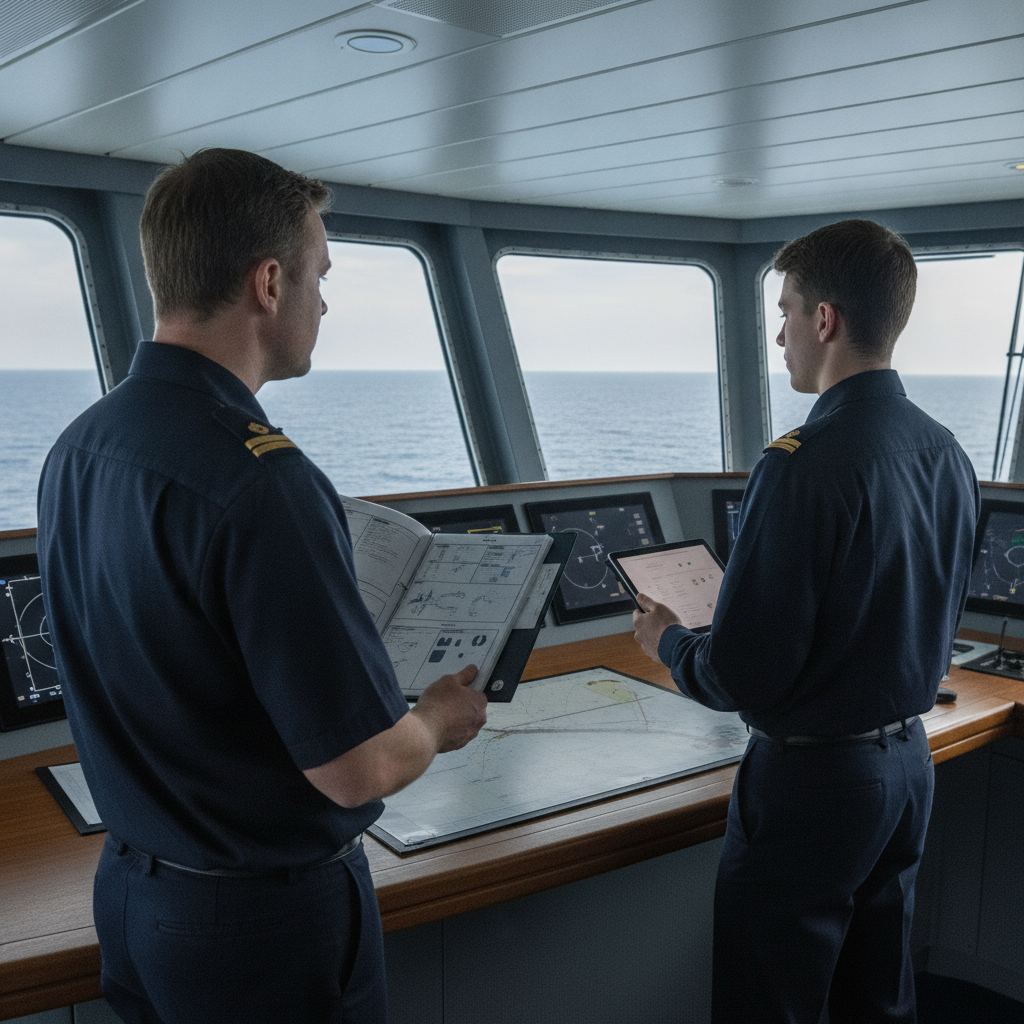
Proof of Delivery Software and Port Calls: Digital Transformation of Port Operations and Cargo Confirmation
Proof of delivery software is revolutionizing how shipping companies, freight forwarders, terminals, and consignees document, confirm, and reconcile cargo movements at every stage of the maritime supply chain. In an industry where cargo claims, documentation disputes, and delayed clearances cost billions annually, digital POD platforms replace error-prone paper processes with legally valid, audit-ready, real-time records.
The global maritime industry handles approximately 90% of world trade by volume, with port operations serving as critical nodes in international supply chains. The digitalization of cargo confirmation processes through digital POD systems and optimized port calls management is fundamentally transforming operational efficiency, cargo traceability, and regulatory compliance — and according to IMO data, can reduce document processing times by 40-60% and decrease operational costs by 20-35%.
Why Traditional Proof of Delivery Processes Fail Maritime Operations
The maritime industry's reliance on paper-based documentation is a well-documented challenge. Bills of lading, mates' receipts, delivery orders, and cargo manifests circulate between multiple parties in physical form — often via courier or fax — creating delays, transcription errors, and fraud risks that would be unacceptable in any other industry handling equivalent transaction values.
The consequences of these legacy processes are felt throughout the supply chain:
- Prolonged processing times of up to 5-7 days for complete cargo reconciliation after vessel discharge
- Transcription errors and document discrepancies that trigger cargo holds and customs queries
- Difficulties in traceability and establishing immutable audit trails for high-value or sensitive cargo
- Risk of fraud and document tampering, particularly with original bills of lading
- High costs of physical document storage, courier services, and manual reconciliation labor
- Disputes and claims arising from contested delivery confirmations or damaged cargo
Digital proof of delivery software eliminates these failure points by creating a single, tamper-evident record that all parties can access in real time — from the vessel's chief officer signing off cargo discharge to the consignee confirming receipt at the inland delivery point.
Fundamental Components of a Digital POD System
1. Integrated Document Management Platform
- End-to-end digitalization of all transport documents including bills of lading, delivery orders, cargo receipts, and exception reports
- Automated workflows for approvals, verifications, and multi-party confirmations
- Secure cloud storage with access controls compliant with international data protection regulations
- Integration with existing ERP and logistics management systems via open APIs
- Version control and change tracking for all document amendments
A centralized document management platform ensures that every party in the delivery chain — shipping line, terminal operator, freight forwarder, customs broker, and consignee — accesses the same document version simultaneously. This eliminates the version control problems that lead to disputes when different parties are working from different document iterations.
2. Real-Time Cargo Tracking System
- GPS monitoring of cargo location from port gate to final delivery destination
- IoT sensors for environmental conditions monitoring including temperature, humidity, shock, and tilt for sensitive cargo
- Automatic notifications for significant events including arrival confirmations, inspection holds, and delivery completions
- Predictive reporting for potential delays and proactive exception management
- Chain of custody documentation with timestamped handoff records at each transfer point
Real-time tracking transforms the delivery confirmation from a single event into a continuous, documented chain of custody. For high-value cargo, perishable goods, or shipments subject to strict regulatory oversight, this continuous visibility provides both operational benefits and legal protection in the event of disputes.
3. Digital Confirmation and Signature Portal
- Qualified electronic signature (QES) meeting eIDAS and equivalent national standards for full legal validity
- Multi-factor authentication for all parties accessing sensitive documents and completing confirmations
- Certified timestamp providing irrefutable temporal proof of delivery confirmation
- Integration with payment systems enabling automatic payment release upon confirmed delivery
- Mobile-compatible interface for delivery confirmations in any location including port terminals and warehouses
The legal validity of electronic signatures in maritime documentation has been progressively recognized across major trading nations, and the transition from original paper bills of lading to electronic equivalents (eBL) is now formally supported by the major P&I clubs and most leading shipping registries. Digital POD software that incorporates qualified electronic signature capabilities provides legally defensible proof of delivery that is admissible as evidence in commercial disputes.
Port Calls Optimization through Digital POD Integration
Intelligent Port Calls Management
Port calls management software coordinates all aspects of a vessel's port stay — from pre-arrival notification to departure clearance — minimizing berth time and the associated costs of port dues, agent fees, and crew time. Optimized management software can reduce vessel port stay times by 25-40% through:
- Predictive planning based on historical port performance data and current berth availability
- Automated communication with port agents, terminal operators, pilotage, towage, and customs authorities
- Dynamic allocation of port resources including berth assignments, crane bookings, and labor scheduling
- Real-time monitoring of operation status with exception flagging and automated escalations
- Digital port call disbursement management with automated cost accrual and invoice matching
When digital POD capabilities are integrated directly with port calls management, the result is a complete digital workflow that connects every step from pre-arrival planning through cargo confirmation to financial settlement. This integration eliminates the handoff delays that occur when separate systems require manual data re-entry between operational and documentation processes.
Pre-Arrival Documentation Preparation
One of the highest-value applications of digital POD and port calls software is pre-arrival document preparation. By enabling the submission of cargo manifests, dangerous goods declarations, port health documents, and customs advance cargo declarations well before vessel arrival, digital systems reduce the time required for regulatory clearance from days to hours. Vessels that arrive with all documentation already processed can begin cargo operations immediately upon berthing rather than waiting for clearance to be completed.
Real-Time Cargo Reconciliation During Discharge
Traditional cargo reconciliation following vessel discharge involves comparing physical tally sheets against the manifest — a labor-intensive process prone to counting errors. Digital maritime documentation tools enable real-time reconciliation as each container or unit is discharged, with immediate exception flagging for quantity discrepancies, damaged goods, or cargo not corresponding to the manifest. This real-time approach reduces post-discharge disputes and accelerates the cargo release process for consignees.
Regulatory Compliance in Maritime Documentation
Maritime documentation is subject to an extensive regulatory framework that digital POD software must address comprehensively:
- FAL Convention requirements for standardized electronic data exchange between vessels, ports, and authorities
- SOLAS Regulation VI/2 for container weight verification (VGM) documentation and transmission
- ISPS Code requirements for cargo security declarations and access control at port facilities
- MARPOL Directives for waste delivery receipts and environmental monitoring documentation
- e-CMR Standards for electronic consignment notes in international road transport connecting to port logistics
- EU Maritime Single Window requirements for electronic submission of vessel arrival and departure notifications
- UNCITRAL Model Law framework governing the legal recognition of electronic transferable records including eBLs
Compliance with this regulatory framework is non-negotiable for operators engaged in international trade. Digital POD software that maintains current compliance with all applicable regulations — and is updated automatically as regulations evolve — reduces compliance risk and eliminates the manual effort of tracking regulatory changes across multiple jurisdictions.
Explore SupaMaritime's compliance management solutions to see how automated regulatory updates keep your documentation practices current across all trading regions.
Operational and Economic Benefits of Digital Maritime Documentation
Operational Efficiency
- 50-70% reduction in document processing times across the cargo delivery workflow
- 30-45% decrease in errors and discrepancies requiring manual resolution
- 25-40% savings in document management costs including storage, courier, and printing
- 35-50% increase in documentation staff productivity through automated workflows
- 60-80% reduction in disputes, cargo claims, and associated legal costs
Customer Experience Improvements
- Complete visibility of cargo status in real-time for shippers, consignees, and freight forwarders
- Self-service document portal allowing customers to access, download, and verify their cargo documents 24/7
- Proactive notifications for key events including vessel arrivals, discharge completions, customs clearances, and delivery confirmations
- Faster cargo release reducing demurrage and storage costs for importers
Sustainability Impact
- 90% reduction in paper and consumable usage across the documentation workflow
- Emissions reduction through logistics optimization that eliminates unnecessary vehicle movements for physical document delivery
- Energy optimization of port operations through better resource planning and reduced idle time
Enabling Technologies in Digital POD Systems
Blockchain and Distributed Ledger Technology
Blockchain provides an immutable ledger for recording cargo delivery transactions, eliminating the possibility of document tampering after the fact. Smart contracts enable conditional payment release upon verified delivery confirmation, removing the need for manual invoice processing and reducing payment cycle times from weeks to days. Certified cargo provenance tracking protects against fraud in high-value commodity shipments, while instant document verification allows any party to confirm the authenticity of a delivery record without intermediary verification services.
The DCSA (Digital Container Shipping Association) eBL standard, now adopted by major container lines, is built on principles compatible with blockchain-based document verification, creating a pathway for industry-wide interoperability of digital bills of lading.
Artificial Intelligence in Maritime Documentation
AI enhances digital POD systems through automatic document recognition and data extraction using optical character recognition (OCR) and natural language processing, predictive logistics analysis that anticipates delays and pre-triggers mitigation workflows, anomaly detection that flags unusual patterns in cargo documentation or delivery confirmation data, and intelligent automation of exception handling that routes issues to the correct party for resolution without manual triage.
Internet of Things Integration
IoT sensors provide the real-time cargo condition monitoring that underpins credible digital POD in cargo-sensitive industries. Temperature loggers integrated with the digital POD system provide an unbroken cold chain record from shipper's warehouse to consignee's facility. Automatic seal integrity verification confirms that container seals are intact at each handoff point. Precision location tracking provides the geofenced delivery confirmation that constitutes proof of delivery in many trade lane requirements.
See how SupaMaritime's IoT integration modules connect sensor data directly to digital delivery documentation workflows.
Best Practices for Digital POD and Port Calls Software Implementation
Define Legal and Contractual Requirements First
Before selecting a digital POD platform, clarify the legal requirements for delivery documentation in each of your trading lanes. Electronic document recognition varies by jurisdiction, and some trading partners may still require original paper documents for specific cargo types or in specific ports. Understanding these requirements upfront ensures that your digital POD implementation is compliant from day one and avoids costly retrofitting.
Engage All Stakeholders in the Design Process
Digital POD systems succeed when all parties in the cargo delivery chain — shipping lines, terminal operators, freight forwarders, customs brokers, and consignees — are aligned on how documents will flow and how delivery confirmation will be executed. Stakeholder workshops early in the implementation process identify workflow requirements, integration points, and training needs that determine implementation success.
Integrate with Port Calls Management for Maximum Value
The full value of digital maritime documentation is realized when POD tools are integrated with port calls management software, vessel operations systems, and financial management platforms. This integration creates a seamless digital thread from voyage planning through cargo delivery and financial settlement — eliminating the manual reconciliation steps that add cost and delay at every process handoff.
Learn more about SupaMaritime's integrated approach to connecting proof of delivery with end-to-end port calls management.
Success Cases
European Container Shipping Line
- 65% reduction in document processing times across all trade lanes
- 45% decrease in errors and discrepancies requiring manual resolution
- Annual savings of €2.3 million in operational and administrative costs
- Complete ROI achieved in 14 months from full deployment
Mediterranean Container Terminal
- 40% reduction in vessel port stay times through pre-arrival documentation automation
- 25% increase in operational productivity from eliminated manual documentation workflows
- 50% improvement in cargo traceability and delivery confirmation accuracy
Frequently Asked Questions
Is digital proof of delivery legally valid for maritime cargo documentation?
Yes, in most major trading jurisdictions. Electronic signatures meeting the qualified electronic signature (QES) standard defined under eIDAS (EU) and equivalent national frameworks are legally equivalent to handwritten signatures. Electronic bills of lading (eBL) are recognized by the Comite Maritime International's model law framework and are accepted by the major P&I clubs. However, specific requirements vary by jurisdiction and cargo type — always verify the legal requirements in your specific trading lanes before transitioning fully to digital documentation.
How does digital POD software integrate with existing shipping line systems?
Modern digital POD platforms provide open REST APIs and support standard maritime data exchange formats including EDIFACT, XML, and JSON. Most platforms offer pre-built connectors for major ERP systems, terminal operating systems, and freight management platforms. Integration complexity depends on the age and architecture of existing systems — cloud-native ERP and TOS platforms typically integrate within days, while legacy on-premise systems may require custom integration work. SupaMaritime's integration team provides dedicated support for all integration configurations.
What happens when a delivery is disputed — how does digital POD support claims resolution?
Digital POD creates an immutable, timestamped audit trail of every cargo handoff — who confirmed receipt, when, at what location, and under what conditions. In the event of a dispute, this audit trail provides definitive evidence that is far more reliable than paper-based documentation. Digital exception reporting, where discrepancies are noted at the time of delivery rather than retrospectively, creates a contemporaneous record that courts and arbitration panels treat as strong evidence. Most operators report a significant reduction in disputed claims after implementing digital POD, precisely because all parties know the evidence record is unambiguous.
Can small freight forwarders and agents access digital POD platforms used by major shipping lines?
Yes. Digital POD platforms designed for maritime use provide web portal access for parties who are not system integrators. Freight forwarders, customs brokers, and consignees can access documents, confirm deliveries, and submit exceptions through a browser-based interface without requiring technical integration. This ensures that the entire cargo delivery chain benefits from digital documentation even when individual parties lack sophisticated systems.
What is the implementation timeline for a digital POD and port calls management system?
A focused digital POD deployment for a single trade lane or vessel type can be operational within 8-12 weeks. A comprehensive implementation covering multiple vessel types, trade lanes, and integration with port calls management, ERP, and terminal systems typically takes 4-8 months. The implementation timeline is primarily driven by the number of stakeholder integrations required and the complexity of existing document workflows that need to be digitized. SupaMaritime offers phased implementation options that deliver early operational value while the broader deployment progresses.
Conclusion
Proof of delivery software and digital port calls management represent a fundamental transformation for the maritime industry. Companies embracing this digital transformation improve operational efficiency, reduce costs, and create value through better customer experience, advanced regulatory compliance, and the legal protection that comes from maintaining irrefutable digital delivery records.
In an industry where a single cargo claim or documentation dispute can generate legal costs exceeding the value of the cargo itself, the investment in purpose-built digital maritime documentation tools delivers returns that go far beyond simple efficiency metrics. Digital POD is simultaneously a cost reduction initiative, a risk management tool, and a customer service differentiator for forward-thinking maritime operators.
Ready to digitalize your port operations and cargo documentation? Request a technical demonstration to see how SupaMaritime's integrated platform for proof of delivery software and port calls management can optimize your documentation workflows, reduce disputes, and accelerate cargo clearance across your entire operation.
Last updated: March 2026