Yacht Agency Software: Running a Superyacht Season
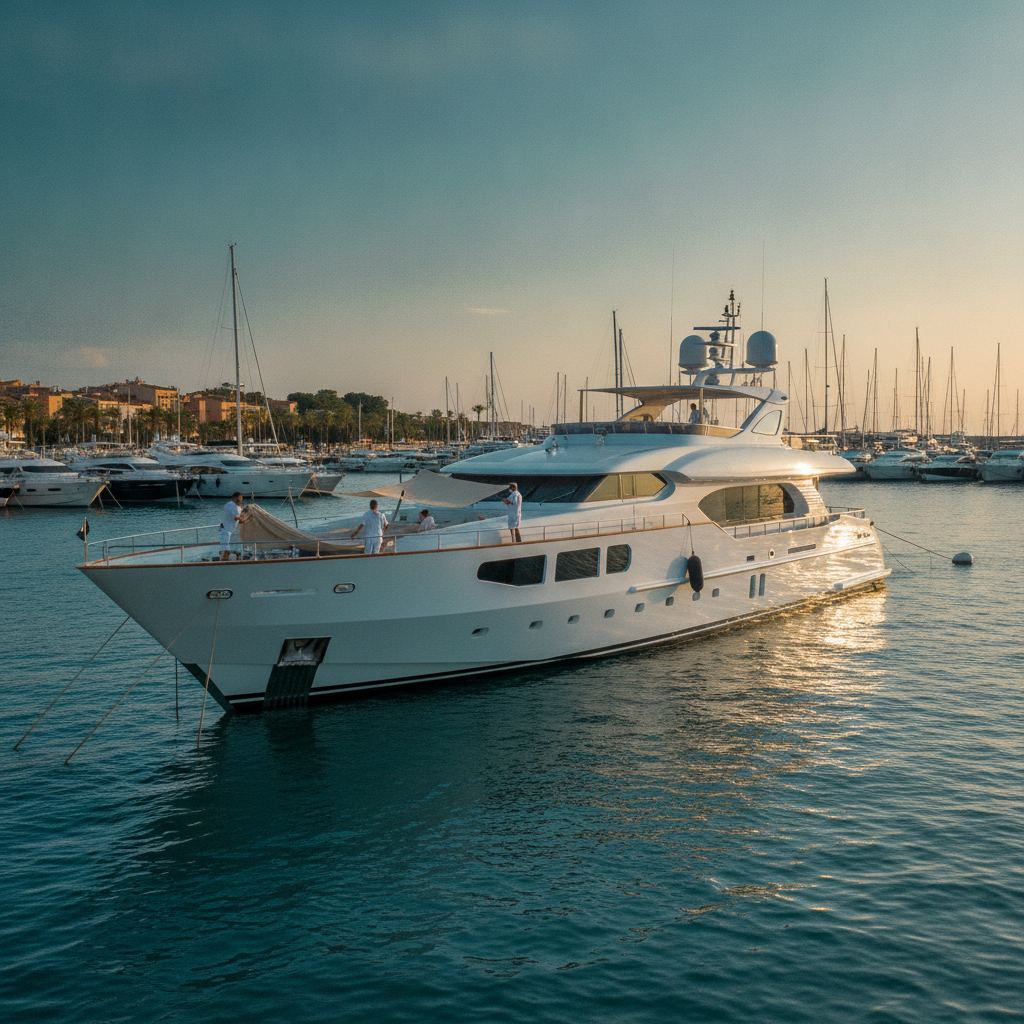
To an owner stepping onto a 60-metre yacht in Porto Cervo, everything looks effortless. The provisions are aboard, the helicopter transfer is confirmed, the customs paperwork has quietly disappeared into someone else's inbox, and the restaurant in Saint-Tropez is holding the table that was supposedly fully booked. That seamlessness is the product. And almost all of it is produced by a person the owner will probably never meet: the yacht agent.
The yacht agent is the invisible operational layer that makes a Mediterranean or Caribbean season actually happen. Yet most agencies still run that layer on a patchwork of spreadsheets, WhatsApp threads, and email folders that only one or two people fully understand. This article is about why generic port-agency tools fail superyacht work, what the job really demands, and what to look for in yacht agency software built for the way superyacht agents actually operate.
What a Superyacht Agent Actually Does
Ask outside the industry what a yacht agent does and you will hear "books berths." Ask inside it and you get a far longer list. A superyacht port agent is simultaneously a logistics coordinator, a customs and immigration intermediary, a concierge, a crew-travel desk, a procurement officer, and a discreet personal fixer for the captain and, by extension, the owner.
In the span of a single call at one port, a yacht agent might arrange berthing and clearance, coordinate fuel (bunkering) and fresh water, manage waste and grey-water removal, organise provisioning down to a specific vintage and a specific brand of mineral water, book a helicopter to land guests directly, arrange a fleet of cars with vetted drivers, handle a mid-season crew change with flights and visas, settle disputes with suppliers, and produce a clean, defensible set of accounts at the end. The work is part operations, part hospitality, and part diplomacy.
This is why software matters. The agent's value is reliability under pressure, and reliability at scale is impossible to sustain from memory and a phone. The right system does not replace the agent's judgement; it protects it by making sure nothing falls through the cracks during the most intense weeks of the year. Our overview of the SupaMaritime Agent module shows how the port-call core underpins this kind of work.

Why Generic Cargo Port-Agency Software Fails Yachts
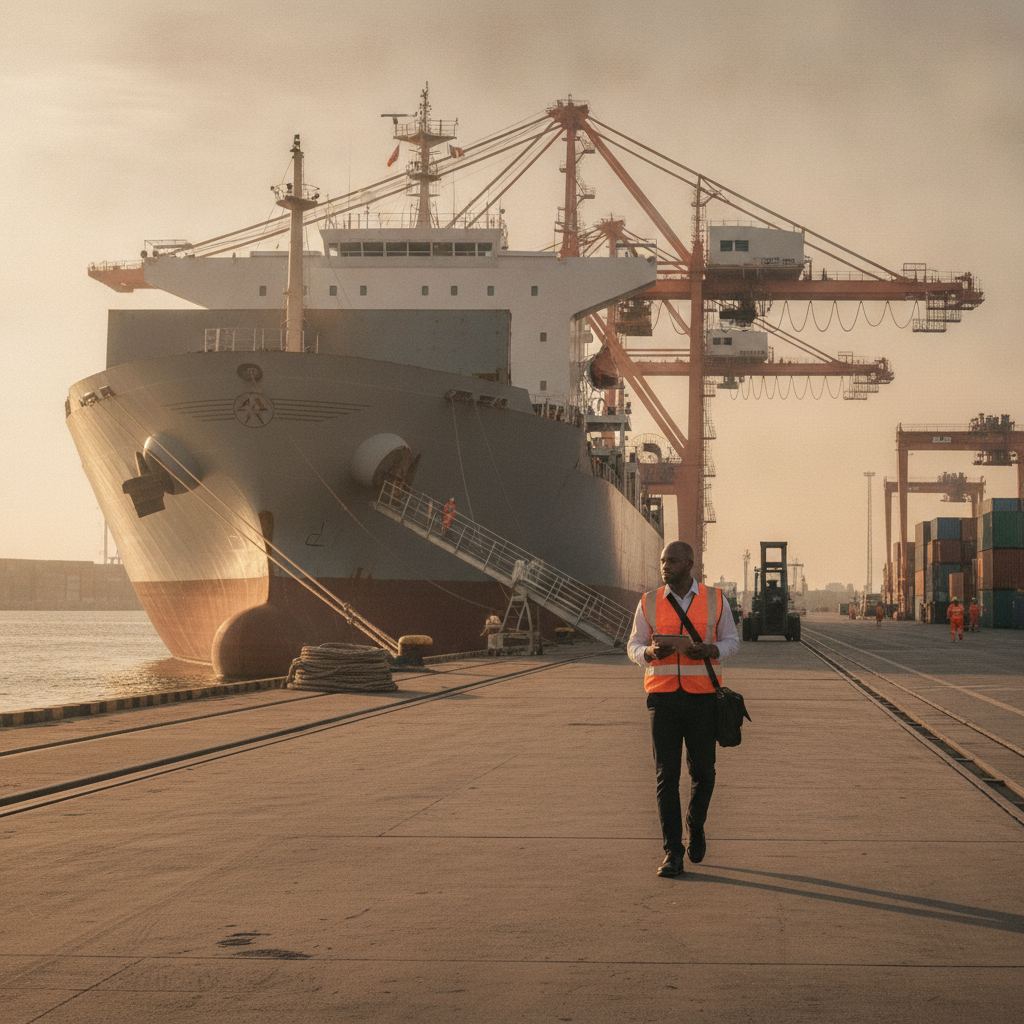
Most port-agency software was built for commercial shipping: tankers, bulk carriers, container vessels. That world is high-volume, standardised, and transactional. A box ship calls, discharges, loads, departs, and the disbursement account follows a familiar pattern. The software reflects that, and it does it well.
Superyacht work breaks almost every one of those assumptions. The cargo world optimises for predictable, repeatable port calls; the yacht world is bespoke by definition. A cargo agent rarely needs to mask an owner's identity, source a particular florist, or coordinate a private chef's last-minute provisioning run. A yacht agent does all three before lunch.
- Service catalogues are wrong. Cargo software has line items for stevedoring and tank cleaning, not helicopter transfers, VIP airport meet-and-greet, art transport with temporary customs admission, or concierge requests.
- Confidentiality is an afterthought. Commercial systems assume everyone with access can see everything. In yachting, owner identity and movements are sensitive, and access has to be controlled at the level of the individual port call.
- Crew is treated as a manifest, not as people who travel. Cargo crew changes are logistical line items. Yacht crew changes are hospitality logistics involving ranks, nationalities, documents, flights, hotels, and ground transport that must all flow into the accounts.
- Communication assumes formality. Captains operate at WhatsApp speed. Software that expects everything through a formal portal simply gets bypassed, and the operational record evaporates into private chats.
The result is that yacht agencies either bend cargo software into shapes it was never meant to take, or abandon it entirely for spreadsheets. Neither scales. The alternative is software that treats yacht-specific work as a first-class mode rather than an exception, which is exactly the philosophy behind our yacht agency solution.
The Season Is Short, Intense, and Unforgiving
The economics of a superyacht agency are shaped by a brutal calendar. The Mediterranean high season runs roughly four to six months; the Caribbean season fills part of the rest. During those weeks, an agency may handle a year's worth of activity. Demand does not arrive smoothly. It arrives in waves around regattas, events, and the movements of a handful of large yachts whose itineraries shift with the weather and the owner's whims.
That compression has two consequences. First, capacity has to flex hard. An agency that runs lean in winter needs to absorb seasonal staff, additional ports, and a surge of concurrent port calls without losing control. Second, mistakes are expensive precisely when there is no time to fix them. A missed provisioning order in February is an inconvenience; the same miss in the second week of August, with guests aboard and every supplier at capacity, is a reputational event.
In yachting, you are not judged by your average week. You are judged by your worst hour during the busiest fortnight of the year, and the owner remembers it for a decade.
Software for this world has to handle seasonal user management and seasonal pricing as normal operations, not edge cases. Bringing on temporary staff for a defined window, granting them precisely the access they need, and removing it cleanly afterwards should be routine. So should adjusting rate cards for peak periods without rewriting the whole catalogue.
Confidentiality Is a Product Requirement, Not a Setting
Discretion is not a nice-to-have in superyacht work; it is part of what the owner is paying for. Owners and their representatives expect that their identity, their location, their guests, and their spending are not casually visible to every junior coordinator or seasonal hire who touches the file.
This is where most generic systems quietly fail. A spreadsheet shared across the office leaks everything to everyone. A cargo system with role-based access at the company level still shows the whole team the owner's name on every screen. Real confidentiality has to operate at the granularity of the individual port call: owner-identity masking so that operational staff can do their jobs without seeing who the principal is, and a full audit trail so that if a question is ever raised, the agency can show exactly who saw what and when.
Done properly, confidentiality controls become a selling point. An agency that can credibly tell a management company "your owner's identity is masked from our seasonal staff and every access is logged" is offering something a spreadsheet never can. For more on how access and audit are handled, see our security overview.

Bespoke Service Catalogues, Kept Structured
The instinct in bespoke work is to treat every request as one-off and unstructured, scribbled into a note or a chat. That instinct is what produces the six-week reconstruction at season's end, when nobody can remember what the helicopter actually cost or which provisioning run belonged to which call.
The better approach is to keep premium, bespoke services structured even when they are unique. A yacht-specific port-call template should anticipate the categories that recur in superyacht work even though the specifics differ every time: provisioning, helicopter and aviation handling, VIP transfers and meet-and-greet, special customs clearance and temporary admission for art or high-value items, and concierge requests of every kind. Each becomes a proper line item with a supplier, a cost, a status, and a place in the disbursement account, rather than a sentence in a chat that has to be excavated later.
Structure does not mean rigidity. It means that when an owner asks for something extraordinary, the agent can deliver it as a tracked task with accountability, and it lands in the accounts automatically instead of being remembered, or forgotten, by hand. You can see how the broader toolkit fits together across our product modules.
Captain Communication at WhatsApp Speed
Here is the operational reality every yacht agency lives with: the captain will message at WhatsApp speed, at any hour, in fragments, and expects an answer now. Any software that pretends this is not true, that insists the captain log into a portal to raise a request, will simply be ignored. The captain texts the agent, the agent acts, and the system never hears about it.
The answer is not to fight the captain's preferred channel but to bridge it. The agent works at speed, and the operational record is captured alongside, not instead of, the conversation. Two devices that matter especially here are captain-friendly no-login summary links and clean status views. A summary link lets a captain see exactly what is arranged, confirmed, and pending for a call without an account, a password, or a training session. It respects how the bridge actually works while still giving the agency a single source of truth.
The goal is a system that the captain barely notices and the agency relies on completely: fast where speed matters, rigorous where the record matters.
Crew Change as Hospitality Logistics
On a cargo ship, a crew change is a manifest update. On a superyacht, it is a hospitality operation in miniature. A yacht-grade crew change captures rank, nationality, and documents, and then handles the travel that follows: flights, hotels, taxis, and transfers, all coordinated to land a deckhand or a chief stew exactly where they need to be, exactly when, with the right paperwork to clear immigration.
The detail that separates good software from adequate software is that every cost in that chain, every flight, every hotel night, every transfer, flows automatically into the Disbursement Account for that call. The agency does not rebuild it from receipts in October. It is already there, attributed, the moment it was arranged. Crew change handled this way stops being a recurring fire drill and becomes a process.
Invoicing and Disbursement Accounts, Done Right
The disbursement account is where an agency's professionalism is ultimately judged. A PDA (Proforma Disbursement Account) sets expectations up front; the FDA (Final Disbursement Account) reconciles reality against it. When this is done well, the management company receives a clean, itemised, defensible account. When it is done badly, the agency spends six weeks after the season reconstructing what happened from scattered notes, and credibility erodes with every disputed line.
Yacht agency software should make the right way the easy way. Every service, task, crew movement, and concierge request should attach to a port call and feed the disbursement account as it happens, so the PDA and FDA are largely assembled by the work itself. Premium, multi-currency invoicing matters too: superyacht agencies deal in euros, dollars, and sterling within a single season, often a single call, and the accounts have to reflect that without manual gymnastics. The end state is simple to describe and hard to achieve any other way: no end-of-season reconstruction, because the account was always current.
Choosing Yacht Agency Software
If you are evaluating yacht agency software, the test is not whether the demo looks polished in February. It is whether the system holds up in the second week of August. A few questions separate tools built for yachts from cargo software wearing a yacht badge:
- Does it offer a genuine yacht port-call template, or are you expected to repurpose cargo line items?
- Is confidentiality controllable per port call, with owner-identity masking and an audit trail?
- Can a captain see a summary without logging in?
- Does crew change capture rank, nationality, and documents and flow travel costs into the Disbursement Account automatically?
- Does it handle seasonal users and seasonal pricing as normal operations?
- Is invoicing multi-currency and premium, and does the disbursement account assemble itself from the work?
- Does it sit on a robust port-call core, port calls, PDA and FDA, services, tasks, and documents, rather than a thin layer of features?
The right answer to all of these is what separates a tool that scales through a Mediterranean or Caribbean season from one that quietly becomes another spreadsheet by July.
Frequently Asked Questions
What is yacht agency software?
Yacht agency software is the operational system a superyacht port agent uses to run port calls end to end: coordinating berthing, clearance, provisioning, transfers, crew change, and concierge services, while tracking every cost in a disbursement account. Unlike generic cargo port-agency tools, purpose-built yacht agency software accounts for confidentiality, bespoke services, and the intensity of a short season.
How is yacht agent software different from cargo port-agency software?
Cargo software is built for high-volume, standardised, repeatable port calls. Yacht agent software is built for bespoke work: yacht-specific service catalogues, per-port-call confidentiality with owner-identity masking, crew change handled as hospitality logistics, and captain communication at WhatsApp speed. Cargo tools can be forced to fit, but they were never designed for superyacht operations.
Why does confidentiality matter so much for a superyacht port agent?
Discretion is part of what the owner pays for. Identity, location, guests, and spending are sensitive, and they should not be casually visible to every seasonal coordinator. Good software controls confidentiality at the level of the individual port call, masks owner identity for operational staff, and keeps a full audit trail so the agency can always show who saw what and when.
Can yacht agency software handle the seasonal nature of Mediterranean operations?
It should. A Mediterranean season is short and intense, so the software has to treat seasonal user management and seasonal pricing as routine: bringing temporary staff on with precise access, removing it cleanly afterwards, and adjusting rate cards for peak periods without rebuilding the catalogue.
How does crew change feed into the Disbursement Account?
A yacht-grade crew change captures rank, nationality, and documents, then coordinates flights, hotels, and ground transport. In well-built software, every one of those costs attaches to the port call and flows automatically into the Disbursement Account, so the PDA and FDA are accurate without an end-of-season reconstruction.
SupaMaritime Agent runs the robust port-call core, port calls, disbursement accounts, services, tasks, and documents, and adds a dedicated yacht mode built for superyacht agencies in the Mediterranean, Caribbean, Balearics, Cote d'Azur, Sardinia, and the Greek Islands. See how SupaMaritime Agent works for yacht agencies or explore the Agent module.