Maritime Fleet Management Software 2026: Navigating Regulatory Compliance and Operational Efficiency
Maritime fleet management software has become the operational backbone for shipping companies facing an unprecedented convergence of regulatory complexity, environmental mandates, and digital transformation requirements. With the International Maritime Organization accelerating its regulatory agenda and environmental compliance obligations multiplying under frameworks including SOLAS, MARPOL, and the EU Emissions Trading System, the difference between compliant and non-compliant operations increasingly comes down to the quality of the software platform managing it. SupaMaritime's fleet management and compliance modules are purpose-built for this environment, delivering the automation, audit trail, and real-time oversight that modern shipping operations demand.
According to BIMCO's 2025 industry report, shipping companies using advanced fleet management software achieve 23% lower operational costs, 31% better regulatory compliance scores, and 18% higher vessel utilization rates. These are not marginal efficiency gains — they represent the difference between profitable and unprofitable operations at current freight market levels.
The Regulatory Landscape: Key Challenges for 2026
The maritime regulatory environment of 2026 is qualitatively different from anything the industry has managed before. For the first time, environmental compliance requirements carry direct financial penalties — not just the reputational and detention risks of port state control findings, but measurable monetary costs tied to carbon emissions. Fleet compliance software is no longer a tool for managing paperwork more efficiently; it is the mechanism through which operators avoid material financial penalties while optimizing their emissions performance.
IMO 2026 Amendments and Digital Compliance
EEXI and CII Enhancements: Strengthened Energy Efficiency Existing Ship Index and Carbon Intensity Indicator requirements mandate more frequent reporting and stricter compliance thresholds. Vessels rated D or E under the CII framework for three consecutive years face corrective action plan requirements and potential restrictions on trading patterns.
Digital Documentation Standards: IMO's e-navigation strategy requires standardized digital formats for all statutory certificates, crew documents, and operational records. Manual or paper-based record-keeping systems are progressively incompatible with the digital submission requirements that flag states and port state control authorities are implementing.
Enhanced Monitoring Requirements: The EU's MRV system and IMO's Data Collection System now require more granular data collection, with penalties for inaccuracies reaching 50 to 100 euros per ton of unreported CO2. For a Handymax bulk carrier making 20 voyages per year, documentation errors could generate six-figure penalty exposure.
SOLAS and Safety Management Updates
Digital Safety Records: Chapter V requirements now emphasize digital record-keeping for safety equipment maintenance, drills, and inspections. Port state control inspectors increasingly expect to access digital records on demand during inspections, and operators who produce paper files face extended detention periods while documentation is reviewed.
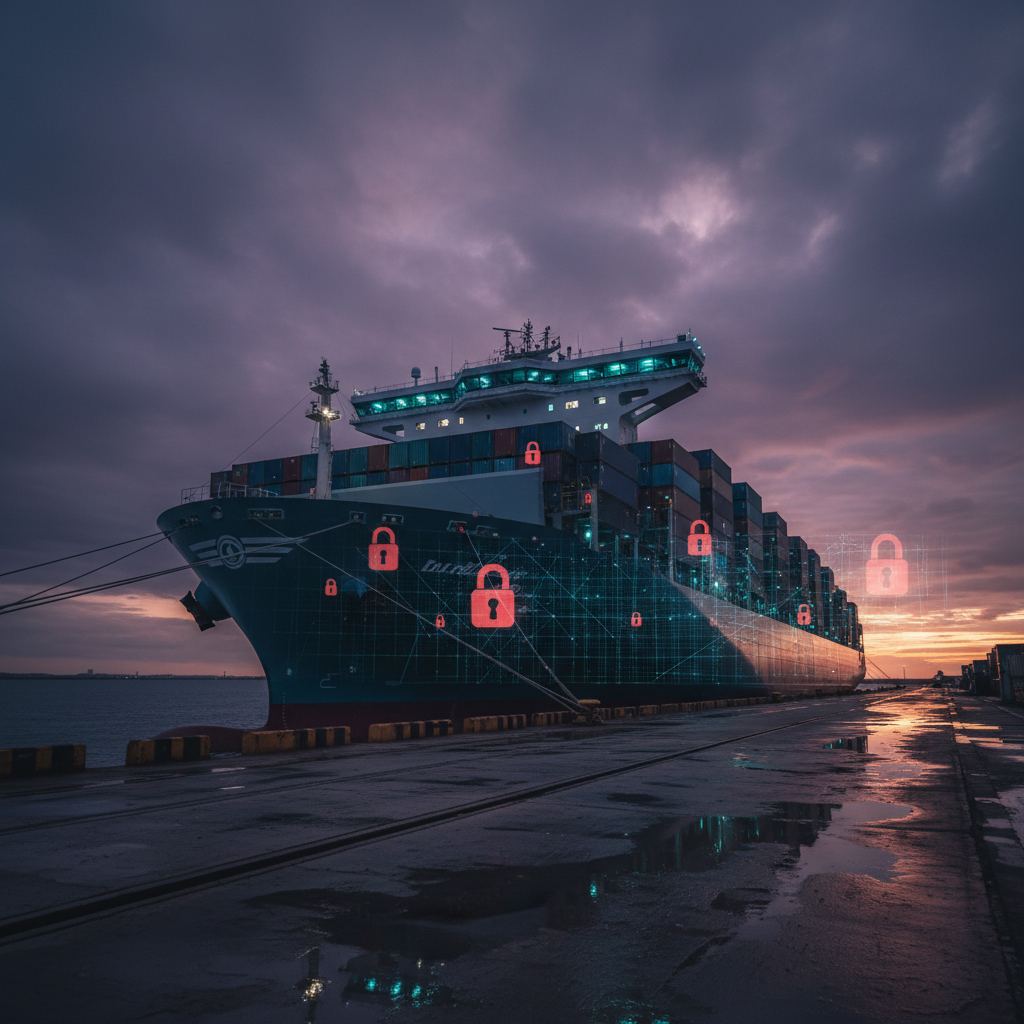
Cyber Risk Management: The 2025 SOLAS amendments formally incorporate IMO's cyber risk management guidelines into mandatory requirements. Ship operators must demonstrate that their cyber risk management procedures have been integrated into the Safety Management System, with documented evidence of implementation, testing, and review.
MARPOL and Environmental Compliance
EU ETS Integration: The European Union's Emissions Trading System for shipping, fully implemented by 2026, requires operators to surrender carbon allowances for CO2 emissions on voyages to, from, and within the EU. The administrative burden of monitoring, verifying, and reporting emissions data across a mixed fleet visiting multiple EU ports is substantial without purpose-built maritime regulatory software.
Sulphur Cap Enforcement: While the global 0.5% sulphur cap has been in force since 2020, enforcement sophistication continues to increase. Fuel oil sampling during port state control inspections and the cross-referencing of bunker delivery notes with emissions monitoring data creates compliance risk for operators whose fuel management records are incomplete or inconsistent.
Core Features of Modern Fleet Management Software
1. Regulatory Compliance Automation
The compliance function in a modern shipping company requires tracking hundreds of certificate expiry dates, reporting deadlines, and regulatory thresholds across every vessel in the fleet. Manual tracking through spreadsheets or calendar reminders creates gaps that port state control inspectors reliably find. SupaMaritime's fleet compliance software replaces this fragmented approach with an automated compliance management system that tracks every obligation, triggers alerts at configurable intervals before deadlines, and generates the reports that regulators require in the formats they specify.
- Automated Reporting: Generate IMO DCS, EU MRV, and flag state reports with single-click functionality, eliminating manual data aggregation and transcription errors
- Document Management: Centralized digital repository with automated renewal alerts, class society integration, and version-controlled certificate archives
- Audit Preparation: Pre-populated checklists with gap analysis highlighting compliance risks before PSC inspections, Flag State audits, and ISM external audits
Early adopters report 65 to 75% reduction in compliance administration time and 40% fewer deficiencies during port state control inspections.
2. Operational Efficiency Optimization
Compliance management and operational efficiency are not separate functions — they are deeply interdependent. A vessel whose maintenance records are incomplete cannot demonstrate compliance with class survey requirements. A crew member whose rest hours are not properly documented creates both a regulatory exposure and an operational safety risk. SupaMaritime's integrated approach means that operational improvements always generate compliance benefits, and vice versa.
- Fuel Optimization: AI-powered voyage planning and speed optimization achieving 8 to 12% fuel savings, directly reducing EU ETS costs and improving CII ratings simultaneously
- Maintenance Management: Predictive algorithms reducing unplanned downtime by 30 to 45%, eliminating the class certificate suspensions that arise when survey-due maintenance is deferred
- Crew Management: Integrated rest hour and certification tracking reducing both administrative overhead by 50 to 60% and the MLC compliance exposure that triggers port state control detentions
3. Environmental and Sustainability Tracking
Environmental performance management has moved from a voluntary reporting exercise to a core compliance function with direct financial consequences. SupaMaritime's environmental tracking module provides the continuous emissions monitoring, voyage-level CII calculation, and EU ETS allowance management that operators need to navigate this new reality without penalty exposure.
- Emissions Monitoring: Continuous tracking of CO2, SOx, NOx, and particulate matter with automated reporting to MRV and DCS frameworks
- Energy Efficiency: Real-time monitoring and optimization of EEOI, CII, and other Key Performance Indicators with voyage-level drill-down capability
- Waste Management: Digital tracking of garbage, bilge water, and sewage management ensuring MARPOL Annex V compliance with tamper-evident records
Technology Integration: The Connected Vessel Ecosystem
IoT and Sensor Integration
According to Lloyd's Register, 68% of newbuild vessels now include integrated IoT systems, up from 32% in 2022. The data generated by these systems — engine performance metrics, fuel flow monitoring, weather and sea state data — is only valuable when it feeds into a management platform that can analyse it and translate it into operational decisions. SupaMaritime's IoT integration layer connects vessel sensor data with fleet management workflows, enabling condition-based maintenance decisions and real-time performance benchmarking across the fleet.
Blockchain for Maritime Transactions
The Digital Container Shipping Association reports that 42% of major carriers will implement blockchain solutions for documentation management by 2026. Bill of lading verification, fuel quality certification, and crew certificate authentication are among the use cases where distributed ledger technology reduces fraud risk and administrative friction. SupaMaritime's document management module is designed to integrate with blockchain-verified document registries as this technology matures.
Artificial Intelligence and Machine Learning
AI transforms the raw data generated by connected vessels into actionable operational intelligence. Predictive maintenance algorithms trained on historical failure data and operating patterns achieve 85 to 90% accuracy rates in identifying components at elevated failure risk, enabling maintenance to be scheduled during port calls rather than forcing emergency repairs at sea. Natural language processing applied to port state control inspection reports identifies recurring deficiency patterns across the fleet, enabling systematic corrective action rather than reactive vessel-by-vessel fixes.
Implementation Strategy: Phased Adoption Approach
Fleet management software implementations are most successful when they follow a phased approach that delivers early wins while building toward full capability. SupaMaritime's standard implementation framework reflects this logic.
- Phase 1 (Months 1 to 3): Foundation and Core Compliance — certificate management, document digitization, and basic reporting automation. This phase delivers immediate compliance risk reduction and establishes the data foundation for subsequent phases.
- Phase 2 (Months 4 to 6): Operational Efficiency Expansion — maintenance management, crew management, and fuel monitoring. Integration with vessel monitoring systems and third-party data sources happens in this phase.
- Phase 3 (Months 7 to 12): Advanced Analytics and Optimization — predictive maintenance, AI-powered voyage optimization, and advanced environmental reporting. This phase delivers the largest financial returns.
IMO Compliance in Practice: What Fleet Managers Need to Know
IMO compliance management requires more than tracking a list of conventions. The interaction between different regulatory frameworks — where CII performance affects insurance premiums, where SOLAS cyber requirements interact with IT governance policies, where MLC crew documentation intersects with flag state requirements — creates a compliance matrix that is impossible to manage without purpose-built maritime regulatory software.
SupaMaritime's compliance module maintains an up-to-date regulatory library that maps every obligation in the applicable frameworks to the specific vessel types, flag states, and trading areas in a company's fleet. When regulations change — as they do continuously — the system updates the compliance requirements automatically, ensuring that fleet managers are always working against the current regulatory standard rather than a version that may have been superseded.
Port state control performance is one of the most tangible indicators of compliance management quality. Operators with robust fleet compliance software consistently outperform industry averages on PSC inspection outcomes, not because inspectors treat them more favourably, but because their records are complete, current, and accessible. When an inspector asks to see the oil record book, the rest hour records, or the fire drill log, the answer is available instantly rather than requiring a search through physical files.
SOLAS Compliance: Digital Safety Management Systems
The Safety Management System required under SOLAS Chapter IX has always been a documentation-intensive framework. The ISM Code requires evidence of every safety drill, every near-miss report, every corrective action, and every management review — across every vessel in the fleet, for a minimum retention period of five years. Managing this documentation manually is not just inefficient; it creates the risk that records are incomplete, inconsistent, or unavailable when needed for an audit.
SupaMaritime's safety management module digitizes the entire ISM documentation workflow. Drill records are completed on mobile devices immediately after the drill, with automatic timestamping and crew sign-off. Non-conformity reports are raised and tracked through to close-out with automated escalation for overdue items. Management reviews are supported by automatically compiled data packs that pull performance metrics from across the platform.
Cost-Benefit Analysis: ROI of Fleet Management Software
Direct Cost Savings
- Compliance Administration: 60 to 75% reduction in staff time spent on documentation, reporting, and audit preparation
- Fuel Optimization: 8 to 12% savings through AI-powered voyage planning and speed optimization
- Maintenance Costs: 15 to 25% reduction through predictive maintenance and elimination of emergency repair premiums
- Insurance Premiums: 10 to 20% reductions achievable for operators who can demonstrate strong safety management and PSC performance records
Avoided Costs
Beyond direct savings, fleet management software eliminates categories of cost that do not appear in operational budgets until they occur. Port state control detentions cost operators an average of 25,000 to 75,000 euros per incident including off-hire, repair costs, and reputational impact. EU ETS penalties for documentation errors can reach six figures for a medium-sized fleet. A single serious marine accident that could have been prevented by better maintenance management can generate liability exposure that dwarfs years of software investment.
Typical payback period: most shipping companies achieve full ROI within 12 to 18 months, with ongoing annual savings significantly exceeding the annual platform cost.
Frequently Asked Questions about Maritime Fleet Management Software
What is maritime fleet management software and what does it cover?
Maritime fleet management software is an integrated platform that manages the technical, operational, crew, compliance, and environmental functions of a shipping fleet. It covers vessel maintenance management, crew certification and rest hour tracking, statutory certificate management, emissions reporting for IMO DCS and EU MRV, safety management system documentation, and operational analytics. Modern platforms like SupaMaritime integrate all of these functions in a single system, eliminating the data silos that create compliance gaps and operational inefficiencies.
How does fleet compliance software support IMO CII compliance?
Fleet compliance software supports IMO CII compliance by collecting the voyage data required for CII calculation, computing CII ratings for each vessel in real time, projecting year-end CII performance based on current trends, and identifying the operational changes — speed adjustments, port call optimization, cargo loading patterns — that would improve the CII rating. For vessels at risk of D or E ratings, the platform generates corrective action plan documentation in the format required by flag states.
What SOLAS compliance features should fleet management software include?
Effective SOLAS compliance features include digital Safety Management System documentation with ISM Code audit trails, automated safety drill scheduling and recording, non-conformity report management from raise to close-out, designated person ashore notification workflows, cyber risk management policy implementation tracking, and GMDSS certificate management. SupaMaritime's safety module covers all of these requirements with flag state-specific customization for the most common flag state ISM frameworks.
How does maritime regulatory software handle multiple flag states?
Maritime regulatory software handles multiple flag states by maintaining a configurable regulatory library that maps requirements to specific flag state variations. Where a flag state imposes requirements beyond the IMO baseline — as many do for crewing, documentation, and environmental reporting — the system applies those additional requirements to vessels under that flag. Operators with vessels under multiple flags see a single consolidated compliance view while the underlying requirements are correctly differentiated by flag.
What is the implementation timeline for fleet management software across a mixed fleet?
Implementation timelines depend on fleet size, the complexity of existing data systems, and the scope of integration required with third-party platforms. A fleet of 5 to 10 vessels with standard flag state requirements can typically be fully operational on a new platform within 3 to 4 months. Larger fleets of 20 or more vessels, or operators with complex integrations to port agency systems, cargo planning tools, or existing ERP platforms, should plan for 6 to 9 months. SupaMaritime provides dedicated implementation project management throughout the deployment, with clearly defined milestones and acceptance criteria at each phase.
Conclusion: Strategic Imperative for Modern Shipping
The convergence of regulatory complexity, environmental mandates, and digital transformation makes advanced maritime fleet management software an operational necessity rather than a competitive advantage for shipping companies in 2026. Operators who continue to manage IMO compliance, SOLAS documentation, and MARPOL reporting through manual processes face escalating administrative costs, growing penalty exposure, and a structural inability to optimize emissions performance as the CII framework tightens.
SupaMaritime's fleet management and compliance platform provides the integrated solution that modern shipping operations require: automated regulatory reporting, predictive maintenance, real-time environmental performance tracking, and the data architecture that connects vessel operations to shore-based management in a single coherent system.
Ready to transform your fleet operations? Request a SupaMaritime Fleet Manager demo to see how our 2026-ready platform addresses your specific regulatory challenges while optimizing operational performance and reducing costs. Explore our full solutions portfolio to understand how our modules work together across your fleet.
Last updated: March 2026