Maritime Logistics Software: End-to-End Ocean Freight Management
Ocean freight remains the backbone of global trade, yet much of it is still coordinated across email threads, spreadsheets, scanned PDFs and a patchwork of disconnected tools. As volumes grow and customers expect real-time answers, that fragmentation becomes a liability. Maritime logistics software exists to close those gaps, giving liner operators, NVOCCs, freight forwarders and corporate shipping departments a single environment to plan, document, track and bill ocean cargo from booking through proof of delivery.
This guide explains what modern sea freight software covers end to end, where the biggest visibility and data-exchange problems live, and how to evaluate a platform that can grow with your business. Throughout, the emphasis is practical: the workflows that consume your team's hours today, and how the right shipping logistics software removes them.
What Maritime Logistics Software Actually Covers
The term is broad, so it helps to map the full lifecycle of a shipment. A complete maritime logistics software stack typically spans the following stages, each of which has traditionally lived in its own silo:
- Booking and quotation - capturing demand, confirming space and rates, and generating booking confirmations.
- Stowage and capacity planning - allocating cargo to voyages and balancing utilization against commitments.
- Documentation - producing bills of lading, manifests, packing lists and customs paperwork without rekeying data.
- Cargo and container tracking - following shipments by milestone and AIS position, with predictive ETAs.
- Port and terminal coordination - aligning port calls, berthing windows, cargo operations and documentation.
- Proof of delivery and invoicing - confirming receipt, closing the file and triggering accurate billing.
The value of treating these as one connected flow, rather than a series of handoffs, is compounding. Data entered once at booking should follow the cargo all the way to invoicing. When it does, the most common sources of dispute, delay and rework simply disappear.
It is worth being clear about what this is not. Maritime logistics software is not a single feature, nor is it a tracking widget bolted onto an otherwise manual operation. The defining characteristic of a serious platform is that the stages above share one data model. A container number, a vessel name, a port pair, a customer reference and a set of dates are entered or imported once and then referenced everywhere they are needed. That shared model is what allows a quotation to become a booking, a booking to become a bill of lading, and a bill of lading to become an invoice without anyone copying values between screens. Operators who have lived through the alternative - reconciling three systems that each hold a slightly different version of the truth - understand immediately why this matters.
The Fragmentation and Visibility Problem in Ocean Freight
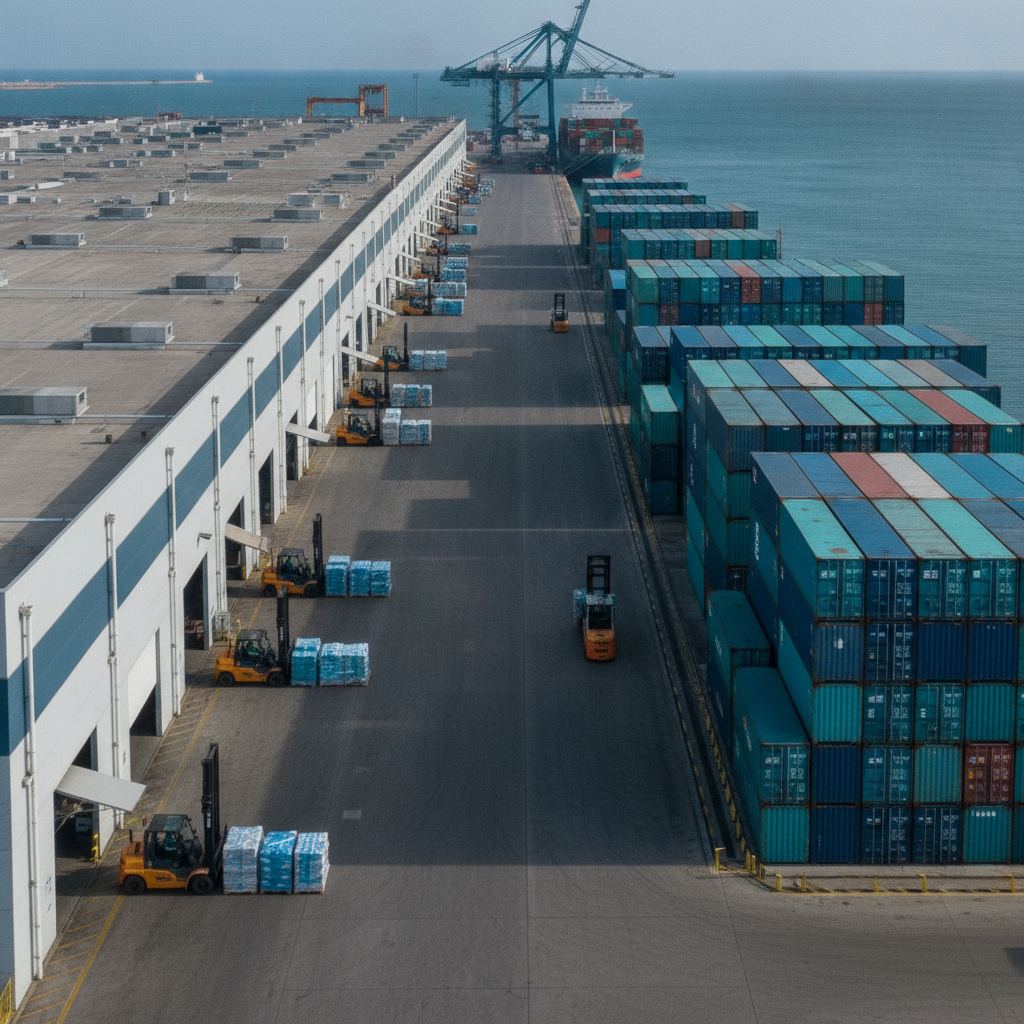
Ask any operations manager where the pain lives and the answer is rarely a single broken process. It is the seams between processes. A booking lands in one inbox, the bill of lading is drafted in a separate template, the customer asks for status by phone, and the port agent sends an update that never reaches the commercial team. Each handoff is an opportunity for data to drift.
This fragmentation produces three recurring costs. First, poor cargo visibility: when no one can answer "where is my container?" without a round of phone calls, service quality suffers and so does customer trust. Second, rework: the same shipment details get rekeyed into booking, documentation and invoicing systems, and every rekey is a chance for error. Third, slow exception response: by the time a delay surfaces, the window to act has often closed.
The goal of maritime logistics software is not to digitize each silo faster. It is to remove the silos so that one accurate record of the shipment serves booking, documentation, tracking, port coordination and billing alike.
Documentation: Booking, Bill of Lading, Manifests and Customs
Documentation is where ocean freight either runs smoothly or grinds to a halt. A shipment touches a remarkable number of documents, and most of them depend on the same underlying data. Strong cargo documentation tooling treats that data as a single source and reuses it across every artifact.
In practice, that means a booking confirmation flows directly into the draft bill of lading; the bill of lading feeds the cargo manifest; and shipment details populate the customs and export paperwork without anyone retyping a container number or HS code. This is the heart of what buyers mean when they search for software to manage sea freight: fewer manual documents, fewer discrepancies, faster turnaround at the desk.
For container line operators in particular, the documentation load scales with volume, which is why purpose-built tooling such as our container line operations solution focuses on automating the repetitive parts of the document chain while keeping a clean audit trail.
Cargo and Container Tracking: AIS, Milestones and ETA
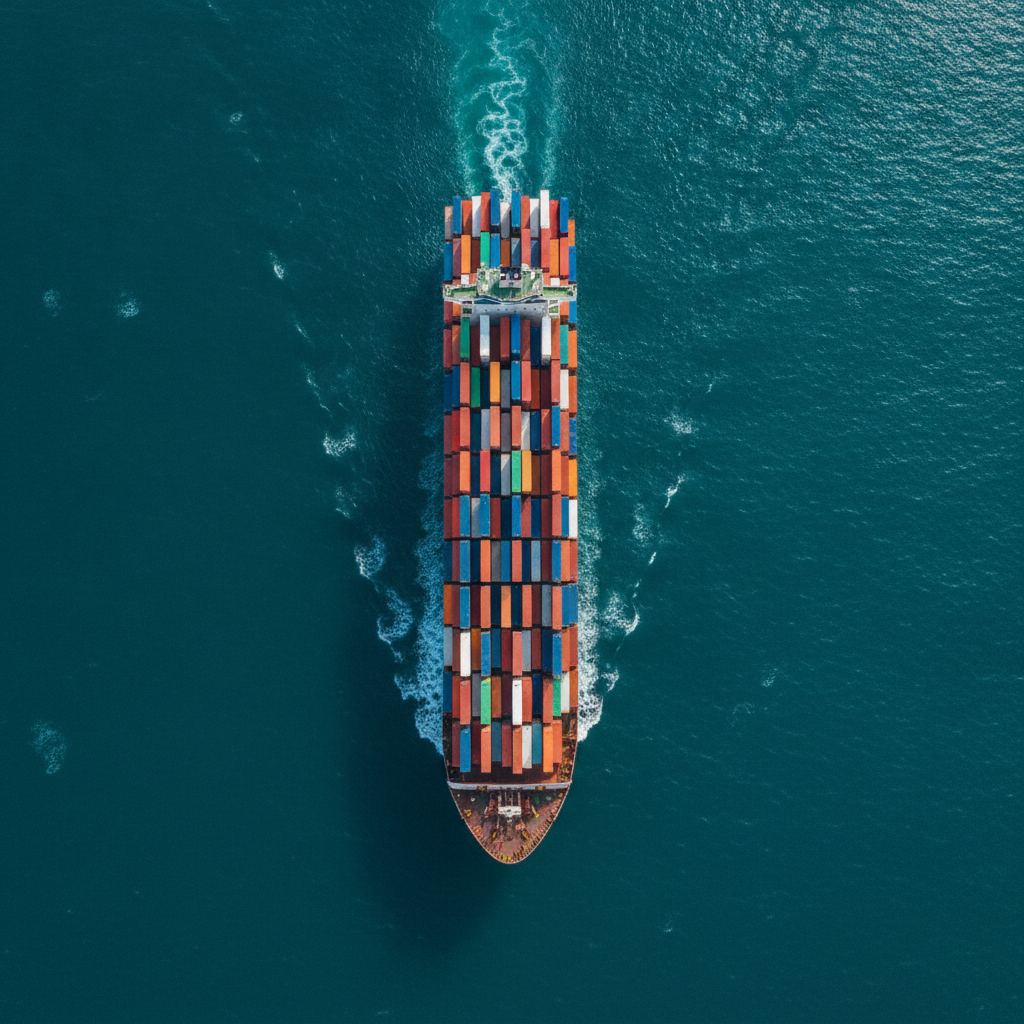
Visibility is the feature customers feel most directly. Modern shipping logistics software combines two layers of tracking. The first is milestone tracking: gate-in, loaded on board, departed, transshipped, discharged, delivered. The second is position tracking via AIS, which places the carrying vessel on a live map and underpins predictive ETAs.
Together these give operators and their customers a credible answer to the central question of ocean freight management: when will it arrive, and is it on plan? Good systems do not just display dots on a map; they compare actual progress against the planned voyage and surface deviations early, so a slipping ETA becomes a proactive notification rather than a surprise at the destination.
Port and Terminal Coordination
Even a perfectly tracked voyage can stall at the port. Berthing windows, terminal slots, cargo operations, customs clearance and documentation all have to align, and they involve parties outside your own organization. This is where many shipments lose hours that no amount of vessel tracking can recover.
Maritime logistics software helps by making the port call a shared, structured workflow rather than a flurry of emails. Estimated and actual times of arrival and departure, required documents, cargo operation status and outstanding actions live in one place that the operator, the agent and the commercial team can all see. The result is fewer surprises at the quay and faster turnaround when the vessel is alongside.
Exception Management and Disruption
The defining test of a logistics platform is not how it behaves when everything goes to plan, but how it behaves when something breaks. Weather, congestion, equipment shortages, rolled cargo and documentation holds are routine in ocean freight. What separates resilient operators is how quickly they detect and resolve these exceptions.
Effective exception management typically rests on three capabilities:
- Early detection - the system flags a deviation (a missed milestone, a slipping ETA, a documentation gap) before it cascades.
- Clear ownership - the exception is routed to the right person with the context they need to act.
- An audit trail - every action is logged, so disputes about who did what and when become trivial to resolve.
When exceptions are managed in software rather than inboxes, response times shrink and the same problem stops recurring shipment after shipment.
Data Exchange, EDI and Integration
No maritime logistics software operates alone. It has to exchange data with carriers, terminals, customs systems, customers and internal finance and ERP platforms. Historically this has meant EDI messages and, increasingly, modern APIs. A platform that integrates cleanly turns external partners into part of one connected flow; a platform that does not simply recreates the fragmentation it was meant to solve.
When evaluating sea freight software, examine its integration posture closely. Look for documented APIs, support for the EDI standards your partners use, and the ability to import and export shipment data without manual intervention. The integration layer is often the difference between a tool your team tolerates and a platform that becomes the backbone of operations.
A useful way to think about integration is to trace a single data point through the network. A booking confirmation may originate with a carrier, the cargo status may come from a terminal operating system, the customs status from a government portal, and the financial posting may land in an ERP. If each of these touchpoints requires a person to copy a value from one screen to another, the platform has not actually integrated anything; it has merely centralized the typing. True integration means those events arrive automatically, are reconciled against the existing shipment record, and update the status that every stakeholder sees. The practical test is simple: when a partner sends an update, does it appear in your system without anyone touching a keyboard? If the answer is yes, the integration is real.
Analytics, Reporting and the Sustainability Angle
Once data flows through one system, reporting stops being a monthly spreadsheet exercise and becomes a live capability. Operators can see utilization, on-time performance, documentation turnaround and exception rates as they happen, and fleet reporting becomes a matter of querying clean data rather than reconciling sources.
The same data foundation increasingly serves compliance and sustainability needs. Voyage and consumption data captured for operational purposes also feed emissions reporting and regulatory obligations. Rather than running a parallel exercise to gather that information, well-designed maritime logistics software lets the records you already keep do double duty for compliance.
How to Choose Maritime Logistics Software
Selection should be driven by your workflows, not a feature checklist. A practical evaluation typically weighs the following:
- End-to-end coverage - does the platform connect booking, documentation, tracking, port coordination, proof of delivery and invoicing, or only a slice?
- Data reuse - is information entered once and reused, or rekeyed between modules?
- Visibility - does it combine milestones and AIS into ETAs your customers can rely on?
- Integration - does it speak EDI and modern APIs to your carriers, terminals and ERP?
- Exception handling - does it detect and route problems, or merely record them?
- Fit - does it serve your specific role, whether that is a liner operator, NVOCC, forwarder or shipping department?
It is often wiser to adopt a platform that owns the connected flow than to bolt point tools together and own the seams yourself.
How SupaMaritime Covers Commercial Shipping Logistics
SupaMaritime brings the end-to-end picture together for commercial operators. The Merchant module handles the cargo side of ocean freight management - cargo documentation, bill of lading generation, container tracking with AIS, voyage planning, port call management and performance analytics - so the same shipment record carries from booking to billing. For operators running container services, the container line operations solution tailors that flow to the documentation and tracking demands of liner trades.
On the ground, the Agent module brings port agency operations into the same system, including proof of delivery that closes the loop on every shipment and feeds accurate invoicing. Explore the full set of capabilities across our SupaMaritime modules to see how the pieces connect.
Frequently Asked Questions
What is maritime logistics software?
Maritime logistics software is a platform that manages ocean freight end to end - from booking and stowage through documentation, cargo and container tracking, port coordination, proof of delivery and invoicing. Its purpose is to replace disconnected spreadsheets and email chains with a single, accurate shipment record.
How is it different from generic logistics software?
Generic logistics tools often focus on road or warehouse operations. Maritime logistics software is built for the specifics of sea freight: bills of lading, manifests, AIS-based vessel tracking, port calls and the EDI exchanges that carriers and terminals rely on.
Does it provide real-time cargo and container tracking?
Yes. Modern platforms combine milestone events (loaded, departed, discharged, delivered) with AIS position data to give live status and predictive ETAs, and they typically flag deviations early so teams can respond before a delay reaches the customer.
Can it integrate with our carriers, terminals and ERP?
A capable platform exchanges data through EDI and modern APIs, so bookings, documents and shipment events move automatically between your system and external partners rather than being rekeyed.
Who uses maritime logistics software?
Liner and cargo operators, NVOCCs, freight forwarders and corporate shipping or logistics departments all use it to coordinate ocean freight, improve cargo visibility and reduce manual documentation work.
Ready to consolidate booking, documentation, tracking and proof of delivery into one connected flow? Explore the SupaMaritime Merchant module and the wider platform, and see how commercial operators run ocean freight on a single accurate record.