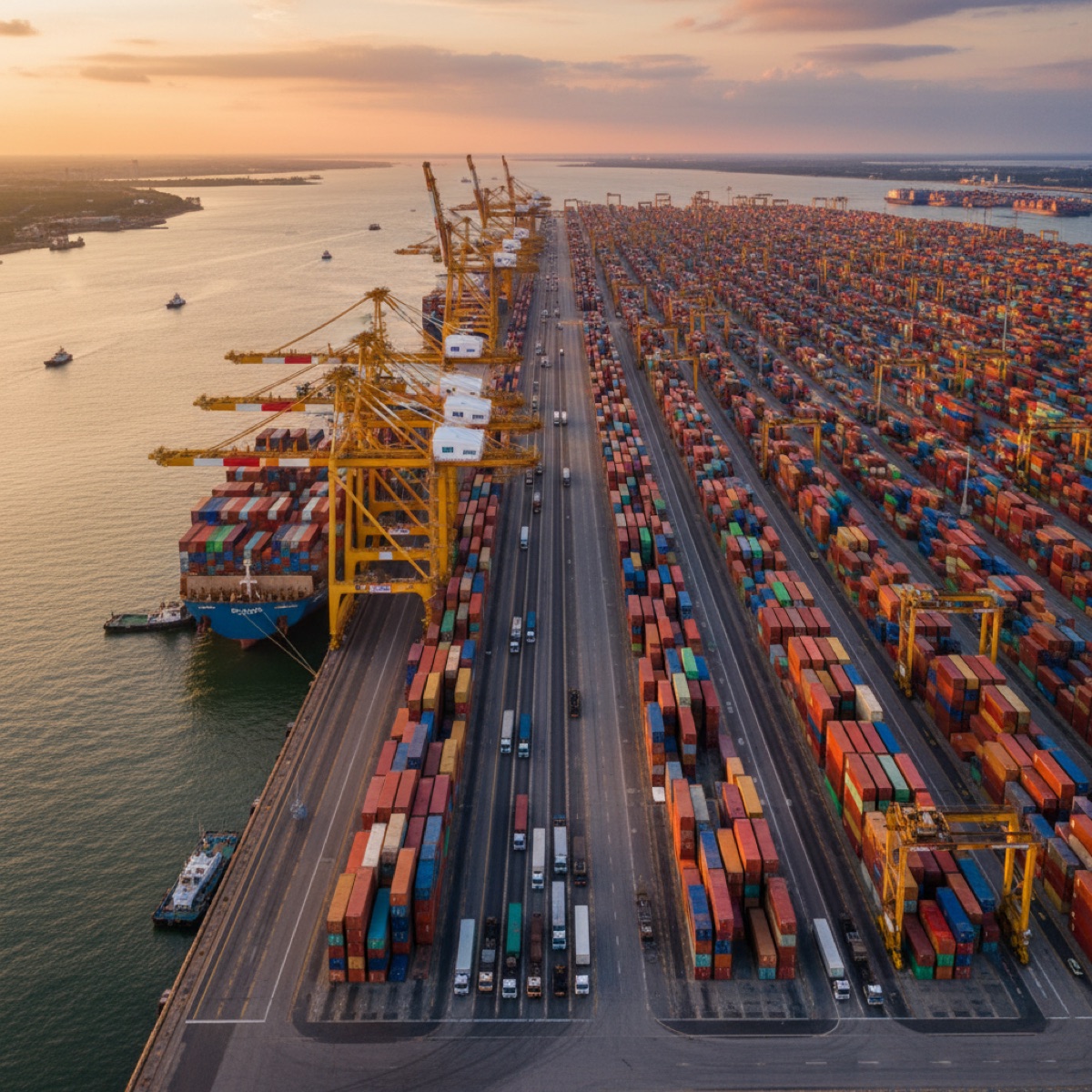
Maritime Single Window: A Practical Guide to Digital Port Clearance
For every ship that calls at a port, someone has to tell the authorities it is coming. Historically that someone was the ship agent, armed with a thick pack of paper forms, a fax machine, and a long list of recipients: customs, immigration, the port authority, the health authority, the harbour master, and sometimes a dozen more. The same crew list went to four different desks in slightly different formats. A single arrival could generate a stack of duplicated declarations and hours of avoidable rekeying. The maritime single window exists to end that duplication.
Since 1 January 2024, the use of a maritime single window is no longer optional for the world's seaports. Under amendments to the IMO FAL Convention, governments are required to introduce electronic information exchange and to make the single window the way ships and ports communicate clearance data. For port agents and ship operators handling arrivals and departures, this is the most significant change to the paperwork of a port call in a generation. This guide explains what a maritime single window is, the problem it solves, the standard FAL forms it carries, how an agent prepares and submits the arrival pack, and how operations software keeps the whole process fast, accurate, and auditable.
What a Maritime Single Window Actually Is
A maritime single window is a single digital point of entry through which all the information legally required for a ship's arrival, stay, and departure is submitted once and then distributed electronically to every authority that needs it. Instead of the agent sending the crew list separately to customs, immigration, and the port, the agent submits it once to the single window, and the platform routes the relevant data to each authority behind the scenes.
The principle is straightforward but powerful: report once, reuse many times. The same arrival data does not have to be typed five times into five systems. It is captured in a structured, machine-readable format and shared. That is the core of what the FAL Convention calls electronic data exchange in ports, and it is the foundation of modern digital port clearance.
The maritime single window is not a new form to fill in. It is a commitment that you only ever have to fill the form in once.
It helps to be precise about the regulatory background. The Convention on Facilitation of International Maritime Traffic, known as the FAL Convention, was adopted by the International Maritime Organization in 1965 with a clear purpose: to prevent unnecessary delays in maritime traffic and to standardise the documents required when ships arrive and leave. The 2024 single window requirement is the natural extension of that mission into the digital era.
The Problem It Solves: Duplicate Paper to Many Authorities
Ask any experienced port agent about the old way of working and you will hear the same complaints. The same vessel particulars and crew details were entered repeatedly across disconnected systems. Each authority had its own form, its own preferred channel, and its own deadline. A typo in one copy did not get corrected in the others. When a document went missing, the agent chased it by phone. None of this added safety or security value; it was pure friction.
That friction has real costs. Clearance delays keep ships waiting at anchor, burning fuel and money. Manual rekeying introduces errors that can hold up a crew change or a cargo release. And because the paper trail was scattered, proving what was submitted, when, and to whom was genuinely difficult. The single window attacks all three problems at once by harmonising the data and centralising the exchange.

The FAL Forms an Agent Submits
The data exchanged through a single window is organised around the standardised FAL forms. These are the building blocks of every port call declaration, and a competent agent knows each one. The standard set includes:
- General Declaration (FAL Form 1) — the master document describing the ship, the voyage, and the basic particulars of the call.
- Cargo Declaration (FAL Form 2) — the details of the cargo carried on board.
- Ship's Stores Declaration (FAL Form 3) — provisions, fuel, and consumables held on the vessel.
- Crew's Effects Declaration (FAL Form 4) — the personal effects of the crew that may be of interest to customs.
- Crew List (FAL Form 5) — the identity and details of every crew member on board.
- Passenger List (FAL Form 6) — the equivalent record for passengers, where carried.
- Dangerous Goods information — the declaration covering any hazardous cargo, which authorities scrutinise closely.
- Maritime Declaration of Health — the health status of those on board, required by the health authority.
Together these forms tell the port and the state everything they need to know to clear a vessel safely and lawfully. The single window does not change what information is required; it changes how it is delivered. Once these declarations exist as structured data, they can be validated, routed, and reused without anyone retyping a single field.
Preparing and Submitting the Arrival Pack
In practice, clearing a vessel is a lifecycle, not a single click. The agent receives the pre-arrival notification from the principal, gathers the vessel's particulars and the crew and cargo details, assembles the FAL declarations into a coherent arrival pack, and submits them to the relevant single window ahead of the required deadline. After arrival, departure declarations follow, and any changes during the stay have to be reflected.
Good pre-arrival documentation is where a clearance is won or lost. If the data is complete and consistent before the ship reaches the pilot station, the call proceeds smoothly. If a crew list is wrong or a dangerous goods entry is missing, the agent is firefighting at the worst possible moment. This is precisely why disciplined document management and a clear port call lifecycle matter so much to professional agency work. You can see how we structure that lifecycle on our port agents solution page and across the wider Agent module.
Data Harmonisation and Reuse
The quiet revolution inside the single window concept is data harmonisation. When everyone agrees on the structure and meaning of a data element — what a crew member record contains, how a port is identified, how a date is formatted — that element can travel between systems without translation. The vessel's IMO number, the crew nationalities, the cargo descriptions: once captured correctly, they populate every form that needs them.
Reuse compounds the benefit over time. A vessel that calls regularly carries forward its particulars from one call to the next. A crew that signs on for several voyages does not have to be re-entered each time. The agent's effort shifts from typing to checking, which is exactly the right place for human attention. Harmonised, reusable data is the difference between a single window that merely digitises paper and one that genuinely streamlines operations.
Single Window Versus Port Community System
Two terms are often confused, and the distinction matters. A maritime single window is the regulated interface between ships and government authorities for the statutory FAL data — the official clearance channel. A port community system is a broader commercial platform that connects the many private and public stakeholders in a port: terminals, agents, hauliers, freight forwarders, and authorities, exchanging the operational and commercial messages that move cargo through the gate.
They overlap and increasingly interconnect, but they are not the same thing. The single window is about regulatory clearance; the port community system is about the whole logistics ecosystem. In many ports the single window is implemented as part of, or alongside, a port community system, which is why agents often work with both. Understanding which platform owns which data prevents a great deal of confusion when something needs correcting.
The Reality of Remaining Fragmentation
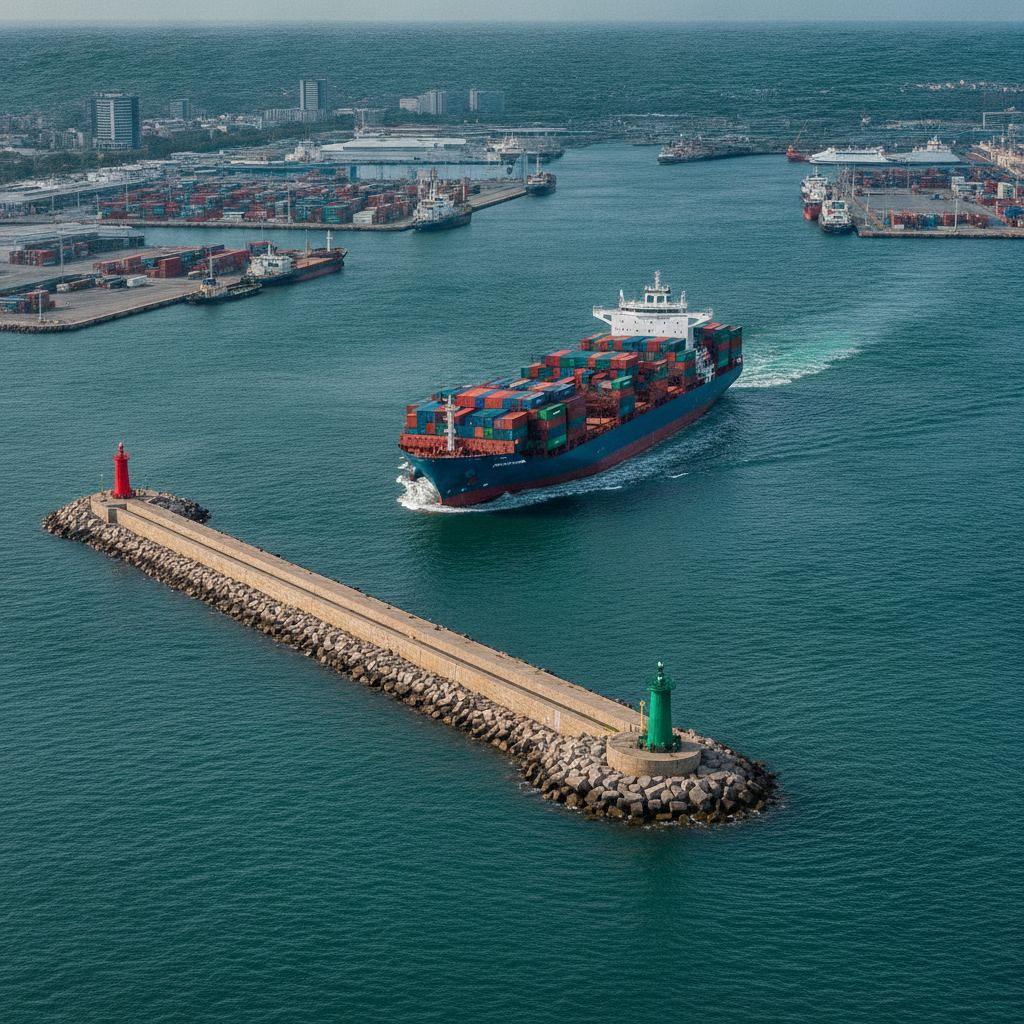
It would be convenient to report that the single window mandate created one global system. It did not. Each country implements its own maritime single window, with its own portal, its own data quirks, its own submission rules, and its own timing requirements. An agent network operating across several jurisdictions still faces a patchwork of national platforms, even though every one of them now exchanges FAL data electronically.
This is the practical challenge agents live with today. The regulatory direction is clear and the destination is harmonised, but the journey passes through dozens of separate national windows. The agents who cope best are those whose internal systems hold clean, structured port call data once and can feed it into whichever national window a given call requires, rather than rebuilding the pack from scratch each time.
How Operations Software Helps the Agent
This is where purpose-built agency software earns its place. The single window tells you what to submit; it does not help you assemble it, keep it consistent, or prove what you did. Good operations software closes that gap. It holds vessel and crew master data so particulars are entered once and reused. It structures the port call lifecycle so nothing is missed between pre-arrival and departure. It generates the FAL declarations from a single source of truth, reducing the rekeying that causes errors.
Just as important, it keeps an audit trail. Every submission, every amendment, every confirmation is logged, so when a question arises weeks later the answer is a search, not an investigation. The same discipline that underpins reliable clearance also underpins reliable proof of delivery for port calls, where a verifiable record of what happened is the whole point. For agents juggling many calls across many ports, that combination of structured data, lifecycle control, and a defensible record is what turns the single window from an obligation into an advantage.
The benefits land where it counts: faster clearance because data arrives complete and on time; fewer errors because information is reused rather than retyped; and better support for just-in-time port calls, where accurate, timely declarations let a ship arrive exactly when its berth is ready instead of waiting at anchor. Across a fleet or an agency network — the kind of coordination our Merchant module supports — those gains accumulate into a real operational edge.
Frequently Asked Questions
Is the maritime single window mandatory?
Yes. Following amendments to the IMO FAL Convention, the maritime single window for electronic data exchange became a requirement on 1 January 2024. Governments must provide it and the electronic exchange of FAL information is the expected standard for port clearance.
What is the difference between a maritime single window and a port community system?
A maritime single window is the regulated channel for submitting statutory FAL clearance data to government authorities. A port community system is a broader commercial platform connecting terminals, agents, hauliers, and authorities for the operational and logistics messages that move cargo. They often interconnect but serve different purposes.
Which forms does an agent submit through the single window?
The standard FAL set includes the General Declaration, Cargo Declaration, Ship's Stores Declaration, Crew's Effects Declaration, Crew List, Passenger List, Dangerous Goods information, and the Maritime Declaration of Health. The single window distributes the relevant data to each authority.
Does a single window mean every country uses the same system?
No. Each country runs its own national maritime single window with its own portal and submission rules. The data exchanged is harmonised around the FAL forms, but the platforms differ, so agents working across jurisdictions still deal with multiple national windows.
How does port clearance software help with the single window?
Port clearance software holds vessel and crew data so it is entered once and reused, structures the port call lifecycle so nothing is missed, generates the FAL declarations from a single source of truth, and keeps a full audit trail of submissions and amendments. That reduces errors and speeds up clearance.
Ready to make digital port clearance faster and more reliable across every port you cover? Explore the SupaMaritime Agent module for port call lifecycle and document management, review how we protect your data on our security page, or see the full platform on the modules overview.