Port Call Optimization: Faster, Cleaner, Cheaper Port Stays
Every commercial voyage ends and begins in port, yet the port call remains one of the least optimized links in the maritime supply chain. A vessel can be navigated across an ocean with remarkable precision, only to lose hours, fuel and money sitting at anchorage waiting for a berth that was never going to be ready on time. Port call optimization is the discipline of removing that waste: aligning the vessel, the port agent, the terminal and the port authority around a single, shared view of when the ship will arrive, what will happen while it is alongside, and when it will leave.
This guide breaks down the anatomy of a port call, quantifies the hidden costs of poor coordination, explains the just-in-time arrival concept and the data sharing it depends on, and shows how purpose-built port call management software turns a chaotic email thread into an auditable, optimized workflow. It is written for the two parties who feel the pain most directly: ship operators and port agents.
The Anatomy of a Port Call
To optimize a process you first have to see it clearly. A port call is not a single event; it is a sequence of dependent phases, each with its own stakeholders, documents and decision points. When any phase slips, the delay cascades into the next.
- Pre-arrival: Voyage instructions, ETA updates, pre-arrival notifications, customs and immigration paperwork, pilot and tug booking, berth nomination, and confirmation of cargo readiness.
- Arrival and Notice of Readiness (NOR): The vessel reaches the pilot station or anchorage, tenders NOR, and laytime considerations begin to apply.
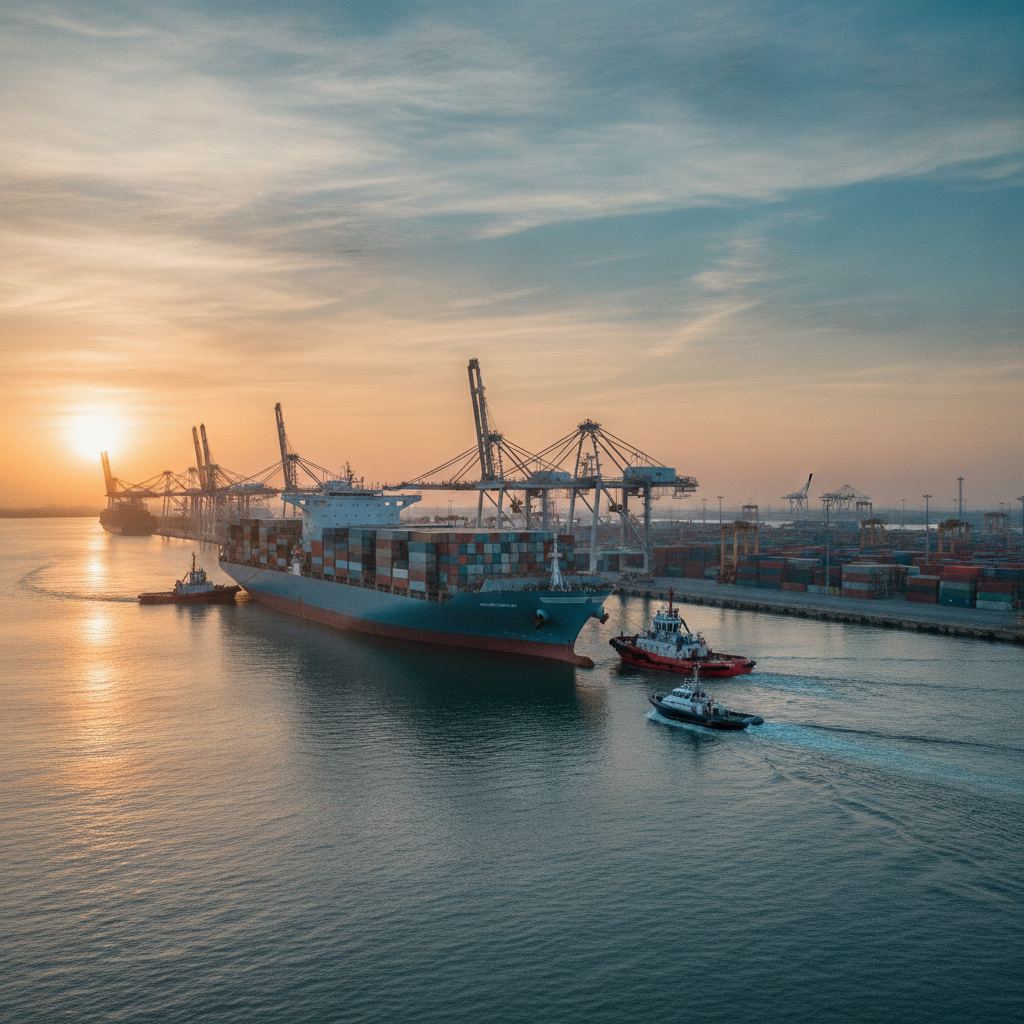
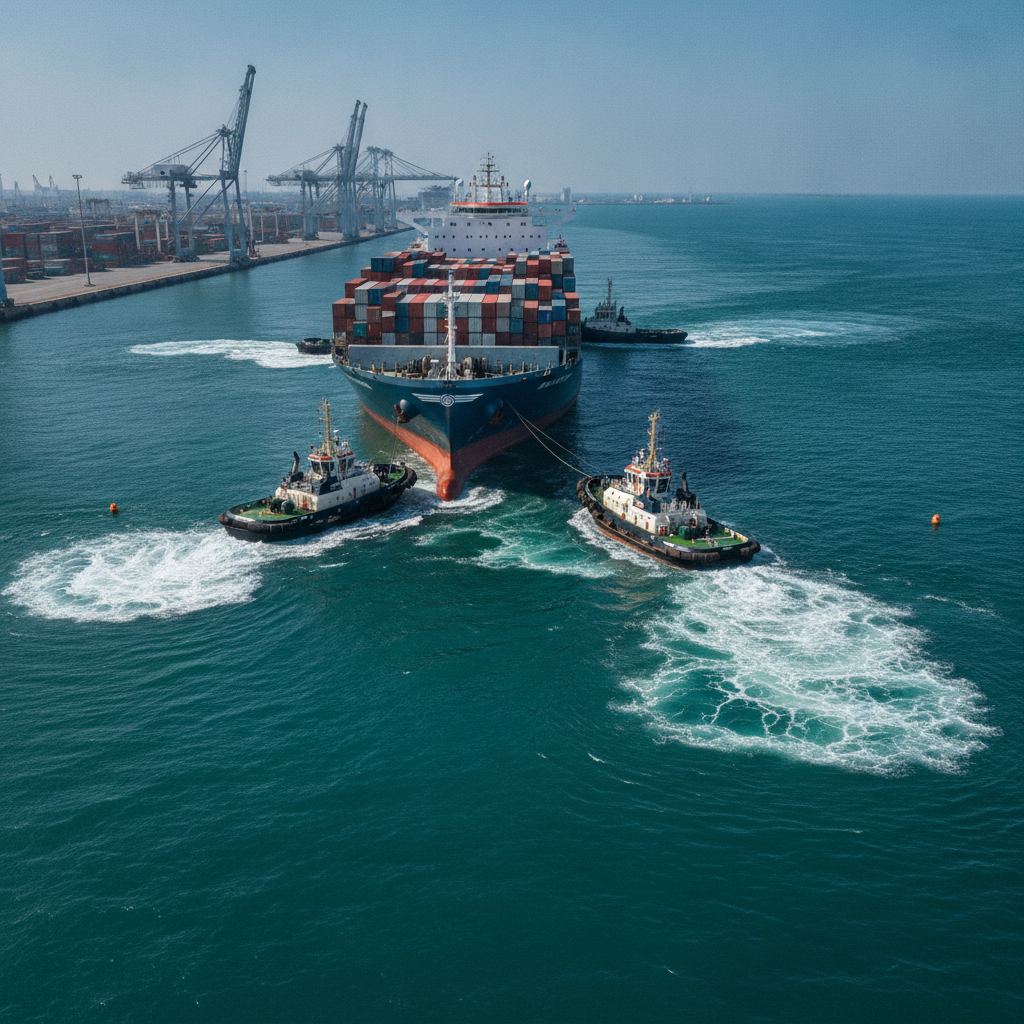
- Berthing: Pilotage, towage and mooring bring the vessel alongside the nominated berth.
- Cargo operations: Loading or discharging, surveys, tank inspections, and any associated stoppages.
- Services: Bunkering, fresh water, stores, crew changes, waste reception, repairs and class attendance, all of which the agent coordinates.
- Departure: Outbound clearance, final documentation, pilot and tug for unberthing, and the next voyage order.
- Post-call: Statement of facts, disbursement account reconciliation, proof of delivery for documents and services, and closing the file.
Each phase generates its own paper trail and its own opportunities for friction. The port agent sits at the centre of this lifecycle, coordinating from the agency side, while the ship operator manages the vessel and voyage side. When those two perspectives are not synchronized, the port call drifts.
The Hidden Cost of a Port Call
Most of the cost of a poorly run port call is invisible on any single invoice. It hides in idle time, in fuel burned to arrive early for no reason, and in commercial penalties that could have been avoided with better information. Consider where the money actually leaks:
- Waiting at anchorage: A vessel that arrives before its berth is free does not save time; it simply waits at anchor, consuming hotel load fuel and crew hours while earning nothing.
- Idle time alongside: Gaps between cargo operations and services, caused by uncoordinated scheduling, extend the port stay without adding value.
- Demurrage and laytime exposure: Disputes over when NOR was tendered and accepted, or over stoppages, turn into expensive claims when the statement of facts is incomplete or contested.
- Wasted fuel from steaming to wait: The classic anti-pattern is to maintain full speed across a voyage only to drop anchor on arrival. The fuel difference between arriving on time and arriving early-then-waiting is pure waste.
- Emissions: Every tonne of wasted fuel is also avoidable carbon. With tightening regulatory and commercial pressure on emissions, inefficient port calls now carry a reputational and compliance cost on top of the fuel bill.
A ship that steams hard to reach the pilot station and then waits three days at anchor has not saved a single hour. It has burned fuel, generated emissions and earned nothing, all because no one shared the one number that mattered: when the berth would actually be free.
Just-In-Time Arrival: Optimizing the Most Wasteful Phase
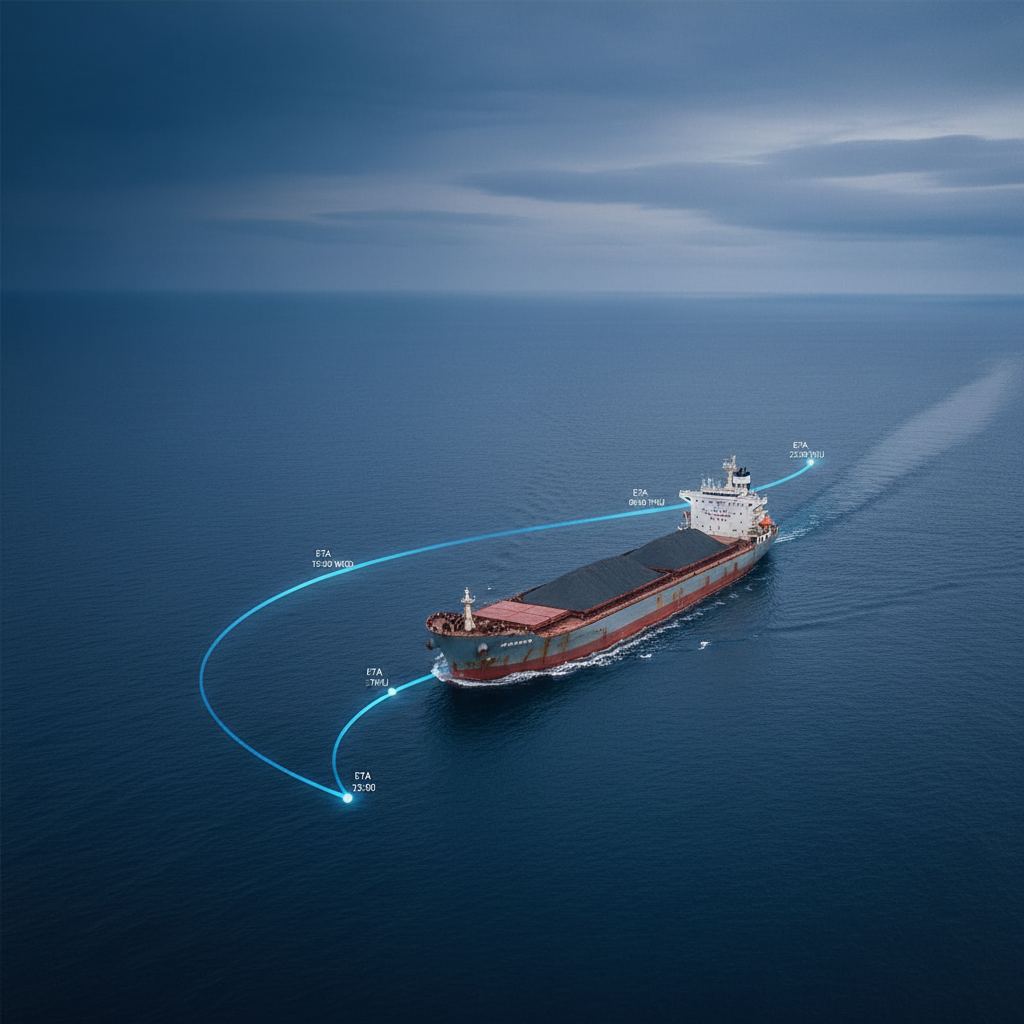
Just-in-time (JIT) arrival is the single most powerful lever in port call optimization. The principle is simple: instead of racing to the port and waiting, the vessel adjusts its speed during the voyage so that it arrives exactly when the berth, the pilot and the services are ready. Slower steaming over the final leg can save a meaningful amount of fuel and emissions while arriving at the same useful moment.
The catch is that JIT is impossible without trustworthy, shared data. The master cannot safely slow down to save fuel unless someone can confirm, with confidence, that the berth will indeed be available at the recalculated arrival time. That confirmation depends on a chain of information flowing between the terminal (berth availability), the port authority (traffic and pilot scheduling), the agent (services and coordination) and the vessel (revised ETA and speed). Break any link in that chain and the master reverts to the safe default of arriving early, and the waste returns.
This is why JIT is not really a navigation problem; it is a coordination and data problem. The technology to slow a ship down already exists on the bridge. What has been missing is a reliable, low-friction way for every party to see and agree on the same timeline.
The Coordination Problem: Too Many Parties, No Single Timeline
Walk through how a typical port call is coordinated today and the inefficiency becomes obvious. The agent juggles a port authority portal, a terminal email, a WhatsApp group with the launch boat operator, a phone call to the bunker supplier, and a separate thread with the operator. The operator, meanwhile, is reading ETA updates from the master, forwarding them on, and trying to reconcile them with what the agent last reported.
There is no single source of truth. Information lives in inboxes, chat apps and people's heads. When a berth slips by six hours, that change has to be manually relayed to everyone who depends on it, and inevitably someone is missed. The statement of facts is reconstructed after the event from fragments, which is exactly why laytime disputes are so common.
Standardized port call data formats exist precisely to address this fragmentation. By agreeing on common definitions for events and timestamps, the industry makes it possible for systems to exchange port call information automatically instead of re-keying it from emails. Software that speaks these standards can integrate with terminals and port systems rather than forcing humans to act as the integration layer. The port agent, in particular, benefits when the coordination role shifts from manual relay to managed workflow, a transition we explore in our companion piece on port agent digitization from paper to platform.
How Software Turns Coordination Into Optimization
Port call management software does not optimize a port call by magic; it optimizes it by giving every stakeholder the same record and making each step trackable. The concrete capabilities that move the needle are these:
- A shared port-call record: One timeline for the whole call, from pre-arrival to closure, that the vessel, agent and terminal all read from. When a berth time changes, it changes once, for everyone.
- Task tracking: Every action in the call, from pilot booking to crew change to outbound clearance, is a task with an owner and a status, so nothing falls between the cracks.
- Service management: Bunkers, stores, fresh water, waste reception and repairs are coordinated and logged against the call rather than scattered across suppliers' inboxes.
- Financial visibility: The disbursement account is built up live as costs are incurred, so the operator sees the running total instead of waiting for a surprise at the end.
- Proof of delivery: Documents and services are confirmed and time-stamped, giving an auditable trail that protects against disputes and supports the statement of facts.
The combined effect is that coordination stops being reactive firefighting and becomes a managed, measurable process. Once the data is structured, the port stay can be analyzed, bottlenecks can be identified, and JIT arrival becomes practical because the arrival time is genuinely shared and trusted.
Port Stay Efficiency and the Environmental Dividend
Optimizing the port call is one of the rare initiatives that improves the commercial result and the environmental result at the same time. JIT arrival cuts fuel consumption on the approach. A tighter port stay reduces the time the vessel spends burning auxiliary fuel alongside. Fewer wasted hours mean fewer wasted emissions. For operators facing increasing scrutiny on their carbon footprint, port call optimization is a credible, measurable lever that does not require new propulsion technology, only better coordination.
The environmental dividend also strengthens the business case internally. A project justified purely on fuel savings and reduced demurrage becomes easier to approve when it also contributes to emissions targets that the organization has already committed to publicly.
Choosing Port Call Optimization Software
Not every tool that calls itself a port solution actually optimizes the port call. When evaluating port call management software, weigh it against the criteria that determine whether it will deliver in practice:
- A genuine shared record that all parties can access, not just an internal database that still requires emails to keep others informed.
- Standards-based integration so the system can exchange data with terminals and port systems rather than relying on manual re-keying.
- Lifecycle coverage that follows the call from pending through arrival, in-port, completed and closed, rather than handling only one slice of the process.
- Service and disbursement management built in, so financial visibility is a by-product of running the call rather than a separate reconciliation exercise.
- Proof of delivery and document management that produce a defensible audit trail.
- Fit for both sides: tools for the agency that coordinates the call and tools for the operator that runs the voyage, so the two perspectives stay aligned.
SupaMaritime is built around exactly this two-sided view. The Agent module manages the full port-call lifecycle from the agency side, moving each call through pending, arrived, in-port, completed and closed, with task and service management, disbursement accounts, document management with proof of delivery, and an operations dashboard that gives the whole team one timeline. On the vessel and operator side, the Merchant module handles voyage planning, port call management and performance, so the operator's view of the call stays synchronized with the agent's. For a deeper look at the agency workflow, see our port agents solution, and explore the full platform across our modules.
Frequently Asked Questions
What is port call optimization?
Port call optimization is the practice of coordinating the vessel, port agent, terminal and port authority around a single shared timeline so that the ship arrives, works cargo, takes services and departs with the least possible waiting, idle time, fuel waste and emissions. It treats the port call as a measurable process rather than a series of disconnected events.
What is just-in-time (JIT) arrival?
Just-in-time arrival means adjusting a vessel's speed during the voyage so it reaches the pilot station exactly when the berth and services are ready, instead of racing to arrive early and then waiting at anchorage. It saves fuel and emissions, but it depends on every party reliably sharing berth availability and arrival data.
Why is data sharing so important for port call efficiency?
A master will only slow down to save fuel if there is trustworthy confirmation that the berth will be free at the new arrival time. That confirmation requires data to flow between the terminal, port authority, agent and vessel. Without a shared, accurate timeline, everyone defaults to arriving early, and the waiting and waste return.
How does port call management software reduce demurrage and laytime disputes?
By recording events and timestamps in a shared record with proof of delivery, the software produces an auditable statement of facts rather than a reconstruction from scattered emails. Clear, time-stamped evidence of when NOR was tendered and when operations and stoppages occurred makes laytime calculations defensible and reduces disputes.
Who benefits more from port call optimization, operators or agents?
Both, and they benefit most when they use aligned tools. Agents coordinate the call and need task, service, disbursement and document workflows; operators run the voyage and need port call visibility tied to voyage planning and performance. SupaMaritime serves both sides so their views of the same call stay in sync.
Ready to turn your port calls from a coordination headache into an optimized, auditable workflow? Explore the SupaMaritime Agent module for the agency side and the Merchant module for the voyage side, and see how a shared port-call record drives faster, cleaner, cheaper port stays.