Laytime and Demurrage Software: Stop Leaking Money on Every Voyage
Demurrage is one of the largest controllable costs in tramp shipping, and it is also one of the least controlled. On dry bulk and tanker voyages, the money that moves between owner and charterer once the vessel arrives at port is decided not by the freight rate but by the clock: how long the ship is allowed to stay, how that allowed time is counted, and what happens when it runs out. Get the counting right and a despatch credit comes back to the charterer or a clean demurrage claim is paid promptly to the owner. Get it wrong, file it late, or document it poorly, and the money simply leaks away. Across a fleet, that leakage is rarely small.
The discipline that governs all of this is laytime, and the financial consequence of exceeding it is demurrage. For decades, the work of counting laytime and preparing demurrage claims has been done in spreadsheets, often by a single overworked post-fixture analyst working from scanned Statements of Facts and a charter party that nobody else has read closely. That model is breaking down. Charter party terms have grown more complex, time-bar deadlines are short and unforgiving, and the volume of voyages has outpaced the capacity to calculate each one carefully by hand. This is the gap that purpose-built laytime and demurrage software is designed to close.
This guide explains what laytime actually is, how it is counted under common charter party language, why the manual spreadsheet approach quietly destroys value, and what good demurrage management software does differently. It is written for shipowners, charterers, operators and the chartering and post-fixture desks who live with these numbers every day, across both dry bulk and tanker trades.
Why Demurrage Is a Major Leaked Cost
Demurrage rarely appears in the headline economics of a fixture, which is precisely why it leaks. The freight rate is negotiated openly and tracked carefully. The demurrage rate is agreed in the same recap, but the actual exposure depends on events that unfold weeks later at a congested berth, in weather, behind a queue of other vessels. A charterer focused on the freight number may treat demurrage as an operational afterthought; an owner may assume the broker or the agent will protect the claim. Neither assumption survives contact with a busy load port.
The leakage takes several forms. Claims are calculated incorrectly because an exception was missed or a time band was misread. Claims are filed after the contractual time bar and are rejected outright, regardless of merit. Despatch is overpaid because the charterer's own calculation was not checked against the owner's. Counterparties dispute figures that cannot be defended because the supporting documentation was never assembled into a coherent file. Each of these failures is avoidable, and each recurs constantly in organisations that treat laytime as clerical work rather than as the commercial discipline it is.
The structural problem is that demurrage sits at the seam between the commercial team that fixes the vessel and the operations team that runs the voyage. The terms are set by one group and the consequences are counted by another, often without a shared system. Value falls through that seam routinely, and because no single number is ever dramatically wrong, the cumulative loss is easy to overlook.
Laytime Basics: The Vocabulary of the Clock
Laytime is the period of time agreed between owner and charterer during which the vessel may be loaded or discharged without further payment beyond the freight. It exists only under a voyage charter, where the owner is paid for carrying a cargo from A to B and bears the risk of delay at port. Under a time charter the dynamic is different: the charterer pays hire for the use of the vessel and effectively carries the time risk themselves, so laytime and demurrage in the voyage sense do not apply. Understanding which regime governs a given employment is the first step, and it is one that automated systems should enforce rather than assume.
Within voyage chartering, several concepts recur in almost every fixture, and the software that manages laytime has to model each of them faithfully:
- Charter party (CP). The governing contract. Standard forms such as Gencon, Asbatankvoy, Synacomex and many trade-specific forms set out the default rules, which are then amended by the rider clauses agreed in the recap. The CP terms are the source of truth for every calculation.
- Laycan. The window, defined by a layday and a cancelling date, within which the vessel must arrive and tender readiness. Arrive too early and the charterer need not accept the vessel before the layday; arrive after the cancelling date and the charterer may have the right to cancel.
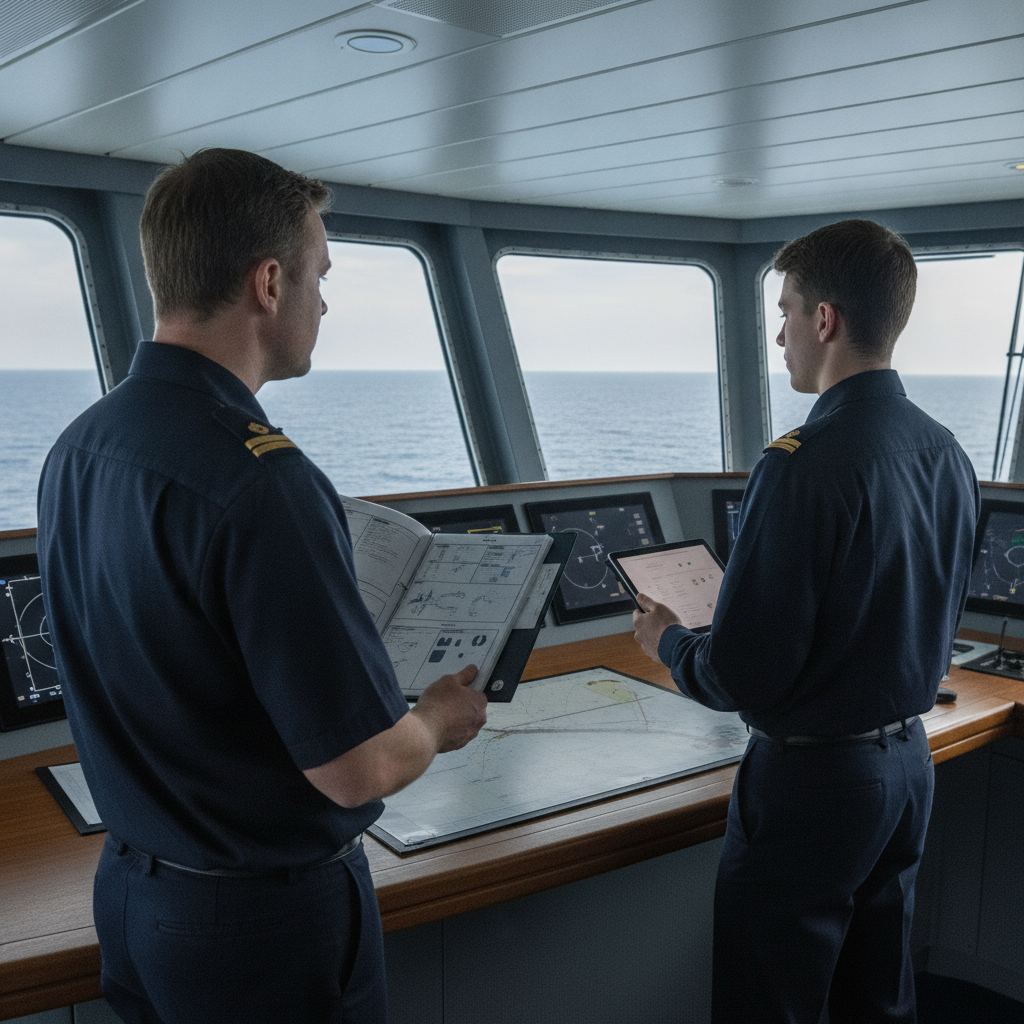
- Notice of Readiness (NOR). The formal notice, tendered by the master, that the vessel has arrived and is ready in all respects to load or discharge. The validity and timing of the NOR is one of the most disputed points in laytime, because it usually determines when the clock starts.
- Statement of Facts (SOF). The chronological port log, signed by the agent and often the master, recording every event from arrival to departure: NOR tendered, berthing, commencement of cargo, stoppages, weather, completion. The SOF is the raw evidence from which laytime is counted.
- Fixed versus reversible laytime. Laytime may be a fixed allowance for load and a separate fixed allowance for discharge, or it may be reversible, meaning load and discharge time are pooled into a single total. Reversible laytime can rescue a slow load port with a fast discharge, and the calculation logic differs materially between the two.
These terms are not interchangeable trivia. Each one is a decision point that changes the result, and each is a place where a manual calculation can quietly go wrong.
How Laytime Is Counted
Once the clock starts, counting laytime is an exercise in applying the charter party's rules to the timeline in the Statement of Facts. The headline allowance, expressed in days, hours or a loading rate in tonnes per day, is only the starting point. What consumes that allowance, and what does not, is governed by the laytime terms, and small differences in wording produce large differences in money.
The familiar abbreviations encode these rules. WWD means weather working days, time during which work is possible weather permitting. SHEX means Sundays and holidays excepted, so those periods do not count. SHINC means Sundays and holidays included, so they do count. Combinations such as WWDSHINC, weather working days Sundays and holidays included, are common and each behaves differently. A system that does not interpret these clauses correctly will count time that should be excepted, or fail to except time that should be, and the error compounds across every stoppage in the port stay.
Interruptions and exceptions are where most disputes live. Weather that prevents cargo operations may stop the clock under a weather working days regime. Stoppages caused by the vessel, such as breakdown of the ship's gear, generally do not count against the charterer. Stoppages caused by the charterer or the port, such as awaiting cargo or shifting berth, usually do. The charter party will also carry specific excepted periods, and once-on-demurrage-always-on-demurrage principles mean that once laytime has expired, many of the exceptions that previously stopped the clock no longer apply. Tracking the precise sequence of events against the precise wording of the clauses is the entire game.
Laytime is not arithmetic applied to a port log. It is the charter party read against the clock, event by event, exception by exception. The number at the end is only as defensible as the reasoning that produced it.
Demurrage Versus Despatch
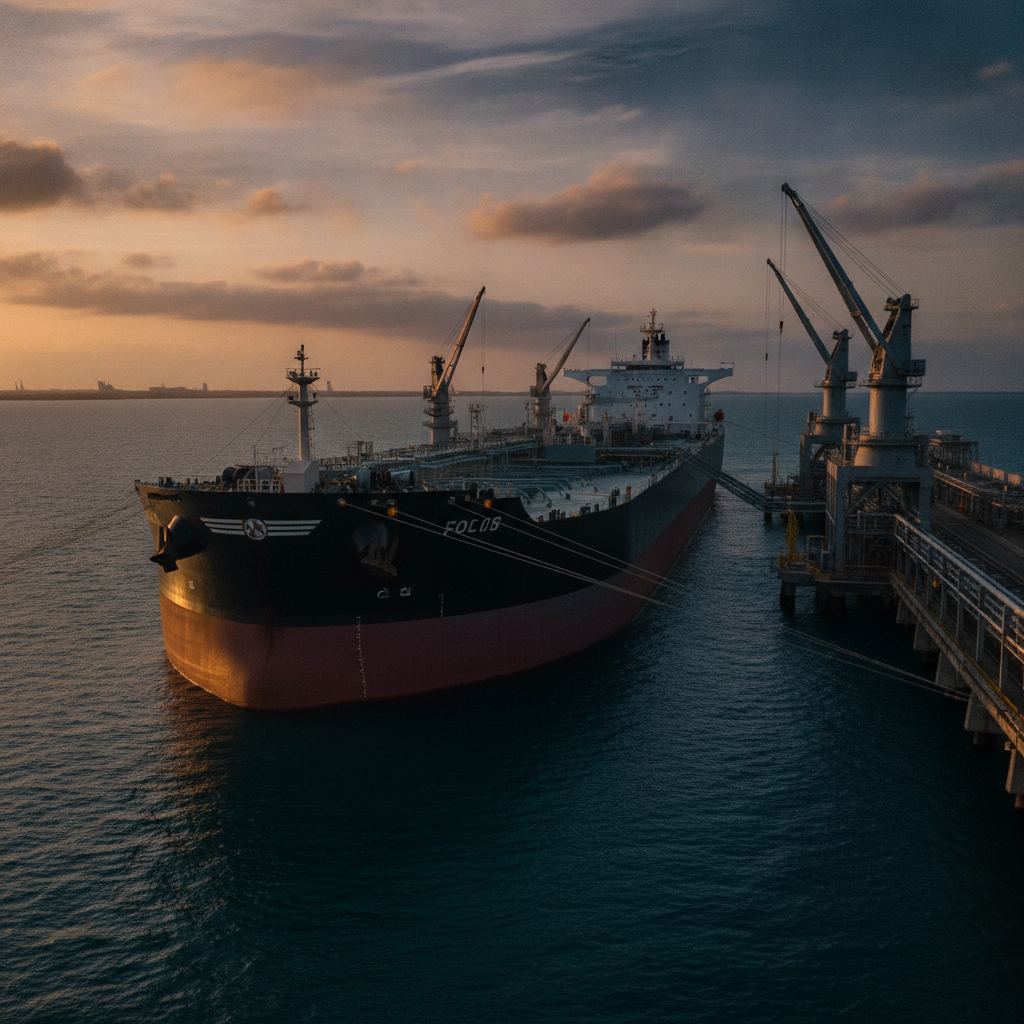
When the allowed laytime is exhausted before cargo operations are complete, the vessel goes on demurrage. From that moment the charterer owes the owner the agreed demurrage rate for the additional time, compensating the owner for the vessel being detained beyond the bargain. Demurrage is, in legal terms, liquidated damages for detention, and the rate is fixed in advance precisely so that the parties do not have to argue about the value of lost time after the fact.
Despatch is the mirror image, and it appears mainly in dry bulk trades. If the vessel completes loading or discharging before laytime expires, the owner may owe the charterer a despatch payment as a reward for the time saved. Despatch is conventionally payable at half the demurrage rate, and it may be calculated on all time saved or only on working time saved, depending on the charter party. Tanker charters typically do not provide for despatch, which is one of several reasons the two trades require different calculation logic.
The commercial point is that demurrage and despatch are two sides of one calculation, and both depend on exactly where the laytime line falls. An hour disputed at the boundary can flip a despatch credit into a demurrage liability or vice versa, which is why both owner and charterer have every incentive to compute the laytime statement independently and reconcile the difference.
The Manual Spreadsheet Problem and Time-Bar Risk
The traditional tool for all of this is the spreadsheet, and it fails in predictable ways. A spreadsheet does not know the charter party. The analyst has to read the CP, transcribe the relevant clauses into their own mental model, key the SOF events by hand, and apply the rules manually. Every one of those steps is a place for transcription error, misreading of a clause, or simple fatigue at the end of a long week. Because the spreadsheet carries no audit trail of why a period was counted or excepted, a disputed claim months later cannot be reconstructed with confidence.
Worse, the spreadsheet does not manage time. Demurrage claims are subject to contractual time bars, frequently in the range of ninety days from completion of discharge, and often with strict documentary requirements: the claim must be presented with the specified supporting documents or it fails entirely, regardless of how sound the underlying figures are. A time-barred claim is worth nothing. Owners lose otherwise valid demurrage every year simply because a claim sat in an inbox until the deadline passed, or because a required document was not attached. No amount of calculation accuracy rescues a claim that arrives one day late.
The volume problem makes this acute. A spreadsheet model that one careful analyst can manage for a handful of voyages becomes a liability across a fleet running hundreds of port calls a year. The analyst becomes a single point of failure, the calculations are inconsistent from one person to the next, and there is typically no portfolio view of which claims are open, which are approaching their time bar, and how much money is at risk. The work scales linearly with voyages while the team does not, and claims start slipping.
What Good Laytime and Demurrage Software Does
Purpose-built laytime and demurrage software replaces the spreadsheet with a system that understands the charter party, the timeline and the deadline together. The point is not merely to compute faster; it is to make every claim consistent, defensible and on time. The capabilities that matter most are these:
- Statement of Facts capture. The SOF events are entered, imported or increasingly parsed from documents into a structured timeline, so the calculation works from clean, time-stamped events rather than a re-typed log.
- Automated laytime calculation. The system applies the laytime terms, weather working day rules, SHEX or SHINC treatment, exceptions and interruptions to the timeline automatically, producing a laytime statement that shows exactly how each period was treated and why.
- A charter party terms library. Standard forms and frequently used rider clauses are stored once and reused, so the demurrage rate, laytime allowance, exceptions and time-bar period for a given fixture are applied consistently rather than re-keyed each voyage.
- A claims workflow with time-bar tracking. Every claim has an owner, a status and a deadline. The system flags claims approaching their time bar, escalates them, and gives management a live portfolio view of open exposure, which is the single most effective defence against silent leakage.
- Documentation and audit. The supporting documents, SOF, NOR, weather logs and correspondence are attached to the claim and travel with it. Because the calculation records its own reasoning, a disputed figure can be replayed against the inputs rather than argued from memory.
- Analytics. With every voyage calculated in one system, patterns become visible: which ports consistently generate demurrage, which counterparties dispute most often, where despatch is being overpaid, and how recovery rates compare across trades.
The shift is from a clerical reconstruction of each voyage to a managed pipeline in which calculation, documentation and deadline are handled as one connected process. For a wider view of how this sits alongside voyage and cargo operations, see our note on how voyage forecasting is reshaping charterer relationships, since the arrival data that drives an ETA is the same data that anchors a Statement of Facts.
Integration With Voyage and Port Data
Laytime calculation does not happen in isolation, and the best results come when the demurrage system shares data with the rest of the operation. The vessel's arrival time, the NOR timestamp, berthing and unberthing events, and cargo commencement and completion are all data points that may already exist in the voyage management and port agency systems. When those flow into the laytime calculation automatically, the analyst spends less time re-keying and more time on the judgement calls that actually require expertise.
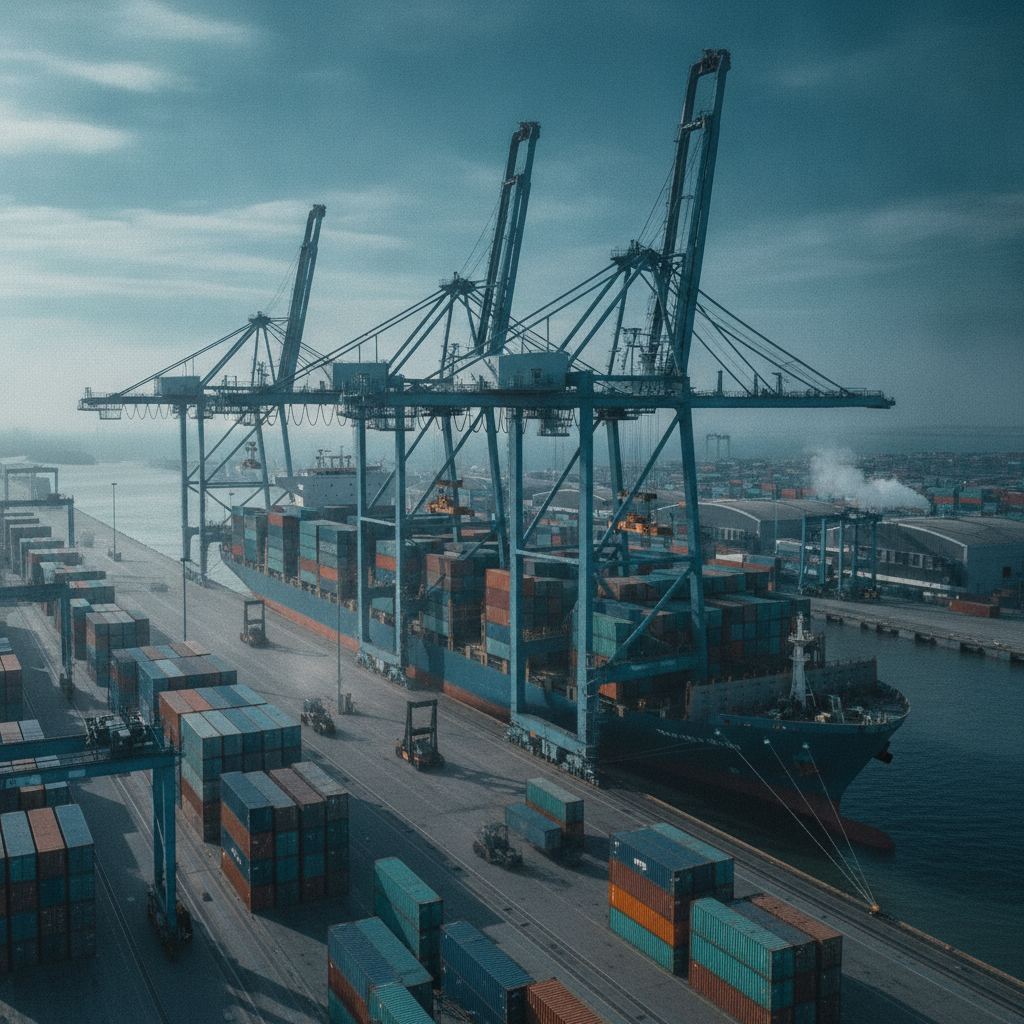
Port agents are central to this. The Statement of Facts originates at the port, and the quality and timeliness of that document drives the quality of the claim. A connected workflow that pulls the SOF from the agent, validates it against the expected events, and feeds it into the calculation closes the longest delay in the traditional process, which is the wait for documents to arrive by email and be manually entered. Demurrage software that ignores the port-side data source solves only half the problem.
For owners and operators running mixed fleets, the integration also matters because different vessel types carry different calculation logic. Bulk carriers, tankers, container ships and ro-ro vessels each have characteristic charter forms and laytime conventions, and a system that handles the whole fleet in one place avoids the fragmentation of separate tools per trade.
Choosing Laytime and Demurrage Software
When evaluating software, the temptation is to focus on the calculation engine, but the calculation is the part that is easiest to get right. The harder questions are about fit, workflow and data. A short checklist helps:
- Does it model your trades correctly? Dry bulk despatch logic, tanker conventions and reversible laytime should all be handled natively, not bolted on.
- Can it parse or import your Statements of Facts with minimal manual entry, given the formats your agents actually use?
- Does the charter party terms library reflect the standard forms and rider clauses you fix on, and can it be extended?
- Is the time-bar tracking proactive, with escalation and a portfolio view, rather than a passive date field?
- Does it produce an auditable laytime statement that a counterparty will accept, with the supporting documents attached?
- Does it integrate with your voyage management and port agency data, so the system is fed rather than re-keyed?
The right answer for any given organisation depends on fleet size, trade mix and how the commercial and post-fixture teams are structured. What does not vary is the underlying lesson: the value of demurrage software lies in consistency, deadline control and defensibility, not in raw calculation speed alone.
Frequently Asked Questions
What is the difference between laytime and demurrage?
Laytime is the time allowed to the charterer to load or discharge the cargo without extra payment. Demurrage is the money the charterer pays the owner once that allowed time is exceeded, compensating the owner for the vessel being detained at the agreed demurrage rate.
What is the time bar on a demurrage claim?
The time bar is the contractual deadline by which a demurrage claim must be submitted, with all required supporting documents, or it is lost. Periods vary by charter party but are often around ninety days from completion of discharge. A claim presented after the time bar, or without the specified documents, is typically rejected regardless of how accurate the figures are, which is why deadline tracking is critical.
How does laytime calculation software handle weather and exceptions?
Good software applies the charter party laytime terms directly to the Statement of Facts timeline. It interprets weather working day rules, SHEX and SHINC treatment, vessel-caused stoppages and charterer-caused stoppages, and produces a statement showing exactly how each period was counted or excepted, so the result is reproducible and defensible rather than a manual reconstruction.
What is despatch and when does it apply?
Despatch is a payment from owner to charterer when cargo operations finish before laytime expires, rewarding the charterer for the time saved. It is common in dry bulk trades, typically at half the demurrage rate, and may be based on all time saved or only working time saved. Tanker charters generally do not provide for despatch.
Can demurrage software replace the post-fixture analyst?
No, and it is not meant to. The software removes the mechanical, error-prone work of re-keying events and applying rules by hand, and it enforces deadlines, but the analyst's judgement on disputed NOR validity, ambiguous clauses and negotiation with counterparties remains essential. The software makes the analyst faster, more consistent and far less likely to miss a time bar.
SupaMaritime's Merchant module brings charter party management, laytime calculation and demurrage claims into one connected system, fed by the same voyage and port data that runs the rest of the operation. To see how it fits dry bulk and tanker desks, explore the Merchant module, our dedicated pages for tanker operators and bulk carrier operators, and the full module overview.