SIRE 2.0 Inspections: A Practical Guide to OCIMF Tanker Vetting
Few events in a tanker's trading life carry as much commercial weight as a SIRE inspection. A single day on board produces a report that oil companies, charterers and terminal operators may read for months afterwards, before they decide whether to use the ship.
Since OCIMF rolled out SIRE 2.0 during 2024, the inspection has changed character. The checklist logic of the VIQ7 era has given way to a risk-based question library, photographic evidence, tablet-based recording and a much closer look at how the crew actually works.
This guide explains how the OCIMF SIRE programme works today, what operators must submit before an inspector boards, what happens on the day, how observations are recorded and answered, and how to prepare a ship and its crew. It is written for tanker operators, vetting and marine superintendents, and masters.
SIRE 2.0 rewards ships that run the way their procedures say they do. Preparation that starts a week before the inspector boards cannot hide the gaps that the crew, the records and the photographs reveal within a few hours.
What the OCIMF SIRE Programme Is and Why Tanker Vetting Matters
SIRE, the Ship Inspection Report Programme, is run by OCIMF, the Oil Companies International Marine Forum. It provides a common format for inspecting tankers and a shared database where inspection reports are stored and made available to programme recipients.
SIRE itself does not approve or reject a ship. It supplies information. Each oil company, charterer or terminal that reads a report applies its own vetting criteria and decides whether the ship is acceptable for a particular voyage, cargo or berth.
That is why tanker vetting is a commercial issue as much as a technical one. A report with poorly answered observations can mean that a ship is not accepted for a fixture, has to wait for another inspection, or is fixed on less attractive terms. A clean, well-documented report keeps the ship tradeable.
The scale of use explains the pressure. OCIMF reports that more than 8,000 SIRE reports are accessed every month. At the time of writing, a report costs £47 for OCIMF members and £58 for non-members, and each published report remains available for 12 months.
From VIQ7 to SIRE 2.0: What Changed
The previous programme was built around the seventh edition of the Vessel Inspection Questionnaire, known as VIQ7. Inspectors worked through a long, largely uniform list of questions and recorded observations mainly where something was missing or deficient.
SIRE 2.0 replaced that model with a risk-based approach. OCIMF built the new question set using bowtie risk analysis, a method that maps the threats leading to a hazardous event, the barriers that should prevent it, and the consequences if those barriers fail.
In practice, each question now targets a barrier that matters for safety or pollution prevention. The inspector is asked to verify not only that equipment exists and certificates are valid, but also that procedures are understood and that crew members can carry out the relevant tasks competently.
The other major shift is the weight given to human factors. Non-technical skills such as communication, situational awareness, leadership and teamwork are observed directly, and responses distinguish between the human, process and hardware elements. A ship can have perfect equipment and still attract negative observations on how that equipment is used.
What stays the same
Some fundamentals have not changed. Inspections are still carried out by accredited inspectors, reports are still shared through OCIMF with programme recipients, and operators still have the chance to respond before a report is published. What has changed is the depth of the evidence behind each answer.
The SIRE 2.0 Question Library and the Compiled Questionnaire
The SIRE 2.0 question library is the master set of questions from which every inspection is assembled. Each question comes with guidance on what the inspector should look at, which objective evidence is expected, and which industry references apply.
No inspection uses the whole library. The questions are grouped so that each inspection covers the essentials while the detail varies from one visit to the next:
- Core questions. High-priority questions linked to the most significant risks, intended to be asked in every inspection of the relevant ship type.
- Rotational questions. Questions included in some inspections and not in others, so that the full scope is covered over time without making every visit unmanageable.
- Campaign and conditional questions. Campaign questions focus attention on a specific topic for a period, while conditional questions apply only when the ship has the relevant equipment, cargo type or operation.
From the questions that apply to the ship, and from the data the operator has submitted, the system generates a Compiled Vessel Inspection Questionnaire, or CVIQ. This is the question set for that specific inspection of that specific ship.
Because the rotational content changes, crews cannot prepare by memorising a fixed list. The only reliable preparation is familiarity with the whole library and with the ship's own procedures, so that any question can be answered with evidence.
Pre-Inspection Data: HVPQ, PIQ, Photographs and Certificates
A SIRE 2.0 inspection starts in the office, long before the inspector arrives. The operator is responsible for keeping a set of pre-inspection data up to date in the OCIMF system, and this data shapes the CVIQ.
- HVPQ. The Harmonised Vessel Particulars Questionnaire holds the ship's particulars: dimensions, cargo systems, equipment and other stable characteristics.
- PIQ. The Pre-Inspection Questionnaire covers information that changes more often and is relevant to the specific inspection, such as details of the ship's current operation.
- Photograph Repository. Photographs of defined areas and equipment on board, supplied by the operator. OCIMF requires them to be refreshed every six months.
- Certificate Repository. Copies of the ship's certificates, uploaded in advance so that their validity can be checked before and during the inspection.
Out-of-date data creates problems before the inspection even starts. If the HVPQ describes equipment that has been replaced, or the photographs show areas in a condition that no longer matches reality, both the questionnaire and the inspector's expectations will be wrong.
Photographs deserve particular attention. They are part of the evidence base, and an image that shows corrosion, a missing label or a poorly stowed item can raise questions of its own. Operators should treat the six-month refresh as a controlled task, with an owner on board and a reviewer ashore, rather than as a last-minute upload.
On SIRE Inspection Day: Tablets, Evidence and Crew Interviews
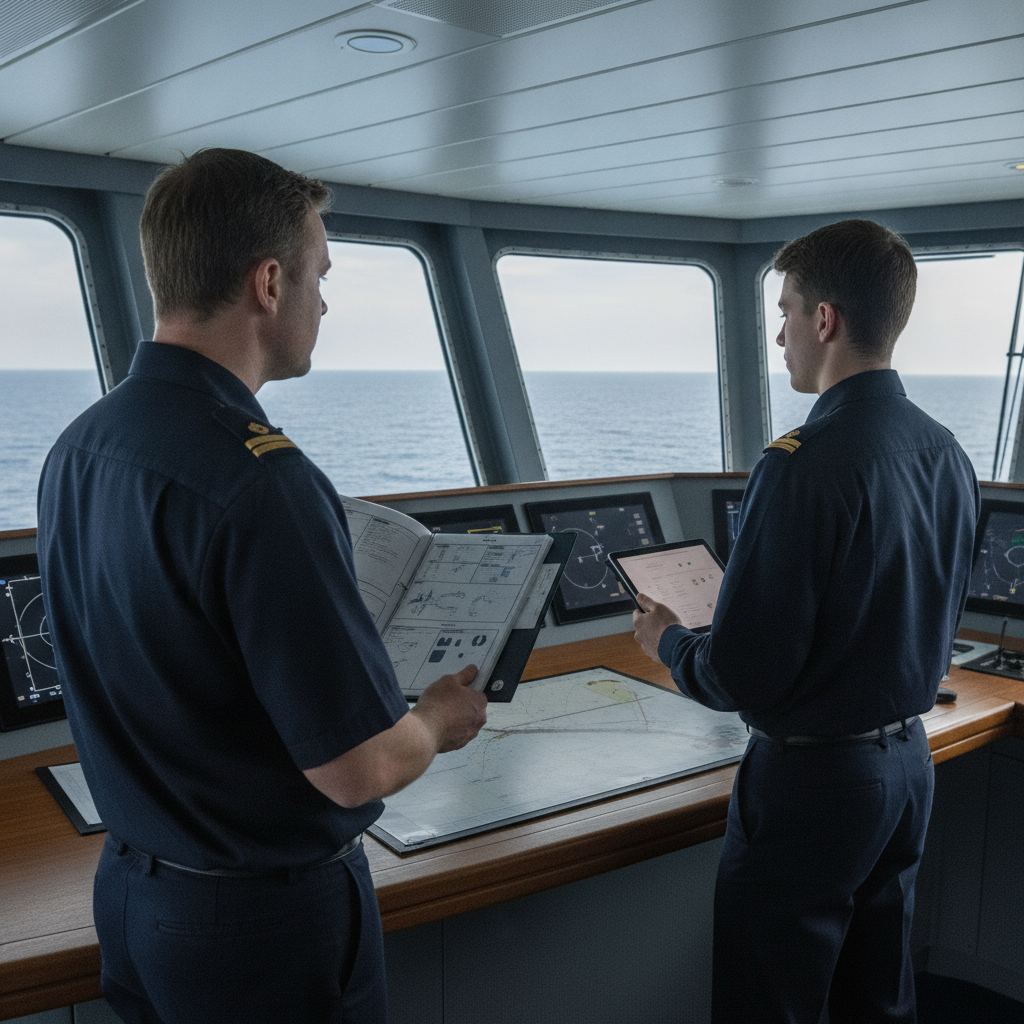
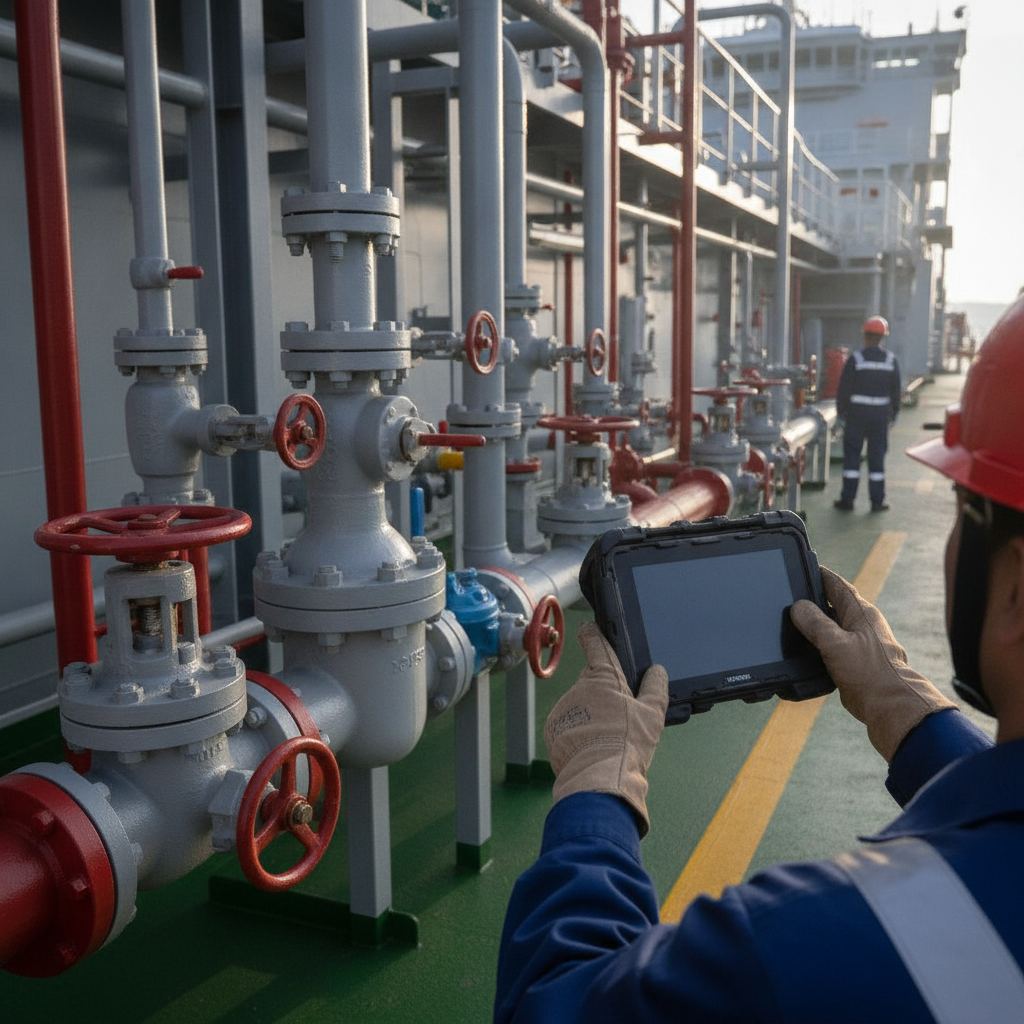
SIRE 2.0 inspectors record their work on intrinsically safe tablets fitted with a camera and voice recording, running OCIMF's Inspection Editor application. The tablet presents the CVIQ question by question and captures responses, comments and supporting evidence as the inspector moves through the ship.
The day typically follows the ship's operations rather than a desk review. Inspectors walk the deck, the cargo control room, the engine room, the bridge and the accommodation, and they talk to the people who do the work in each location.
Human factors in practice
Crew interviews are central. An inspector may ask a junior officer to explain how a cargo operation is monitored, ask a rating to describe an emergency response, or observe how the watch communicates during a transfer. Answers are judged on understanding, not on reciting a procedure word for word.
This is where many ships are caught out. Senior officers often prepare thoroughly, while the inspector deliberately speaks to crew members at every level. A new joiner who does not know where the relevant procedure is kept, or why a barrier matters, can generate an observation just as easily as a broken gauge.
Masters can help by setting the tone. Crew members who understand that the inspector wants to see the ship as it normally operates, and who feel comfortable saying "I would check the procedure" instead of guessing, tend to give better answers.
Observations, Operator Comments and the Published Report
Every response in a SIRE 2.0 report is structured. Instead of a simple yes or no, the inspector records what was found against the relevant elements of the question and assigns an outcome.
How responses are recorded
- Hardware. The physical condition and function of equipment, structure and systems, for example whether a gas detection system is working and calibrated.
- Process. Whether procedures, records and plans exist, are appropriate and are followed, for example whether a cargo plan was prepared and signed as the safety management system requires.
- Human. Whether the people involved have the knowledge and non-technical skills to perform the task safely, for example whether the officer of the watch can explain the alarm limits.
Outcomes include, for example, "as expected", "exceeded expectation" and "not as expected". A response that is not as expected becomes a negative observation, and the inspector's comment and evidence explain why. Positive findings can be recorded too, which gives well-run ships a way to stand out.
The 14-day comment window
When the inspector submits the report, it goes first to the submitting company that requested the inspection. The operator then has a 14-day window to add comments to each observation. After that, the report is published and becomes available to programme recipients for 12 months.
Operator comments are read alongside the observations by every recipient who buys the report. A vague reply such as "noted, crew instructed" does little to reassure a vetting department. A structured reply shows that the company understood the issue and dealt with its cause.
A strong operator comment usually follows the same pattern:
- Acknowledge the finding factually, without disputing the inspector's description unless it is demonstrably wrong.
- State the immediate action taken on board, with the date it was completed.
- Identify the root cause, distinguishing between a hardware failure, a gap in the procedure and a human or training issue.
- Describe the corrective and preventive actions, including whether other ships in the fleet were checked for the same issue.
- Reference the evidence that the change was made, such as a work order, a revised procedure or a training record.
Fourteen days is short when a ship is trading, the crew is busy and several departments must agree on a root cause. Companies that respond well usually have their investigation workflow ready before the inspection takes place.
How to Prepare for a SIRE Inspection: A 90-Day Plan
Good vetting results come from a ship that is ready every day. Even so, a structured countdown helps to focus effort in the months before an expected inspection.
90 days before
Review previous SIRE reports and internal inspections for recurring themes. Check that the HVPQ and PIQ describe the ship as it is today, and plan the next photograph refresh. Compare the question library with the safety management system to find procedures that are unclear, impractical or out of date.
30 days before
Run a self-assessment against the relevant parts of the question library, ideally led by someone who does not sail on that ship. Close overdue maintenance, test critical alarms and emergency equipment, and hold the drills an inspector may ask about, such as cargo spill response or emergency steering.
Crew familiarisation matters as much as hardware. Short sessions on board in which officers and ratings explain their own tasks, rather than listen to a presentation, build the confidence that interviews require. Our guide to the ISM Code in practice covers how drills, familiarisation and internal audits fit into the safety management system.
7 days before
Confirm that certificates are valid and uploaded, that records such as cargo logs, oil and garbage record books and hours of rest are complete, and that the master and chief officer know the inspection plan. Resist the temptation to stage the ship: a condition prepared for one day rarely matches the records, and crew interviews tend to show it.
Common SIRE 2.0 Pitfalls and the Data Behind a Clean Report
Most negative observations are not caused by a single dramatic defect. They come from a small number of recurring weaknesses that are visible in the office data long before the inspector sees them on board.
- Stale pre-inspection data. An HVPQ, PIQ or photograph set that no longer matches the ship.
- Procedures nobody uses. Instructions written for the office rather than for the crew that must follow them.
- Crew changes without familiarisation. New joiners who have not been walked through ship-specific equipment and emergency roles.
- Deferred maintenance on critical systems. Open jobs on alarms, gas detection or cargo equipment that the inspector will find.
- Weak close-out of past findings. Observations from earlier inspections that were answered on paper but not fixed across the fleet.
SIRE 2.0 is aligned with, but separate from, TMSA, OCIMF's Tanker Management and Self Assessment programme. TMSA looks at the company's management system, while SIRE looks at one ship on one day. Findings in one should inform the other, and companies that manage both from the same data tend to face fewer surprises.
That data usually sits in several places. Certificate and survey status belongs to fleet compliance management. Crew familiarisation, training records and hours of rest are covered in our article on crew management and MLC 2006 compliance.
Maintenance history is the third pillar. A planned maintenance system that shows critical equipment tested on schedule is strong evidence for the hardware element, and the condition-based methods described in predictive maintenance ROI in merchant shipping help prevent the failures inspectors find. Larger repairs that can only be done in the yard belong in the plan for the next dry docking.
Frequently Asked Questions
What is SIRE 2.0?
SIRE 2.0 is the current version of OCIMF's Ship Inspection Report Programme. It replaced the VIQ7-based programme during 2024 with a risk-based question library, pre-inspection data supplied by the operator, tablet-based inspections and a much stronger focus on human factors.
What is the difference between the HVPQ and the PIQ?
The HVPQ contains the ship's harmonised particulars, such as dimensions, cargo systems and equipment, which rarely change. The PIQ collects information relevant to the specific inspection and changes more often. Both feed the Compiled Vessel Inspection Questionnaire used on the day.
How long does an operator have to comment on a SIRE report?
The operator has a 14-day window to add comments once the report has been submitted. When that window closes, the report is published and remains available to programme recipients for 12 months.
Does a SIRE inspection pass or fail a ship?
No. SIRE provides inspection reports, not approvals. Each oil company, charterer or terminal applies its own vetting criteria to the report, including the operator's comments, and makes its own decision about whether to use the ship.
How often do SIRE 2.0 photographs need to be updated?
OCIMF requires the photographs in the Photograph Repository to be refreshed every six months. It is also good practice to update them whenever a significant change on board makes the existing images inaccurate.
SupaMaritime's Merchant module keeps SIRE 2.0 questions and supporting evidence in one place per vessel, and tracks each corrective action from raised to closed with a named owner and a deadline, alongside certificates, maintenance and crew records. See how it supports tanker operators, explore the Merchant module and review its full feature list.