Port State Control: How Inspections Work, the Paris MoU and How to Prepare
An inspector walks up the gangway without warning, asks for the certificates and then heads down to the engine room. For the crew it is a tense day; for the shipowner it can turn into a detention. Port State Control (PSC) is the system by which the port state checks that foreign ships comply with international conventions.
Inspections are not a rare event. A ship calling in Europe, Asia or North America may be inspected several times in the same year, and the outcome of each inspection stays in the databases and weighs on the risk profile of the ship and the company.
This guide explains the legal basis of PSC, how regional memoranda such as the Paris MoU work, how ships are selected, what types of inspection exist, what happens with deficiencies and detentions, and how to prepare ship and office. It is written for shipowners, ship managers, fleet superintendents, masters and ship agents.
The key point: PSC does not reward the perfect ship but the well-run one. Valid certificates, documented maintenance and a crew who can explain their own procedures make the difference before you even reach the quay.
What port state control is and its legal basis
Every ship flies the flag of a state, and in principle it is that state's job to ensure the ship complies with international rules. The flag state does so through its own certificates, its own inspections and, very often, through recognised organisations such as classification societies.
The reality is that the quality of flag state controls is not uniform. PSC exists to close this gap: the port state has the right to check foreign ships entering its waters, as a second line of defence behind flag state control.
The legal basis lies in the conventions themselves. SOLAS, MARPOL, STCW, the Load Lines Convention and the Maritime Labour Convention, MLC 2006, provide that ships of the contracting countries may be inspected in the ports of the other contracting states. In the European Union the matter is implemented by a directive on port state control, applied by the national maritime authorities. In Italy the inspections are carried out by the Capitanerie di porto, the harbour offices of the Coast Guard.
The principle of no more favourable treatment also applies: ships of states that have not ratified a convention receive no better treatment than the others, so no one escapes inspection because of their flag.
What regional memoranda are: Paris MoU, Tokyo MoU and the others
No port could inspect every ship that arrives. For this reason states have grouped into regional memoranda of understanding (MoUs), which harmonise procedures, share results and divide the work.
The main memoranda are the following:
- Paris MoU. The best known, it covers European ports and Canada.
- Tokyo MoU. Covers the Asia-Pacific region.
- Mediterranean MoU, Black Sea MoU, Indian Ocean MoU. Smaller regions, with similar mechanisms.
- Abuja MoU and Riyadh MoU. For West and Central Africa and for the Gulf area respectively.
- Caribbean MoU and the Viña del Mar Agreement. For the Caribbean and for Latin America.
- United States Coast Guard. The United States does not belong to a regional MoU but runs its own control programme, with specific rules and practices.
For those calling in several regions the regulatory basis is common, but selection criteria and priorities change. Concentrated inspection campaigns devoted to a single topic, such as fire safety, are announced in advance and are a good moment to check your own preparedness.
How the ship to be inspected is chosen
Selection is not random. Under the European Paris MoU regime every ship receives a ship risk profile that places it, in general terms, in one of three categories: high-risk ship, standard-risk ship or low-risk ship. The higher the category, the more frequent the inspections.
The profile depends on generic parameters that the ship carries with it. The authorities use them to decide where to concentrate their resources:
- Ship type and age. Some types and the older ships receive greater attention.
- Flag. Flag states are assessed on the overall inspection results of their ships.
- Company and recognised organisation. The results of the managing company and of the classification society that certified the ship also count.
- Inspection history. The number of past deficiencies and detentions bears directly on the profile.
Beyond the profile there are so-called overriding factors: reports from third parties, a recent accident, an anomaly found at a previous port or failure to notify arrival can make an inspection mandatory even for a low-risk ship. The precise time windows within which a ship of a given category must be inspected differ from regime to regime and should be checked against the current text of the memorandum.
Types of inspection: initial, more detailed and expanded
When an inspector comes on board, the visit falls into one of these categories. The difference lies in the breadth of the checks and in the time the inspector devotes to the ship.
| Type | When it applies | What is checked |
|---|---|---|
| Initial inspection | Routine visit, first check of the ship in that cycle | Certificates and documents, general condition of the ship, safety equipment, overall impression of the crew |
| More detailed inspection | When there are clear grounds for believing that the condition of the ship or crew does not comply with the conventions | In-depth check of the areas of doubt, often with practical tests and drills |
| Expanded inspection | For ships falling in categories considered higher risk, under the European regime | Wide-ranging check, including organisational aspects such as the safety management system and living and working conditions on board |
Clear grounds are objective situations that lead the inspector to look beyond the documents: certificates inconsistent with the physical condition of the ship, visible leaks, a crew that does not know the emergency procedures, a sloppily kept logbook.
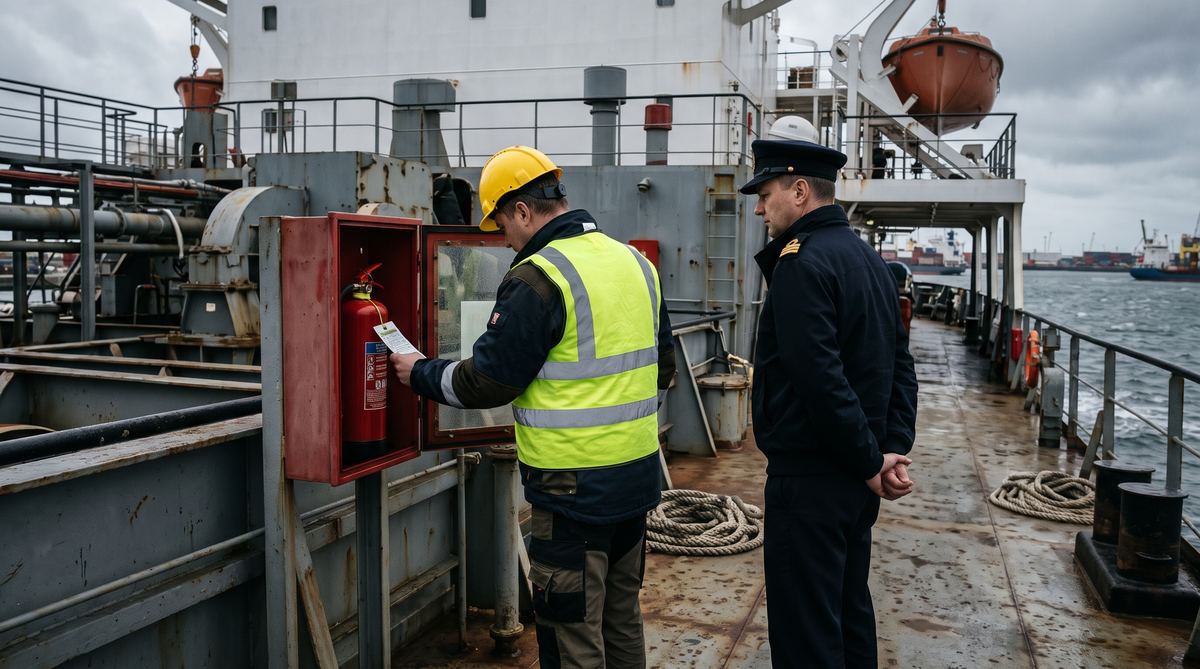
What happens in an inspection: from the inspector's arrival to the final report
Inspections follow a recurring pattern, which is worth knowing so as to guide the visit without becoming rigid.
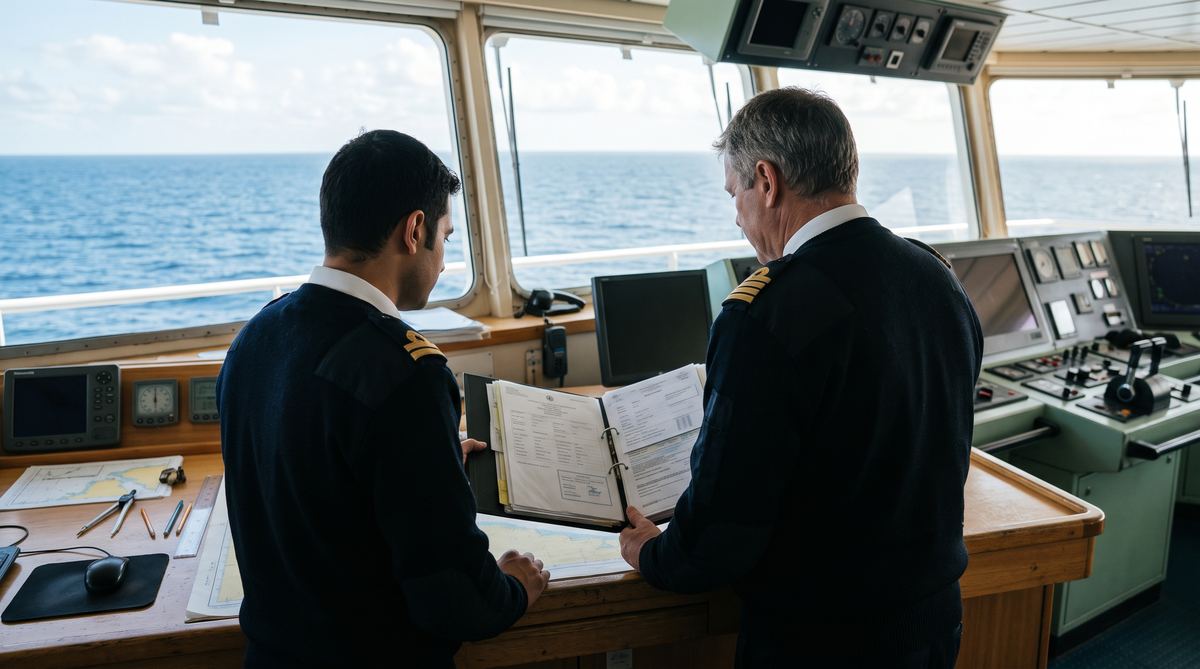
- Introduction and documents. The inspector introduces themselves to the master or the officer of the watch and asks for the flag and class certificates, the safety management certificate, the pollution prevention certificates, the Maritime Labour Certificate and the crew documentation.
- Walk round the ship. The deck, accommodation, galley, bridge and engine room are checked, with attention to state of maintenance, tidiness and cleanliness.
- Tests and drills. The inspector may ask to see systems working, from watertight doors to fire pumps, or to witness an abandon-ship or fire drill.
- Interview with the crew. Knowledge of procedures, working language, rest hours.
- Closing meeting and report. The inspector explains the deficiencies found and hands the master a report, signed for receipt, with the deadlines set for rectification.
The master may ask questions and, if they disagree with a finding, provide documented evidence.
Deficiencies, detention and banning: the consequences of an inspection
At the end of the visit every defect found is a deficiency. For each one the report states the action required and the deadline to resolve it: a correction before departure, at the next port or within a set time. Many deficiencies are closed with a repair or a documentary update and the ship sails as normal.
When the deficiencies are such as to make the ship unsafe or to pose a risk to the environment, the authority may order a detention. The ship cannot leave port until the defects have been corrected and the authority has confirmed the rectification with a new check. The detention can last from a few hours to weeks, depending on severity and the availability of spare parts.
The consequences of a detention go well beyond the port where it happens:
- Direct costs. Repairs, technicians, class surveys and agency expenses, on top of the time lost.
- Commercial impact. The delay may open disputes with the charterer, for example over off-hire or damages for delay, depending on the contract.
- Effect on the profile. Detentions and deficiencies raise the risk profile of the ship, the company and the flag, with more inspections in future.
- Reputation. The results can be consulted and many charterers, insurers and lenders look at them when selecting ships.
- Refusal of access. Under the European regime, ships with repeated detentions may be banned from the ports of the region. The precise criteria are set by the memorandum and the directive.
The areas with the most deficiencies: where inspectors look
Every year the memoranda publish the areas that generate the most findings. We do not quote figures here: the qualitative picture is stable and is enough as a guide to preparation.
- Fire safety. Fire doors, dampers, detectors, extinguishers, fixed systems and their state of maintenance, as well as an up-to-date fire plan.
- Life-saving appliances. Lifeboats, liferafts, lifejackets, launching appliances and their documented periodic checks.
- Safety management system. Real application of the ISM Code: procedures that are known, internal audits, corrective actions, near-miss reports. For the detail we refer to our guide to the ISM Code in practice.
- Maritime labour. Contracts, pay, rest hours, food, accommodation and medical care under MLC 2006. We cover the subject in crew management and MLC 2006 compliance.
- Pollution prevention. Oily water separator, oil record book, garbage record book, ballast water management and, where applicable, emission control systems.
- Certificates and documents. Missed expiry dates, out-of-date copies or crew data inconsistent with the actual complement on board.
How to prepare: the PSC checklist for ship and office
The best preparation is continuous. A well-handled inspection is the result of a ship kept in order every day, not of a week of cleaning before arrival. A realistic checklist divides the work between ship and office.
On board
- Certificates and documents in order. Originals available, expiry dates and flag and class surveys checked, annual endorsements entered. A tidy file on the bridge saves time and builds trust.
- Up-to-date records. Logbook, oil record book, garbage record book, ballast water record book, drill and rest hour records, completed consistently and without erasures.
- Real drills. Everyone knows their own duty on the muster list and where the equipment is: a drill held only on paper does not survive the practical test.
- Internal walk-round. Master and heads of department go round the ship through the inspector's eyes, from the doors to the galley to the hospital.
- Known defects already documented. If a defect is awaiting a spare part, the purchase request, the expected date and the temporary measures should be shown straight away.
In the office
- A single calendar of expiry dates. Ship certificates, class and statutory surveys, crew certificates, periodic tests of equipment.
- Periodic internal checks. Preparatory inspections by the fleet superintendent and internal ISM audits, with corrective actions followed through to closure.
The role of the ship agent and the classification society
The ship agent is often the first to know that an inspection is under way. They welcome the inspector, coordinate access on board, obtain any permits for spare parts and technicians and keep the company informed. In the event of a detention they arrange spare parts, workshops and class surveys, and report on the progress of the work. The role is described in our article on the ship agency and the ship agent.
The classification society comes into play when a deficiency concerns the hull, the machinery or a certificate it has issued on behalf of the flag. The inspector often asks for confirmation of rectification from class, and one of its surveyors may be called to the port to verify the repair. How surveys and class conditions work is explained in classification societies and class surveys.
Do not confuse PSC with the vetting done by oil charterers. PSC is a state control, mandatory and legal in nature; vetting is a commercial and voluntary inspection, requested by oil companies according to their own standards. For tankers see the guide to the SIRE 2.0 inspection.
After a detention: how to handle it and return the ship to service
When a ship is detained, the first hours are decisive. Whoever has a process already defined loses less time and makes fewer mistakes. A sensible plan involves a few steps in sequence.
- Understand exactly what is contested. Obtain the written report, the references to the conventions cited and the deadline for rectification. On each item you need to know what the authority requires, not what you think it requires.
- Inform the parties involved. Shipowner, flag, class, charterer and insurers, with a single, consistent message.
- Plan the rectifications. Spare parts, workshops, technicians, any extraordinary class surveys; each item with an owner and a date.
- Request the re-inspection. When the work is finished, the new check is agreed with the authority, with the repair documentation to hand.
- Analyse the cause. A detention almost always points to a system problem, such as deferred maintenance, a neglected record or a skipped drill. The analysis should be extended to the other ships and closed with corrective actions in the management system.
If the detention appears unjustified, the route of appeal exists, with short deadlines set by the port state: it should be assessed immediately with a maritime legal adviser.
How Software Simplifies PSC Preparation
Most PSC findings do not come from mysterious defects but from missed expiry dates, inconsistent records and information scattered between ship and office. A single system that gathers this information reduces the risk without replacing the judgement of those who work on board.
The SupaMaritime Merchant module is designed for commercial ships and gathers maintenance, crew, rest hours and ISM, ISPS, MARPOL and ballast water records, together with the ship's certificates. In practice it lets you:
- Keep expiry dates under control. Ship and crew certificates with expiry alerts.
- Schedule maintenance. Jobs by calendar or running hours, work orders and documented breakdowns.
- Check rest hours. Against MLC and STCW, to avoid one of the most frequent findings.
- Follow audits and drills. ISM and ISPS entries, audits and environmental records in one place.
A single archive does not decide in place of the master, but it lets you show in a few minutes what was done and when. For details of the functions see the features of the Merchant module, and for use cases the pages dedicated to bulk carrier and tanker operators.
Frequently Asked Questions
What is the difference between port state control and flag state control?
Flag state control is exercised by the state in which the ship is registered, directly or through recognised organisations. Port state control is exercised by the state of the port where the ship is, on any foreign ship. The first is the primary responsibility; the second is an independent check that strengthens the system.
What is the Paris MoU?
It is the memorandum of understanding that coordinates port state control for European and Canadian ports. It sets common procedures, shares inspection results and publishes a flag performance system. European Union member states apply it together with the relevant EU directive.
How do you avoid detention in a PSC inspection?
There is no formula, but there are habits that greatly reduce the risk: consistent certificates and records, traced maintenance, verified safety equipment, real drills and a crew who know the procedures. In addition, known defects should be documented with a spare part request and a temporary measure, not hidden.
Does a detention stay in the ship's history?
Yes, inspection results are recorded in the memoranda's databases and affect the risk profile of the ship, the company and the flag. Charterers and insurers can consult them. That is why it also matters to show that you have resolved the cause and not only the defect.
Is the ship agent responsible for the outcome of the inspection?
No. Technical and regulatory responsibilities lie with the master, the shipowner and the managing company. The agent facilitates access, coordinates technicians and spare parts and communicates with the authorities, but is not answerable for the condition of the ship.
Final Thoughts
Port state control is a check on how a ship is run more than on a single defect. The ships that face it calmly are those in which certificates, maintenance and training are part of everyday work, not an end-of-voyage emergency.
For thresholds, deadlines and procedures, the current texts of the memorandum, the directive and the port authority prevail. If you want to organise expiry dates, records and maintenance in a single system, discover the SupaMaritime Merchant module.